Loading...
Done
Chimbu Tribe And The Skeleton Body Painting

Skeleton bodypainting in Chimbu tribe. Village Mindima, Simbu (a Highlands Region province in Papua New Guinea), September 14, 2009. (Photo by Rita Willaert; Source: Flickr)
Details
26 Apr 2012 13:39:00
Toddlers by Karolina Bazydlo

Toddlers by Karolina Bazydlo. (Photo by Karolina Bazydlo; Source: Flickr)
Details
14 May 2012 08:53:00
long exposure

Long-exposure photography or time-exposure photography involves using a long-duration shutter speed to sharply capture the stationary elements of images while blurring, smearing, or obscuring the moving elements. The paths of moving light sources become clearly visible.
Details
03 Jul 2012 14:37:00
South American sea lion

South American sea lion. Valencia, February 8, 2012. (Photo by Ger Art; Source: Flickr)
Details
19 Apr 2012 13:06:00
Photographers: Trini aka Trini61

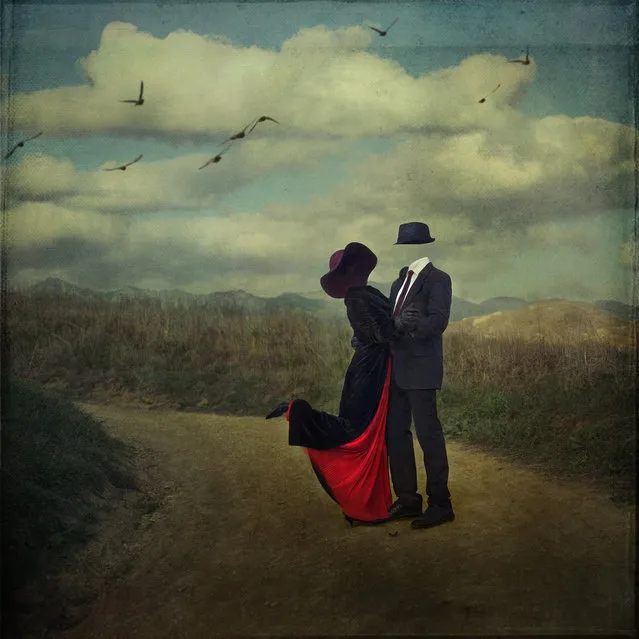
“When We're Gone... Memories Of Us Are All That Remain”, 2011. (Photo by: Trini61; Source: Flickr)
Details
14 May 2015 06:00:00
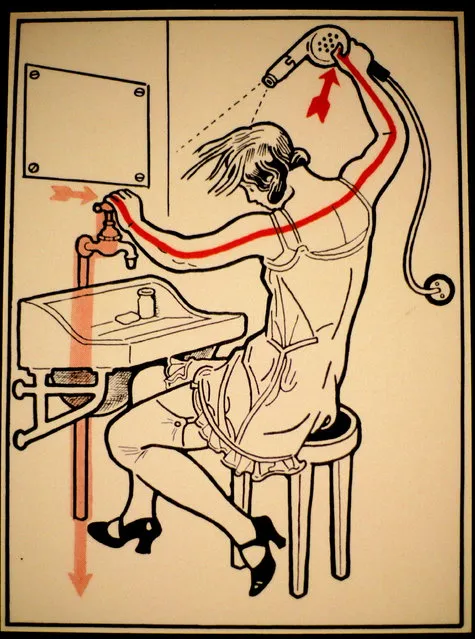
The book “Elektroschutz in 132 Bildern” (Electrical Protection in 132 Pictures) was published in Vienna in the early 1900s by a Viennese physician named Stefan Jellinek (1878-1968, a founder of the Electro-Pathological Museum). The pictures are nice and direct and unambiguous; they teach, graphically, that the surest way to kill yourself with electricity is to form a complete path from source (usually the bright red arrow) to ground (the screened back, pink arrow). Arrowheads provide the path for current flow. (Photo by The Vienna Technical Museum)

The book “Elektroschutz in 132 Bildern” (Electrical Protection in 132 Pictures) was published in Vienna in the early 1900s by a Viennese physician named Stefan Jellinek (1878-1968, a founder of the Electro-Pathological Museum). The pictures are nice and direct and unambiguous; they teach, graphically, that the surest way to kill yourself with electricity is to form a complete path from source (usually the bright red arrow) to ground (the screened back, pink arrow). Arrowheads provide the path for current flow. (Photo by The Vienna Technical Museum)
Details
11 Aug 2014 11:10:00
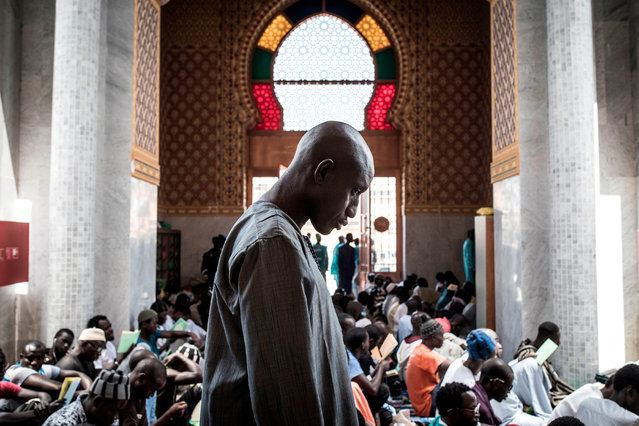
A Muslim worshipper attends a  mass prayer against COVID-19, the new coronavirus, in Dakar on March 4, 2020, after two cases were confirmed in Senegal in the previous days. Across the world, 3,155 people have died from the virus. More than 92,723 have been infected in 78 countries and territories, according to AFP's latest toll based on official sources at 1700 GMT on March 3, 2020. (Photo by John Wessels/AFP Photo)

A Muslim worshipper attends a mass prayer against COVID-19, the new coronavirus, in Dakar on March 4, 2020, after two cases were confirmed in Senegal in the previous days. Across the world, 3,155 people have died from the virus. More than 92,723 have been infected in 78 countries and territories, according to AFP's latest toll based on official sources at 1700 GMT on March 3, 2020. (Photo by John Wessels/AFP Photo)
Details
26 Mar 2020 00:01:00
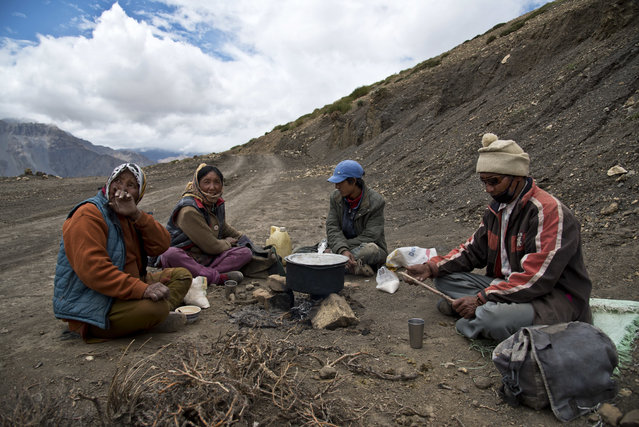
In this August 17, 2016, photo, from left to right, Chhering Chodom, 60, Tashi Yangzom, 50, Lobsang Chhering, 27, and Dorje Tandup, 58, drink milk tea on the side of the road. For centuries, the sleepy valley nestled in the Indian Himalayas remained a hidden Buddhist enclave forbidden to outsiders. Enduring the harsh year-round conditions of the high mountain desert, the people of Spiti Valley lived by a simple communal code – share the Earth's bounty, be hospitable to neighbors, and eschew greed and temptation at all turns. That's all starting to change, for better or worse. Since India began allowing its own citizens as well as outsiders to visit the valley in the early 1990s, tourism and trade have boomed. And the marks of modernization, such as solar panels, asphalt roads and concrete buildings, have begun to appear around some of the villages that dot the remote landscape at altitudes above 4,000 meters (13,000 feet). (Photo by Thomas Cytrynowicz/AP Photo)

In this August 17, 2016, photo, from left to right, Chhering Chodom, 60, Tashi Yangzom, 50, Lobsang Chhering, 27, and Dorje Tandup, 58, drink milk tea on the side of the road. For centuries, the sleepy valley nestled in the Indian Himalayas remained a hidden Buddhist enclave forbidden to outsiders. Enduring the harsh year-round conditions of the high mountain desert, the people of Spiti Valley lived by a simple communal code – share the Earth's bounty, be hospitable to neighbors, and eschew greed and temptation at all turns. That's all starting to change, for better or worse. (Photo by Thomas Cytrynowicz/AP Photo)

Details
15 Sep 2016 09:22:00