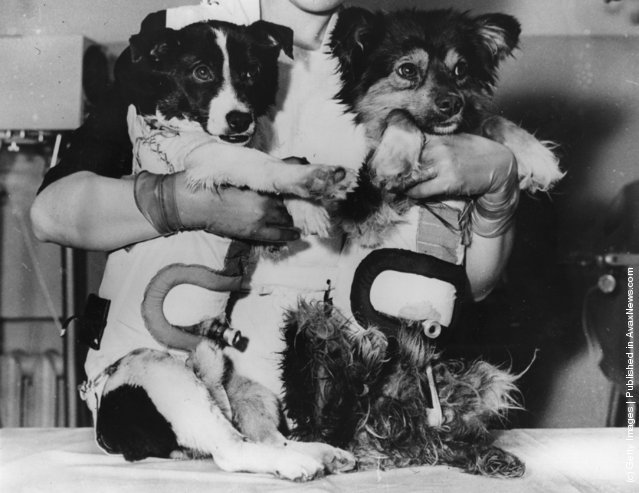
Two dogs sent into outer space by the Soviet Union after their safe return to earth. They spent 22 days in orbit. (Photo by Central Press/Getty Images). 22nd March 1966
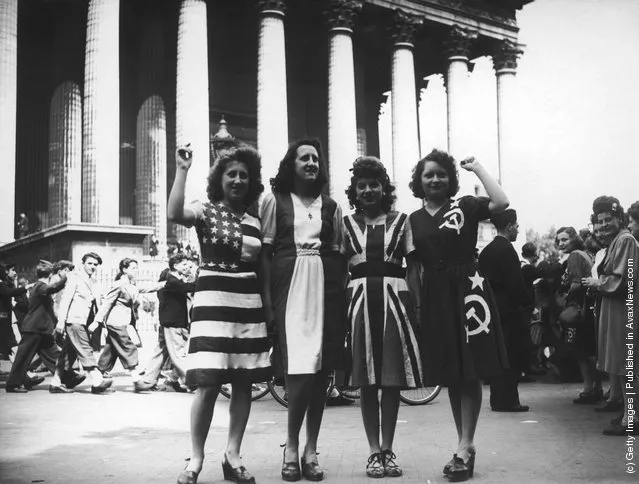
A group of women wearing dresses representing flags of the Allied powers (left to right: the USA, France, Britain and the Soviet Union) outside the Eglise de la Madeleine on VE Day in Paris, 8th May 1945. (Photo by Keystone/Hulton Archive/Getty Images)
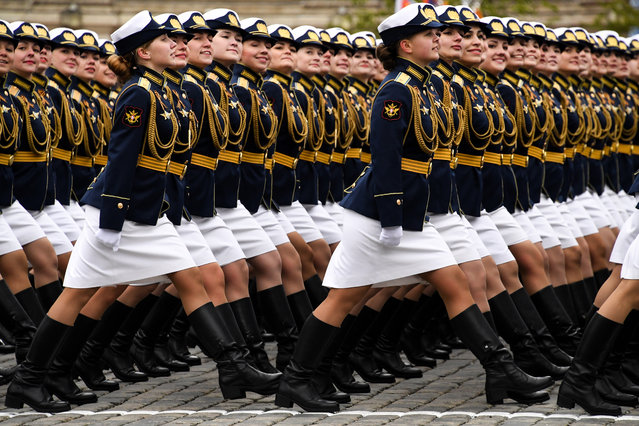
Russian servicewomen march at Red Square during the Victory Day military parade in Moscow on May 9, 2017. Russia marks the 72nd anniversary of the Soviet Union's victory over Nazi Germany in World War Two. (Photo by Kirill Kudryavtsev/AFP Photo)
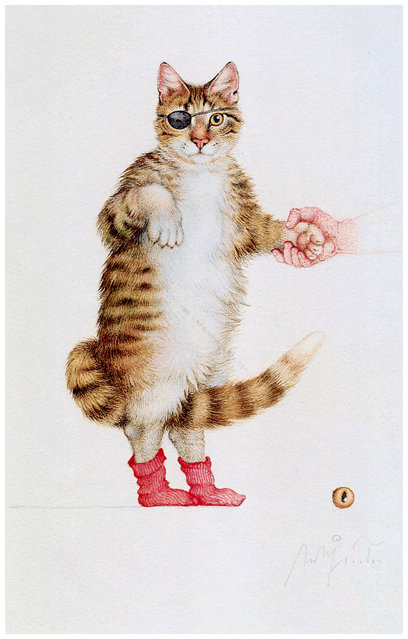
“Michael Mathias Prechtl (April 26, 1926, Amberg – March 19, 2003, Nuremberg) was a German artist, illustrator and cartoonist. He served as a soldier on the Eastern Front during World War II and spent 1945-49 as a prisoner of war in the Soviet Union”. – Wikipedia
Photo: “Der Gestiefelte Kater (Puss in Boots)”, 1997. Artwork by Michael Mathias Prechtl
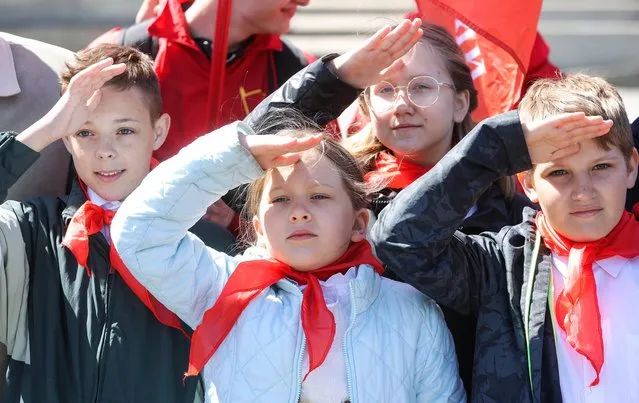
School students attend a pioneer induction ceremony in Moscow's Red Square in Moscow, Russia on May 22, 2022. Pro-Communist Russians are trying to preserve the Young Pioneers, which used to be the Communist league for pre-teens in the Soviet Union. (Photo by Sergei Karpukhin/TASS)
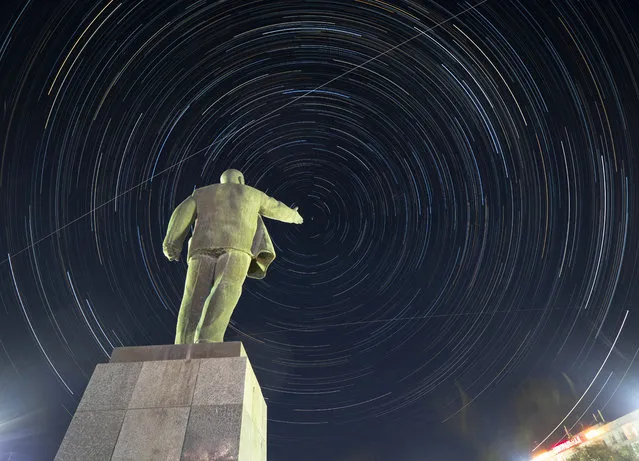
The International Space Station (ISS) moves along its orbit above at the Russian leased Baikonur cosmodrome, Kazakhstan, Thursday, July 18, 2019, with a statue of Soviet Union founder Vladimir Lenin in the foreground. Circular star tracks around the Polar Star and tracks of the ISS is the result of the camera multiple exposure with a total duration of two hours. (Photo by Dmitri Lovetsky/AP Photo)
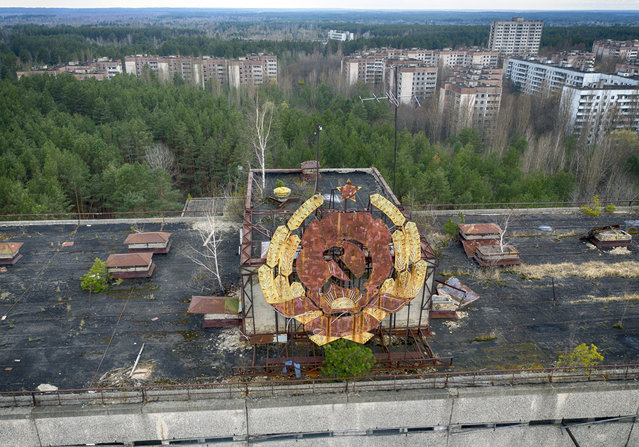
The rusty emblem of the Soviet Union is seen over the ghost town of Pripyat close to the Chernobyl nuclear plant, Ukraine, Thursday, April 15, 2021. The vast and empty Chernobyl Exclusion Zone around the site of the world’s worst nuclear accident is a baleful monument to human mistakes. Yet 35 years after a power plant reactor exploded, Ukrainians also look to it for inspiration, solace and income. (Photo by Efrem Lukatsky/AP Photo)
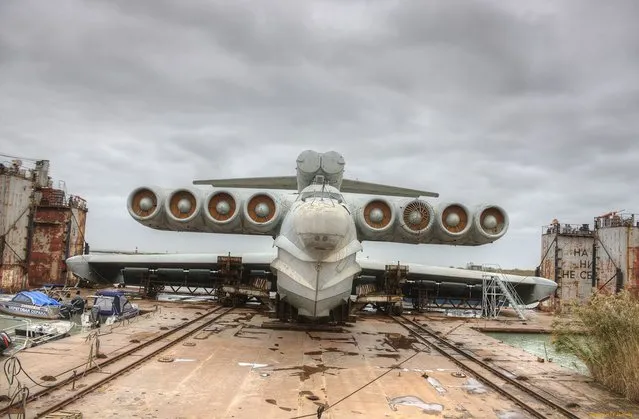
“The Lun-class ekranoplan (NATO reporting name Duck) was a ground effect vehicle (GEV) designed by Rostislav Evgenievich Alexeev and used by the Soviet and Russian navies from 1987 until sometime in the late 1990s. It “flew” using the lift generated by the ground effect of its large wings when close to the surface of the water – about four metres or less. Although they might look similar and/or have related technical characteristics, ekranoplans like the Lun are not aircraft, seaplanes, hovercraft, or hydrofoils – ground effect is a separate technology altogether. The International Maritime Organization classifies these vehicles as maritime ships. The name Lun comes from the Russian for harrier”. – Wikipedia (Photo by Igor113)