Loading...
Done
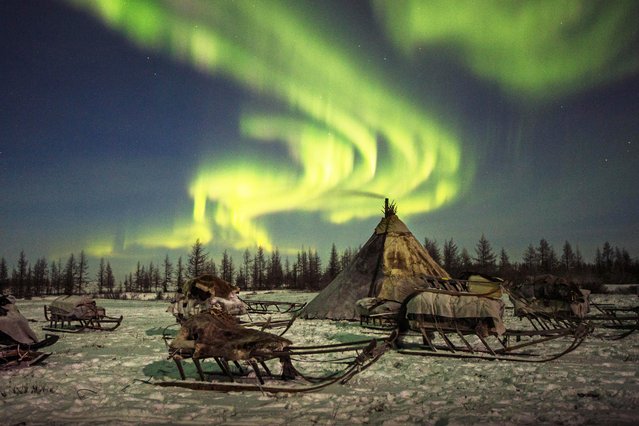
An empty camp is shown beneath a colourful sky in Siberia, December 2016. (Photo by Timothy Allen/Barcroft Productions)

A British photographer has captured life at the “edge of the world”. Timothy Allen, best known for his work on BBC's Human Planet, trekked through the freezing Siberian wilderness for 16 days as he joined part of an 800km migration of reindeer in the Yamal-Nenets region – a name that roughly translates to “edge of the world”. The stunning pictures feature the nomadic Nenets tribe, who drink blood to survive in -45°C temperatures. Timothy's epic journey, which will be revealed in an eight-minute documentary on Animal Planet USA, saw him travel across the bleak terrain of the frozen Ob River with the Nenets people in December last year. Here: An empty camp is shown beneath a colourful sky in Siberia, December 2016. (Photo by Timothy Allen/Barcroft Productions)
Details
19 Sep 2017 07:48:00
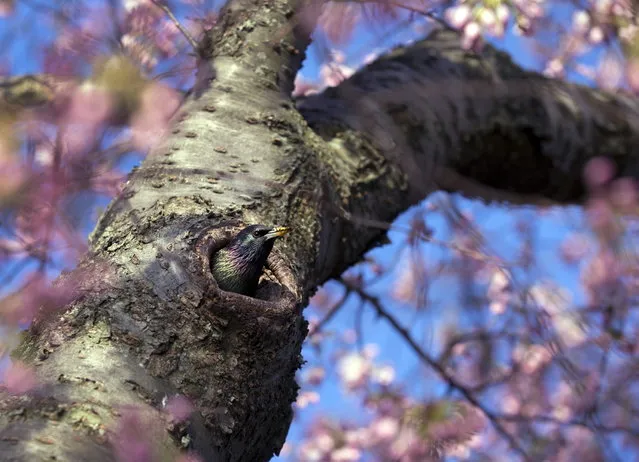
A nesting bird peeks out of the budding Japanese Yoshino cherry tree along the Tidal Basin in Washington, Sunday, April 7, 2013. Despite repeated predictions peak blossom time for the historic cherry trees is not yet here, but almost, almost. (Photo by Carolyn Kaster/AP Photo)

A nesting bird peeks out of the budding Japanese Yoshino cherry tree along the Tidal Basin in Washington, Sunday, April 7, 2013. Despite repeated predictions peak blossom time for the historic cherry trees is not yet here, but almost, almost. (Photo by Carolyn Kaster/AP Photo)
Details
08 Apr 2013 10:05:00
A woman wears VR glasses while the projection mapping is cast on table and walls during its media preview at “TREE BY NAKED, yoyogi park” restaurant in Tokyo, Japan on July 19, 2018. (Photo by Kim Kyung-Hoon/Reuters)

A woman wears VR glasses while the projection mapping is cast on table and walls during its media preview at “TREE BY NAKED, yoyogi park” restaurant in Tokyo, Japan on July 19, 2018. This restaurant incorporates virtual reality, projection mapping, and music to enhance diners' enjoyment of their food. (Photo by Kim Kyung-Hoon/Reuters)
Details
23 Jul 2018 00:03:00
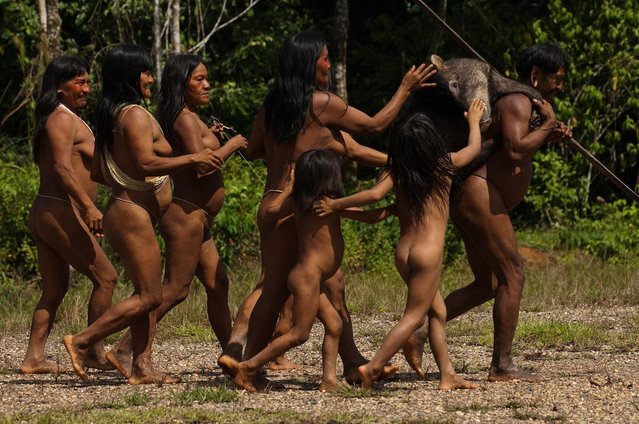
Spectacular images offering insight into the lives of the Huaorani people in the Ecuadorian Amazon have been revealed showing how they use traditional methods to hunt monkeys for food. The stunning pictures were taken by conservation photographer Pete Oxford from Torquay, Devon in the Ecuadorian Amazon. “The Huaorani Indians are a forest people highly in tune with their environment. Many are now totally acculturated since the 1950s by missionaries”, said Pete. “Today they face radical change to their culture to the proximity of oil exploration within their territory and the Yasuni National Park and Biosphere Reserve, they are vastly changed. Some still live very traditionally and for this shoot, through my Huaorani friend, a direct relative of those photographed he wanted to depict them as close to their original culture as possible. They still largely hunt with blow pipes and spears eating a lot of monkeys and peccaries”. The Huaorani are also known as the Waorani, Waodani or the Waos and are native Amerindians. Their lands are located between the Curaray and Napo rivers and speak the Huaorani language. Pete says that during his visit he was welcomed into the group and hopes that ancient cultures can be saved. Here: The tribe were seen celebrating after a hunter returned to camp with a wild pig. (Photo by Pete Oxford/Mediadrumworld.com)

Spectacular images offering insight into the lives of the Huaorani people in the Ecuadorian Amazon have been revealed showing how they use traditional methods to hunt monkeys for food. The stunning pictures were taken by conservation photographer Pete Oxford from Torquay, Devon in the Ecuadorian Amazon. Here: The tribe were seen celebrating after a hunter returned to camp with a wild pig. (Photo by Pete Oxford/Mediadrumworld.com)
Details
20 Jan 2017 07:58:00
Sarah Bui poses for photographer, Brian Le around blossoming cherry trees, near the Tidal Basin on Thursday March 23, 2017 in Washington, DC. (Photo by Matt McClain/The Washington Post)

Sarah Bui poses for photographer, Brian Le around blossoming cherry trees, near the Tidal Basin on Thursday March 23, 2017 in Washington, DC. (Photo by Matt McClain/The Washington Post)
Details
25 Mar 2017 08:17:00
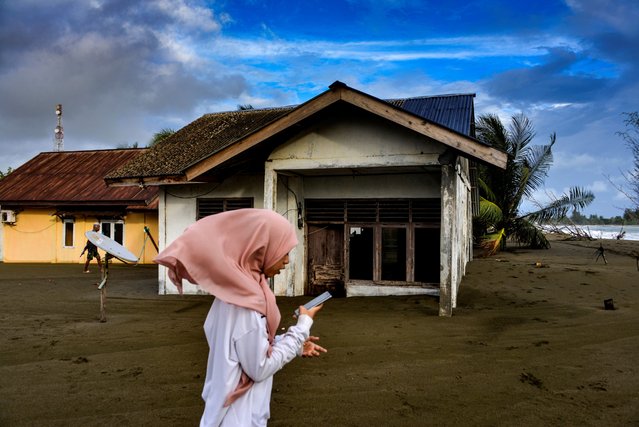
A girl walks past outside a house damaged by tidal waves at Meulaboh beach in Aceh province on July 12, 2020. (Photo by Chaideer Mahyuddin/AFP Photo)

A girl walks past outside a house damaged by tidal waves at Meulaboh beach in Aceh province on July 12, 2020. (Photo by Chaideer Mahyuddin/AFP Photo)
Details
05 Aug 2020 00:03:00
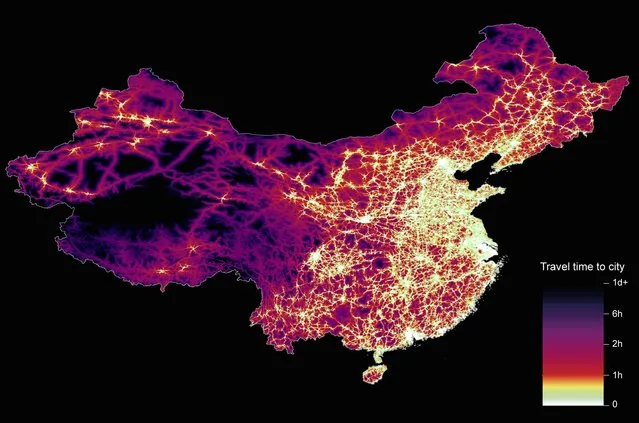
From Britain to China to Mali, new maps showing travel times to the nearest urban centre reveal huge differences between countries. Using Open Street Map and Google, a University of Oxford team have created a visual breakdown that suggests major inequalities when it comes to commuting. Here: China. The dataset used for China was unique as it relied solely on Open Street Map, due to restrictions on accessing Google data. The population is densely concentrated in the east and accessibility is increased, whereas rural provinces in the west remain remote. (Photo by Daniel Weiss/Jennifer Rozier/Malaria Atlas Project/University of Oxford )

From Britain to China to Mali, new maps showing travel times to the nearest urban centre reveal huge differences between countries. Using Open Street Map and Google, a University of Oxford team have created a visual breakdown that suggests major inequalities when it comes to commuting. Here: China. The dataset used for China was unique as it relied solely on Open Street Map, due to restrictions on accessing Google data. The population is densely concentrated in the east and accessibility is increased, whereas rural provinces in the west remain remote. (Photo by Daniel Weiss/Jennifer Rozier/Malaria Atlas Project/University of Oxford)
Details
12 Jan 2018 06:43:00


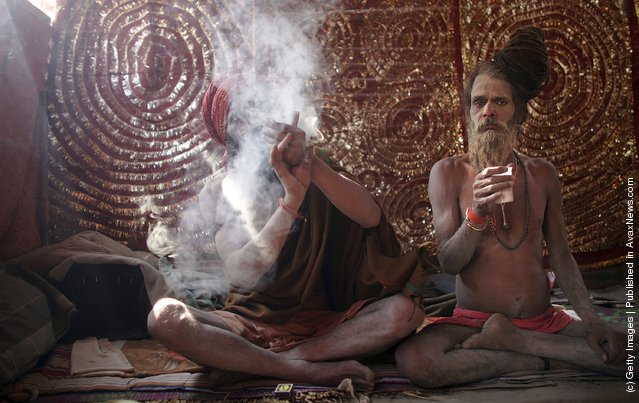
“Kumbh Mela is a mass Hindu pilgrimage in which Hindus gather at the Ganges river. The normal Kumbh Mela is celebrated every 3 years, the Ardh (half) Kumbh Mela is celebrated every six years at Haridwar and Prayag, the Purna (complete) Kumbh takes place every twelve years, at four places (Prayag (Allahabad), Haridwar, Ujjain, and Nashik). The Maha (great) Kumbh Mela which comes after 12 “Purna Kumbh Melas”, or 144 years, is held at Allahabad.

The last Ardh Kumbh Mela was held over a period of 45 days beginning in January 2007, more than 70 million Hindu pilgrims took part in the Ardh Kumbh Mela at Prayag, and on January 15, the most auspicious day of the festival of Makar Sankranti, more than 5 million participated. The previous Maha Kumbh Mela, held in 2001, was attended by around 60 million people, making it at the time the largest gathering anywhere in the world in recorded history”. – Wikipedia

Photo: Sadhus (holy men) smoke at their camp near the ritual site at Sangam, the confluence of the Ganges, Yamuna and mythical Saraswati rivers during the Ardh Kumbh Mela festival (Half Pitcher festival) January 18, 2007 in Allahabad, India. Millions of Hindu pilgrims have flocked to the largest religious gathering in the world which lasts for 45 days in northern India. The festival commemorates the mythical conflict between gods and demons over a pitcher filled with the “nectar of immortality”. Devotees believe that taking a holy dip in the Ganges at this time washes away their sins and paves the path to salvation. (Photo by Mario Tama/Getty Images)
Details
30 Jun 2011 10:27:00