Loading...
Done
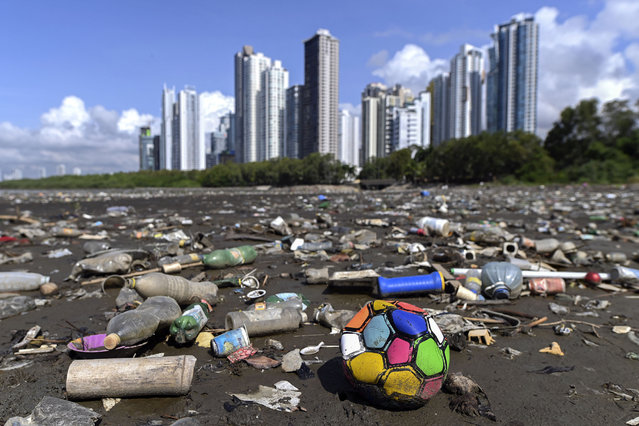
Garbage, including plastic waste, is seen at the beach of Costa del Este, in Panama City, on April 19, 2021. Every two weeks, Marine Biology students descend about five meters in the sea to take care of a coral nursery of the staghorn species (Acropora cervicornis) in Portobelo, Panama, with which they aim to restore reefs damaged by climate change and pollution, as part of the Reef2Reef project. (Photo by Luis Acosta/AFP Photo)

Garbage, including plastic waste, is seen at the beach of Costa del Este, in Panama City, on April 19, 2021. Every two weeks, Marine Biology students descend about five meters in the sea to take care of a coral nursery of the staghorn species (Acropora cervicornis) in Portobelo, Panama, with which they aim to restore reefs damaged by climate change and pollution, as part of the Reef2Reef project. (Photo by Luis Acosta/AFP Photo)
Details
21 Jun 2021 07:30:00
The Dubai Miracle Garden

The Dubai Miracle Garden is unique in that it was essentially built on a desert. Head landscaper Akar says that the grounds are a great example of how it is possible to “green the desert” by reusing waste water. Designers took additional precautions to protect the beautiful garden arrangements from the environment. For instance, the garden’s perimeter is lined with trees that are used as windbreakers. Unlike most of the gardens around the world, the Dubai Miracle Garden closes during the summer due to severe weather conditions.
Details
17 May 2015 09:00:00
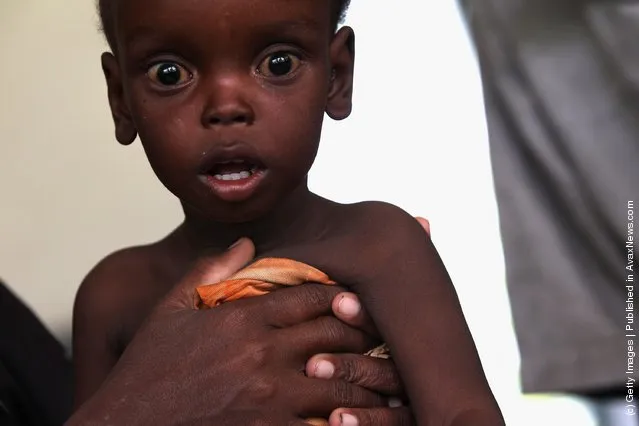
Somali Famine Refugees Seek Aid In Mogadishu

Weakened by sickness and malnutrition, Arbty Mohammad, 2, lies in the Banadir Hospital on August 12, 2011 in Mogadishu, Somalia. Some 100,000 Somalis have flooded into Mogadishu from drought and famine stricken areas of the country. The UN warned Friday that a cholera epidemic could spread through Mogadishu, as Somalis fill unsanitary makeshift camps throughout the capital. (Photo by John Moore/Getty Images)
Details
14 Aug 2011 14:13:00


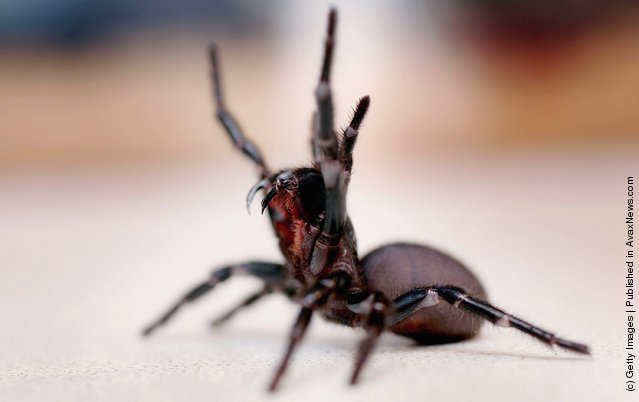
A Funnel Web spider is pictured at the Australian Reptile Park January 23, 2006 in Sydney, Australia. The Funnel Web is one of Australia's deadliest animals, with a venom that is packed with at least 40 different toxic proteins. A bite from a Funnel Web causes massive electrical over-load in the body's nervous system. Finally, fatalities occur from either heart attack or a pulmonary oedema, where the capillaries around the lungs begin to leak fluid and the patient effectively drowns. Death can come as quickly as two hours after a bite if no medical treatment is sought. Due to advances in anti-venom, there has been no death from a Funnel Web bite in Australia since 1980. Australia is home to some of the most deadly and poisonous animals on earth. (Photo by Ian Waldie/Getty Images)
Details
25 Apr 2011 07:49:00
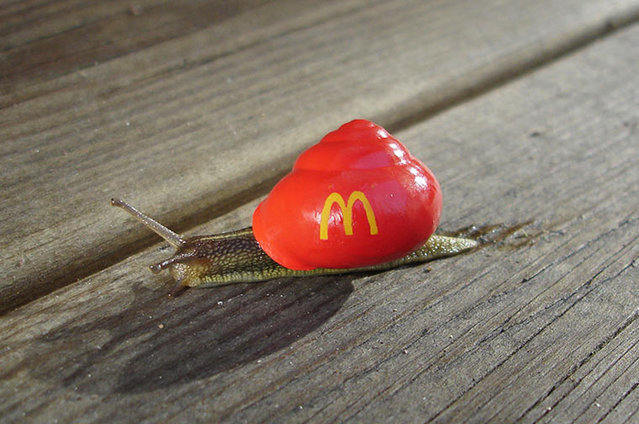
Snailpimp By Stefan Siverud

“Snailpimp” is a project by artist Stefan Siverud, who is having fun decorating living snails with the most varied designs, from the McDonald’s logo to the miniature lighthouse through Pac-Man, Ikea and Adidas. A funny and interesting project, achieved with non-toxic paints, which of course raises the question of the impact on these living animals. If some people ironize that these highly visible snails are less likely to be inadvertently stepped on by people, others point out that they are more easily spotted by predators… A project in line with the Inner City Snail artist Slinkachu.
Details
09 Jun 2015 12:18:00
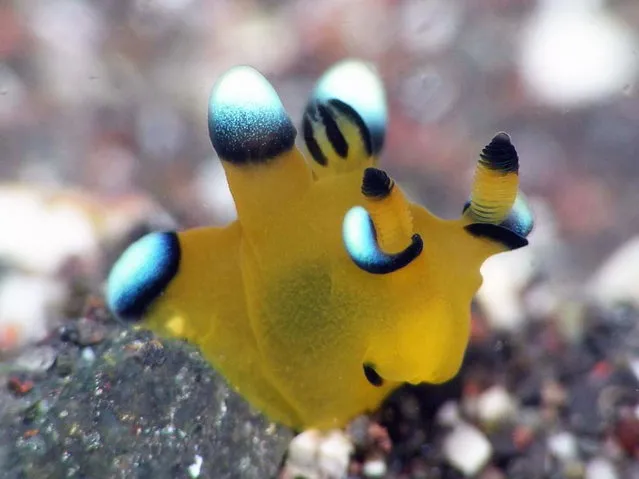
Thecacera Pacifica AKA Pikachu

If you ever wanted to meet a live Pikachu, you might have a hard time finding one. However, there is a creature on this Earth that kind of looks like one. That creature’s name is Thecacera pacifica and it is a species of a sea slug. These little critters can be found in the Indian Ocean from African coast to Indonesia and Vanuatu. Their vibrant orange and blue colors look gorgeous, making it look like some sort of anemone. Also, as you might have guessed from the striking colors of the sea slug, just like most of anemones, this creature is very toxic. Thus, keeping it as a pet isn’t an option.

Details
19 Dec 2014 12:51:00
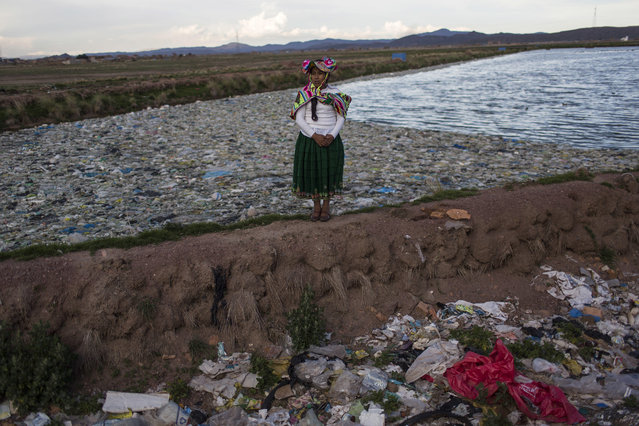
In this February 1, 2017 photo, environmental activist Maruja Inquilla poses for a photo next to a Municipal waste treatment plant with water that flows into Lake Titicaca, in Juliaca, in the Puno region of Peru. “If the frogs could talk they would say, This is killing me”," said Inquilla, who recently showed up at the Puno governor's house carrying plastic bags filled with hundreds of dead frogs in protest. (Photo by Rodrigo Abd/AP Photo)

In this February 1, 2017 photo, environmental activist Maruja Inquilla poses for a photo next to a Municipal waste treatment plant with water that flows into Lake Titicaca, in Juliaca, in the Puno region of Peru. “If the frogs could talk they would say, This is killing me”," said Inquilla, who recently showed up at the Puno governor's house carrying plastic bags filled with hundreds of dead frogs in protest. (Photo by Rodrigo Abd/AP Photo)
Details
04 Mar 2017 00:02:00
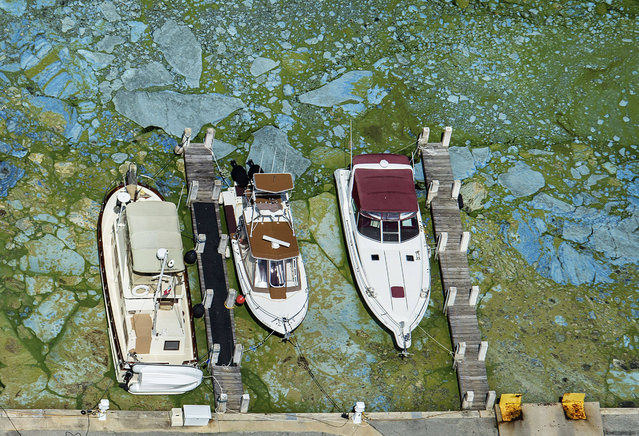
In this June 29, 2016 file photo, boats docked at Central Marine in Stuart, Fla., are surrounded by blue green algae. The 153-mile-long Indian River Lagoon has been plagued by harmful algae blooms. Water quality testing data analyzed by the AP showed the average phosphorous level – a byproduct of fertilizers and human waste that algae thrive on, rose nearly 75 percent between 2000 and 2016. (Photo by Greg Lovett/The Palm Beach Post via AP Photo)

In this June 29, 2016 file photo, boats docked at Central Marine in Stuart, Fla., are surrounded by blue green algae. The 153-mile-long Indian River Lagoon has been plagued by harmful algae blooms. Water quality testing data analyzed by the AP showed the average phosphorous level – a byproduct of fertilizers and human waste that algae thrive on, rose nearly 75 percent between 2000 and 2016. (Photo by Greg Lovett/The Palm Beach Post via AP Photo)
Details
11 May 2017 07:26:00