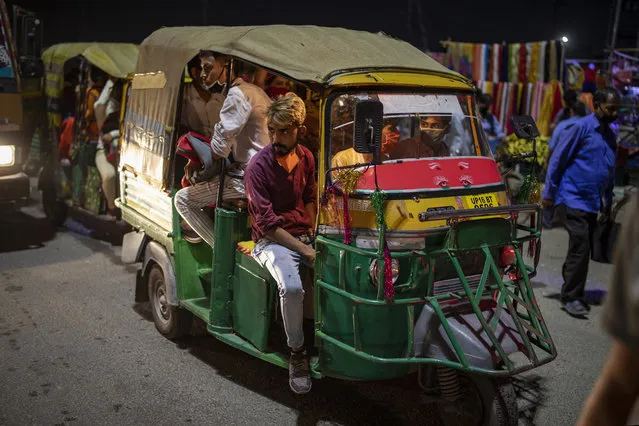
Commuters, some of them wearing masks as a precaution against the coronavirus ride an auto-rickshaw in Noida, outskirts of New Delhi, India, Thursday, July 16, 2020. (Photo by Altaf Qadri/AP Photo)
The Rafflesia Arnoldi flower (Amarphophallus titanum) which has been cultivated is seen in Palupuah Village, Agam District, West Sumatra, Indonesia, on April 13, 2022. The West Sumatera Nature Conservation Agency (BKSDA) estimates around seven Rafflesia Arnoldi flowers will bloom in Palupuah Village this year. (Photo by Adi Prima/Anadolu Agency via Getty Images)
A woman poses for a picture during Lunar New Year's Eve on Yaowarat Road in Bangkok's Chinatown, Thailand, February 9, 2024. (Photo by Jorge Silva/Reuters)
Revelers participate in J'Ouvert, an overnight celebration the night before the West Indies Day Parade in Brooklyn, NY on September 3, 2018. Violence in past years led NYPD to shut down the parade route until 2am. (Photo by Stephen Yang)
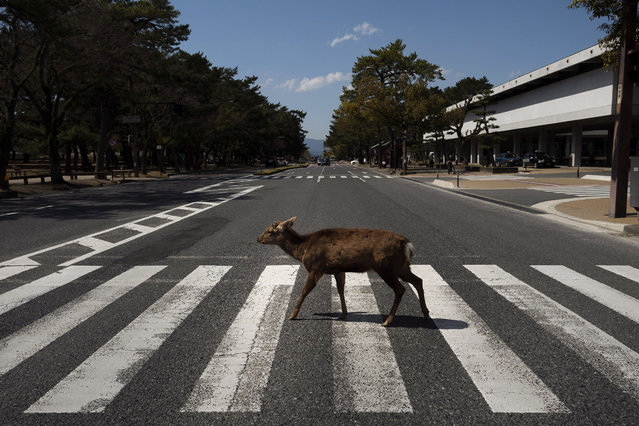
A deer walks across a pedestrian crossing in Nara, Japan, Thursday, March 19, 2020. More than 1,000 deer roam free in the ancient capital city of Japan. Despite the town's tourism decline, these wild animals are doing just fine without treats from tourists, according to a deer protection group. (Photo by Jae C. Hong/AP Photo)
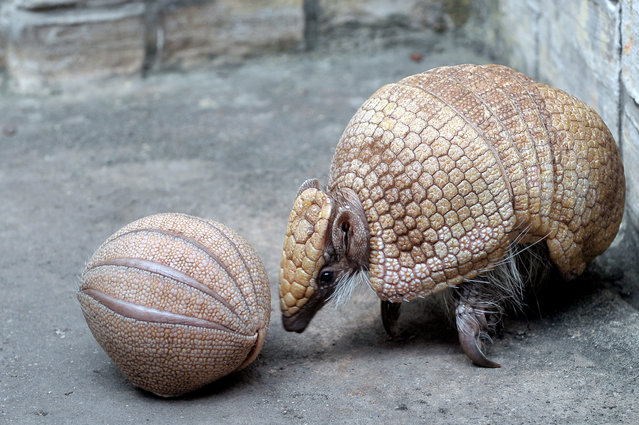
A four-week old southern three-banded armadillo (Tolypeutes matacus) is rolled up into a ball next to its mother in the tropical house of Budapest Zoo in Budapest, Hungary on May 3, 2019. The South American insect-eating mammal and its close relative, the Brasilian three-banded armadillo (Tolypeutes tricinctus) are the only two species of armadillos capable of rolling into a complete ball to defend themselves when feeling threatened. (Photo by Attila Kovács/EPA/EFE)
Frankie the Dinosaur, mascot of the United Nations Development Program “Don't Choose Extinction” visits Times Square spreading his climate-related message in New York on September 21, 2022. (Photo by Alex Kent/AFP Photo)
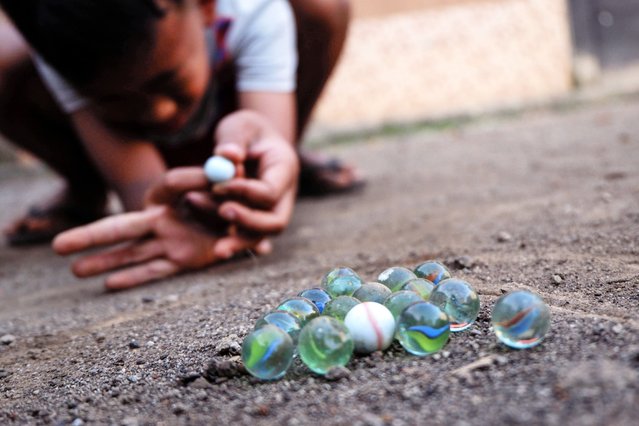
Children play marbles on the dirt in Garut, West Java, Indonesia on October 17, 2025. This traditional game, which was popular in the 1980s, is now rarely played by children due to the increasing popularity of modern games with advanced technology. According to a survey by the Indonesian Child Protection Commission (KPAI), more than 71.3% of school-age children own gadgets and play them for a considerable amount of time each day, and as many as 79% of child respondents are allowed to play gadgets for purposes other than learning. (Photo by Algi Febri Sugita/ZUMA Press Wire/Rex Features/Shutterstock)