Loading...
Done
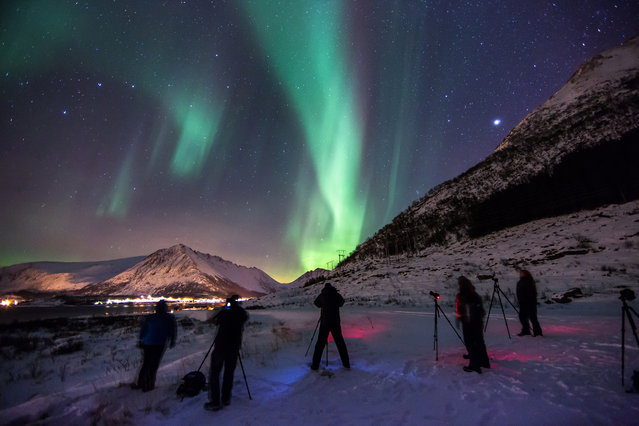
“Aurora Hunters”. Photographers taking part in a photography tour on the Lofoten Islands in Norway, pull over on the side of the road to take a photo of their first ever Aurora Borealis after spotting it from their tour bus. Photo location: Rystad, Lofoten Islands, Norway. (Photo and caption by Mark Gee/National Geographic Photo Contest)

“Aurora Hunters”. Photographers taking part in a photography tour on the Lofoten Islands in Norway, pull over on the side of the road to take a photo of their first ever Aurora Borealis after spotting it from their tour bus. Photo location: Rystad, Lofoten Islands, Norway. (Photo and caption by Mark Gee/National Geographic Photo Contest)
Details
17 Jun 2014 10:08:00
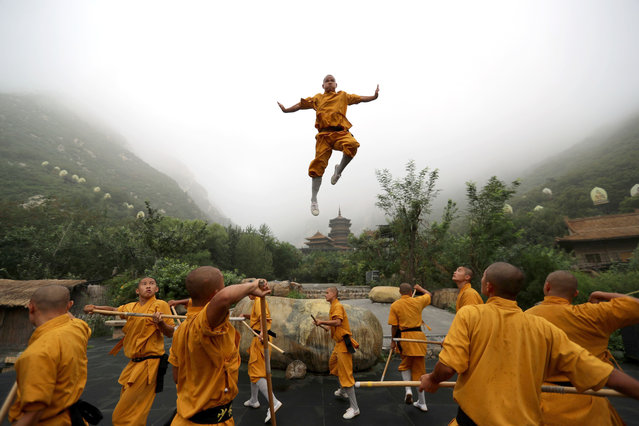
Shaolin boys practice kung fu in the sweltering heat during the zen shaolin music ceremony at shaolin temple, Dengfeng, Henan province, China on August 4, 2019. Shaolin unique skills include: shaolin arhat formation, three gun sashimi, shaolin stick, shaolin stone lock skill, iron hand splitting bricks, water training, fist and foot sparring. (Photo by Sipa Asia/Rex Features/Shutterstock)

Shaolin boys practice kung fu in the sweltering heat during the zen shaolin music ceremony at shaolin temple, Dengfeng, Henan province, China on August 4, 2019. Shaolin unique skills include: shaolin arhat formation, three gun sashimi, shaolin stick, shaolin stone lock skill, iron hand splitting bricks, water training, fist and foot sparring. (Photo by Sipa Asia/Rex Features/Shutterstock)
Details
07 Aug 2019 00:05:00
Actors, clowns and mime artists celebrate “Humor Day” in St Petersburg on April 1, 2022. April 1 is also referred to as “April Fool’s Day” and is a time for playing pranks in the country. (Photo by Anatoly Maltsev/European Press Photo Agency)

Actors, clowns and mime artists celebrate “Humor Day” in St Petersburg on April 1, 2022. April 1 is also referred to as “April Fool’s Day” and is a time for playing pranks in the country. (Photo by Anatoly Maltsev/European Press Photo Agency)
Details
03 Apr 2022 04:42:00
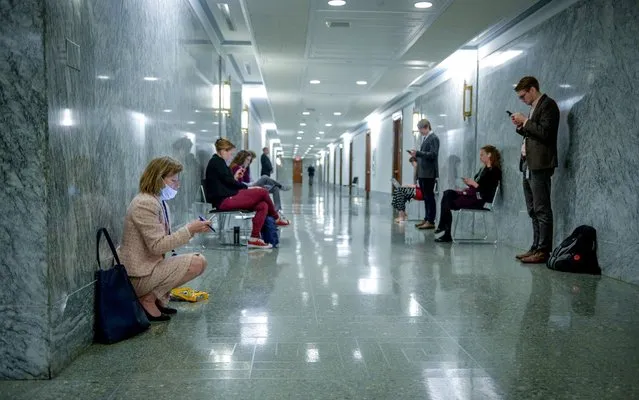
Journalists practice social distancing outside a meeting to wrap up work on coronavirus economic aid legislation to prevent the spread of coronavirus disease (COVID-19) in Washington, U.S., March 21, 2020. (Photo by Mary F. Calvert/Reuters)

Journalists practice social distancing outside a meeting to wrap up work on coronavirus economic aid legislation to prevent the spread of coronavirus disease (COVID-19) in Washington, U.S., March 21, 2020. (Photo by Mary F. Calvert/Reuters)
Details
27 Mar 2020 00:01:00
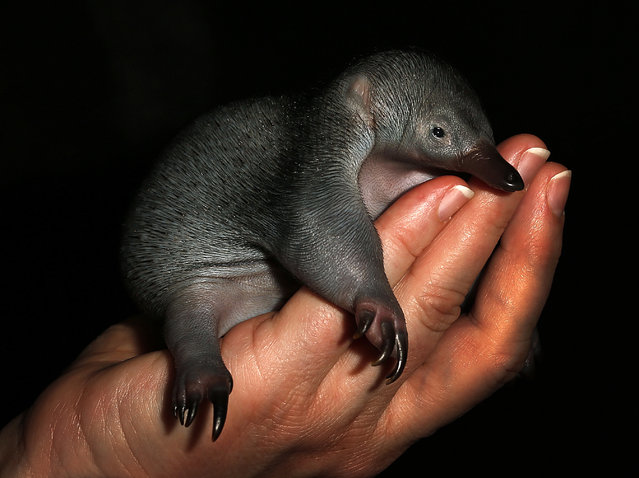
Bo, a 55-day-old baby Echidna known as a puggle, rests in the hands of vet nurse Annabelle Sehlmeier at Taronga Zoo in Sydney November 1, 2012. The puggle was brought to the zoo after it being found by itself on a walking track north of Sydney and will be fed by hand until it is weaned at about six months of age. (Photo by Tim Wimborne/Reuters)

Bo, a 55-day-old baby Echidna known as a puggle, rests in the hands of vet nurse Annabelle Sehlmeier at Taronga Zoo in Sydney November 1, 2012. The puggle was brought to the zoo after it being found by itself on a walking track north of Sydney and will be fed by hand until it is weaned at about six months of age. (Photo by Tim Wimborne/Reuters)
Details
23 Apr 2018 00:03:00
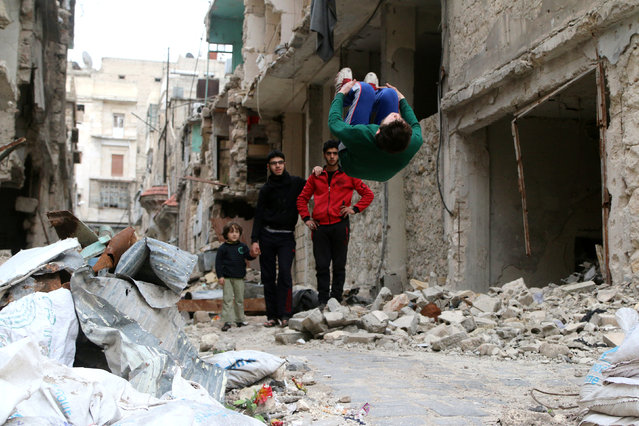
Gymnast Ahmad al-Sawas performs gymnastic moves near damaged buildings in the rebel-held Bustan al-Qasr neighbourhood of Aleppo, Syria March 26, 2016. As Syrian gymnast Ahmad al-Sawas watched his country fall apart, his Olympic dream collapsed too. The last national champion before the fighting began, he knew that supporting the anti-government side in the five-year-old civil war would prevent him from being selected for the Rio Games. “I chose to be an athlete who participates in the revolution”, said Ahmad, who trains where he can for two hours a day – be it on a mattress on a soccer field, in a local hall or somersaulting off a wall. (Photo by Abdalrhman Ismail/Reuters)

Gymnast Ahmad al-Sawas performs gymnastic moves near damaged buildings in the rebel-held Bustan al-Qasr neighbourhood of Aleppo, Syria March 26, 2016. As Syrian gymnast Ahmad al-Sawas watched his country fall apart, his Olympic dream collapsed too. The last national champion before the fighting began, he knew that supporting the anti-government side in the five-year-old civil war would prevent him from being selected for the Rio Games. (Photo by Abdalrhman Ismail/Reuters)
Details
05 Aug 2016 13:25:00
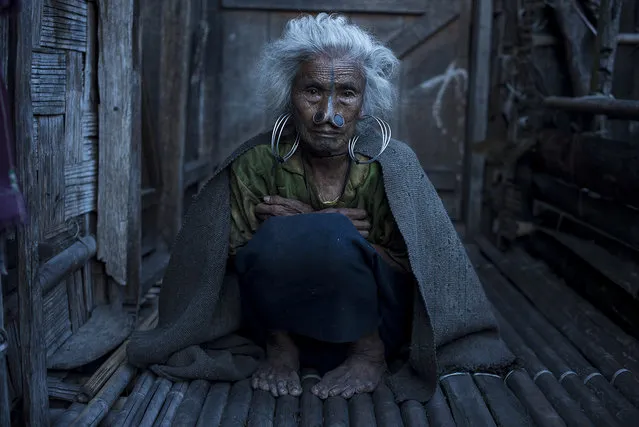
“YagYang”. The Apatani are tribal people living in north east of India in the region of Arunachal Pradesh. Tattooing and stuffing of large nose plugs is the particularity of these women. YagYang 75 years old, her husband passed away few months ago and she feels very alone, during my visit I was very fond of this woman and I wanted to spend some more time with her, so I asked her which was her favorite dish. Photo location: India. (Photo and caption by Passarini Mattia/National Geographic Photo Contest)

“YagYang”. The Apatani are tribal people living in north east of India in the region of Arunachal Pradesh. Tattooing and stuffing of large nose plugs is the particularity of these women. YagYang 75 years old, her husband passed away few months ago and she feels very alone, during my visit I was very fond of this woman and I wanted to spend some more time with her, so I asked her which was her favorite dish. The next day i returned with the fresh fish, as she mentioned, and when she saw me she was very happy and welcomed me with a big smile. Photo location: India. (Photo and caption by Passarini Mattia/National Geographic Photo Contest)
Details
05 Nov 2014 11:55:00
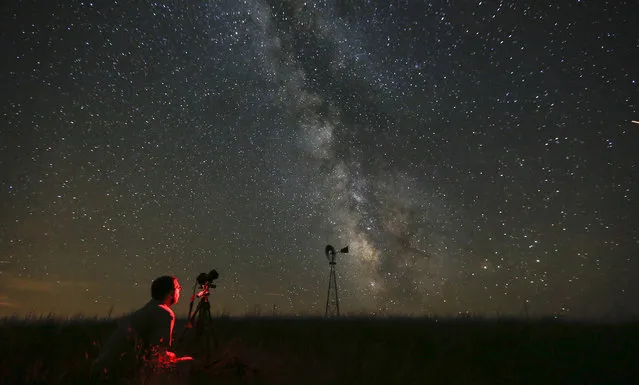
In this Wednesday, July 23, 2014 file photo, Omaha photographer Lane Hickenbottom photographs the night sky in a pasture near Callaway, Neb. With no moon in the sky, the Milky Way was visible to the naked eye. More than one-third of the world’s population can no longer see the Milky Way because of man-made lights, according to a scientific paper by Light Pollution Science and Technology Institute's Fabio Falchi and his team members, published on Friday, June 10, 2016. (Photo by Travis Heying/The Wichita Eagle via AP Photo)

In this Wednesday, July 23, 2014 file photo, Omaha photographer Lane Hickenbottom photographs the night sky in a pasture near Callaway, Neb. With no moon in the sky, the Milky Way was visible to the naked eye. More than one-third of the world’s population can no longer see the Milky Way because of man-made lights, according to a scientific paper by Light Pollution Science and Technology Institute's Fabio Falchi and his team members, published on Friday, June 10, 2016. (Photo by Travis Heying/The Wichita Eagle via AP Photo)
Details
11 Jun 2016 12:37:00