Loading...
Done
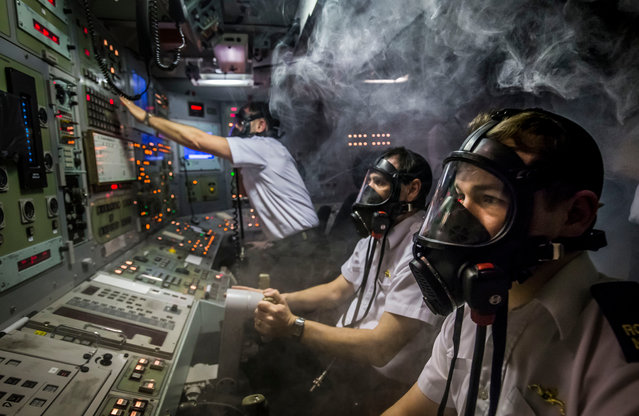
Members of the Royal Navy respond to a simulated fire in a Vanguard-class submarine control room training facility at Clyde naval base in Faslane, Scotland on January 21, 2016. (Photo by Photograph: Danny Lawson/PA Wire)

Members of the Royal Navy respond to a simulated fire in a Vanguard-class submarine control room training facility at Clyde naval base in Faslane, Scotland on January 21, 2016. (Photo by Photograph: Danny Lawson/PA Wire)
Details
22 Jan 2016 11:14:00
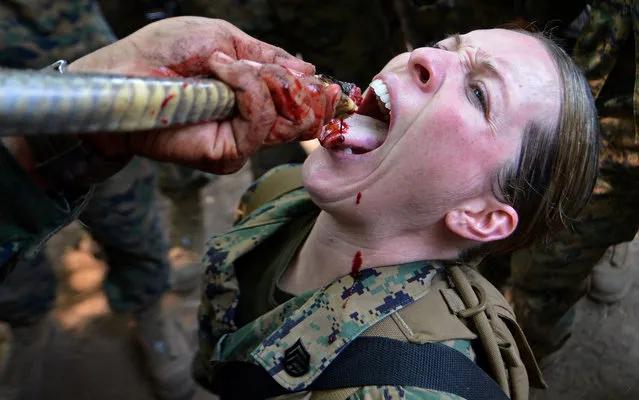
In a military base in the Thai province of Chon Buri February 20 U.S. Marines Navy with Thailand began their studies in jungle survival. The event is held in joint military exercises “Cobra Gold 2013”. During a jungle survival program February 20, 2013 taught by Royal Thai Special Forces in Sannapit, Thailand, U.S. Marines learned to catch cobras and drink their fresh blood, not to mention eat forest insects and pull the heads off of chicken. The training was part of Operation Cobra Gold 13, the 32nd edition of international military exercises hosted by the Thai. According to a U.S. Marines press release, Cobra Gold is the largest exercise of its kind in Asia and incorporates troops from five other nations in addition to the U.S. and Thailand. The Daily Mail reports that the Marines were invited to experience the local custom of drinking cobra blood after being taught to catch and kill cobras in the wild. As CNN notes, Cobra blood is believed to be a panacea and aphrodiasic in parts of Southeast Asia. In Jakarta, vendors can earn over $100 a night selling shots of cobra blood mixed with liquor. (Photo by Pornchai Kittiwongsakul/AFP Photo)

During a jungle survival program February 20, 2013 taught by Royal Thai Special Forces in Sannapit, Thailand, U.S. Marines learned to catch cobras and drink their fresh blood, not to mention eat forest insects and pull the heads off of chicken. The training was part of Operation Cobra Gold 13, the 32nd edition of international military exercises hosted by the Thai. According to a U.S. Marines press release, Cobra Gold is the largest exercise of its kind in Asia and incorporates troops from five other nations in addition to the U.S. and Thailand. The Daily Mail reports that the Marines were invited to experience the local custom of drinking cobra blood after being taught to catch and kill cobras in the wild. As CNN notes, Cobra blood is believed to be a panacea and aphrodiasic in parts of Southeast Asia. In Jakarta, vendors can earn over $100 a night selling shots of cobra blood mixed with liquor. (Photo by Pornchai Kittiwongsakul/AFP Photo)
Details
23 Feb 2013 11:52:00
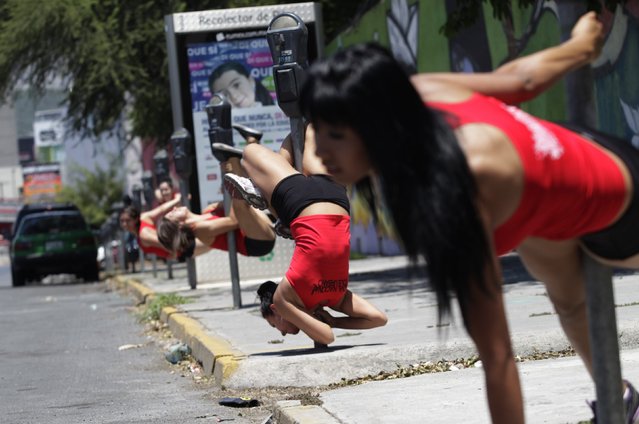
Women perform a pole dancing routine during the national day celebration of “Urban Pole” dance along a street in Monterrey, Mexico, on June 9, 2013. (Photo by Daniel Becerril/Reuters)

Women perform a pole dancing routine during the national day celebration of “Urban Pole” dance along a street in Monterrey, Mexico, on June 9, 2013. (Photo by Daniel Becerril/Reuters)
Details
15 Jun 2013 11:21:00
Kang Na-ra, a North Korean defector who is now a beauty YouTuber, points at her lips after putting on a lipstick made by North Korea, in Seoul, South Korea, June 11, 2019. (Photo by Kim Hong-Ji/Reuters)

Kang Na-ra, a North Korean defector who is now a beauty YouTuber, points at her lips after putting on a lipstick made by North Korea, in Seoul, South Korea, June 11, 2019. (Photo by Kim Hong-Ji/Reuters)
Details
06 Dec 2019 00:05:00
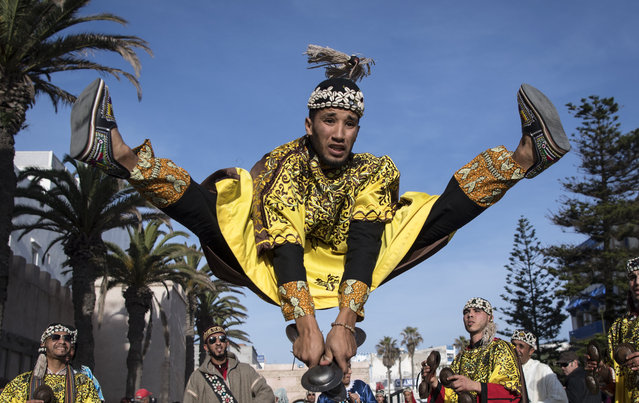
A Gnawa traditional group performs in the city of Essaouira on December 14, 2019, to celebrate the decision of adding the Gnawa culture to UNESCO's list of Intangible Cultural Heritage of Humanity. Gnawa culture, a centuries-old Moroccan practice rooted in music, African rituals and Sufi traditions, was added to UNESCO's list of Intangible Cultural Heritage of Humanity earlier in the week. Gnawa refers to a “set of musical productions, fraternal practices and therapeutic rituals where the secular mixes with the sacred”, according to the nomination submitted by Morocco. Often dressed in colourful outfits, Gnawa musicians play the guenbri, a type of lute with three strings, accompanied by steel castanets called krakebs. (Photo by Fadel Senna/AFP Photo)

A Gnawa traditional group performs in the city of Essaouira on December 14, 2019, to celebrate the decision of adding the Gnawa culture to UNESCO's list of Intangible Cultural Heritage of Humanity. Gnawa culture, a centuries-old Moroccan practice rooted in music, African rituals and Sufi traditions, was added to UNESCO's list of Intangible Cultural Heritage of Humanity earlier in the week. Gnawa refers to a “set of musical productions, fraternal practices and therapeutic rituals where the secular mixes with the sacred”, according to the nomination submitted by Morocco. Often dressed in colourful outfits, Gnawa musicians play the guenbri, a type of lute with three strings, accompanied by steel castanets called krakebs. (Photo by Fadel Senna/AFP Photo)
Details
18 Dec 2019 00:05:00
Julia Marino of USA in action during the final run of the snowboard slopestyle competition at the Laax Open, in Laax, Switzerland, 17 January 2020. (Photo by Gian Ehrenzeller/EPA/EFE/Rex Features/Shutterstock)

Julia Marino of USA in action during the final run of the snowboard slopestyle competition at the Laax Open, in Laax, Switzerland, 17 January 2020. (Photo by Gian Ehrenzeller/EPA/EFE/Rex Features/Shutterstock)
Details
20 Jan 2020 00:01:00
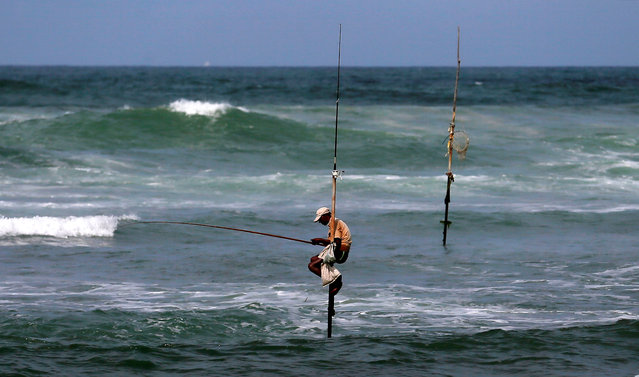
A fisherman waits to catch fish as he sits atop a stilt in the sea in Koggala, Sri Lanka on July 4, 2019. (Photo by Dinuka Liyanawatte/Reuters)

A fisherman waits to catch fish as he sits atop a stilt in the sea in Koggala, Sri Lanka on July 4, 2019. (Photo by Dinuka Liyanawatte/Reuters)
Details
11 Feb 2020 00:03:00
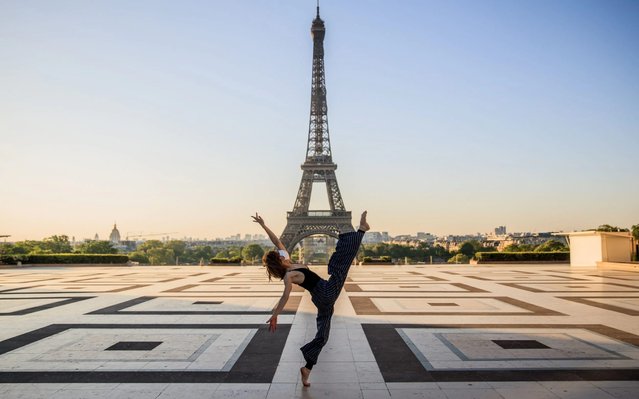
Syrian dancer and choreographer Yara al-Hasbani performs a dance on the empty Trocadero square in front of the Eiffel tower in Paris on April 22, 2020, on the 37th day of a strict lockdown in France to stop the spread of COVID-19 (novel coronavirus). (Photo by Sameer Al-Doumy/AFP Photo)

Syrian dancer and choreographer Yara al-Hasbani performs a dance on the empty Trocadero square in front of the Eiffel tower in Paris on April 22, 2020, on the 37th day of a strict lockdown in France to stop the spread of COVID-19 (novel coronavirus). (Photo by Sameer Al-Doumy/AFP Photo)
Details
26 Apr 2020 00:07:00