Loading...
Done
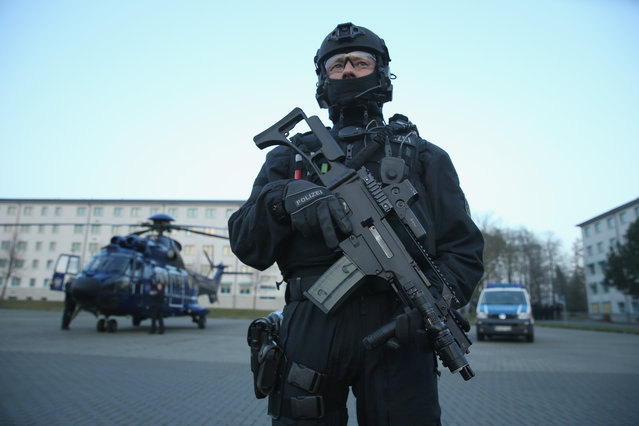
Members of the new BFEplus anti-terror unit of the German federal police holds a G36C automatic weapon after taking part in a capabilities demonstration at a police training facility on December 16, 2015 in Ahrensfelde, Germany. The BFEplus, whose acronym stands for Beweissicherungs und Festnahme Einheit, or Evidence Safeguarding and Arrest Unit, is to support the GSG9 police special forces unit in containing domestic terror threats. Germany is on high-alert following the November Paris terror attacks and a credible threat at the Germany vs. Holland football match in Hanover. (Photo by Sean Gallup/Getty Images)

Members of the new BFEplus anti-terror unit of the German federal police holds a G36C automatic weapon after taking part in a capabilities demonstration at a police training facility on December 16, 2015 in Ahrensfelde, Germany. The BFEplus, whose acronym stands for Beweissicherungs und Festnahme Einheit, or Evidence Safeguarding and Arrest Unit, is to support the GSG9 police special forces unit in containing domestic terror threats. Germany is on high-alert following the November Paris terror attacks and a credible threat at the Germany vs. Holland football match in Hanover. (Photo by Sean Gallup/Getty Images)
Details
18 Dec 2015 08:01:00
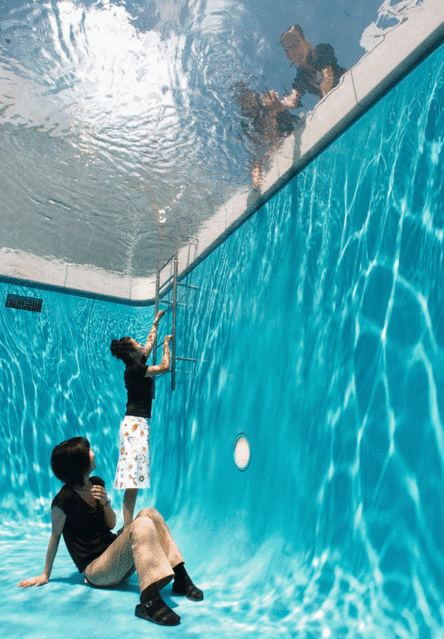
Swimming Pool Art Installation by Leandro Erlich

In one of the Museum’s courtyards is a swimming pool framed by a limestone deck. When seen from the deck, the pool appears to be filled with deep, shimmering water. In fact, however, a layer of water only some 10 centimeters deep is suspended over transparent glass. Below the glass is an empty space with aquamarine walls that viewers can enter. The work sets up an unfolding sequence of experiences—we view the pool through the glass wall enclosing the courtyard; from the deck, looking down into the pool; and from the interior of the pool, looking up. The Swimming Pool might hence be considered a place where, slowly, with time, different perspectives and perceptions of self and others all come to intersect.
Details
25 Aug 2012 07:31:00
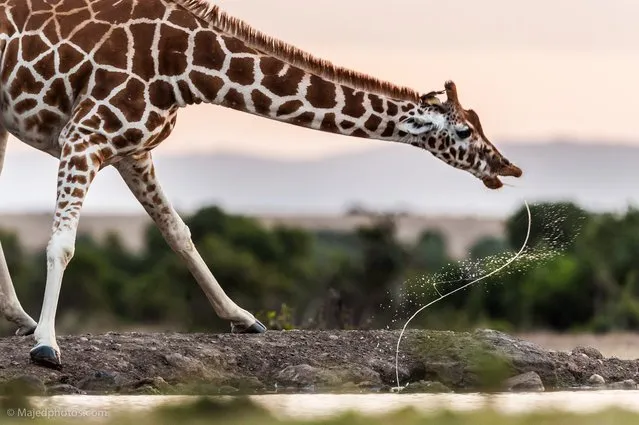
“We just want to move to search to the Leopard at that morning but we found a group of giraffes come toward a small lake and start drinking it was a nice moment when the Giraffe finish from drinking and leave a letters S with motion in the air”. (Photo and caption by Majed Ali)

National Geographic invites photographers from around the world to enter the 2013 National Geographic Photography Contest. The grand-prize winner will receive $10,000 (USD) and a trip to National Geographic headquarters in Washington, D.C., to participate in the annual National Geographic Photography Seminar in January 2014. Photo: “We just want to move to search to the Leopard at that morning but we found a group of giraffes come toward a small lake and start drinking it was a nice moment when the Giraffe finish from drinking and leave a letters “S” with motion in the air”. (Photo and caption by Majed Ali/National Geographic Photography Contest)
Details
15 Nov 2013 14:34:00


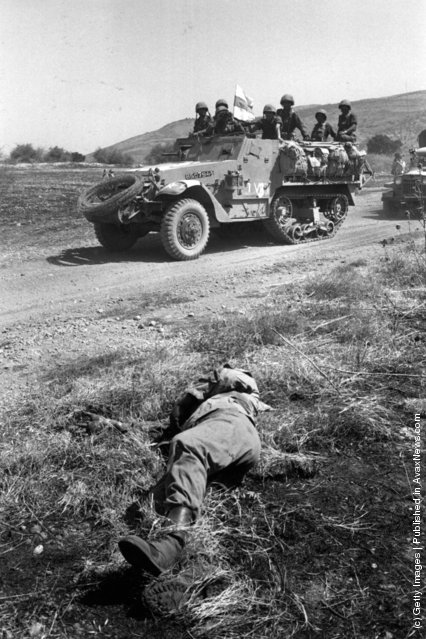
“The Six-Day War or June War, also known as the 1967 Arab-Israeli War or the Third Arab-Israeli War, was fought between June 5 and June 10, 1967, by Israel and the neighboring states of Egypt (known then as the United Arab Republic [UAR]), Jordan, and Syria. The war began with a large-scale surprise air strike by Israel on Egypt. The outcome was a swift and decisive Israeli victory. Israel took effective control of the Gaza Strip and the Sinai Peninsula from Egypt, the West Bank and East Jerusalem from Jordan, and the Golan Heights from Syria. Opinions are divided on whether Israel's attack was an act of aggression or a preemptive strike of a defensive nature”. – Wikipedia

Photo: The corpse of a soldier lying on the line of the Israeli advance into Syria during the Six-Day War. (Photo by Terry Fincher/Getty Images). 1967
Details
21 May 2011 08:29:00
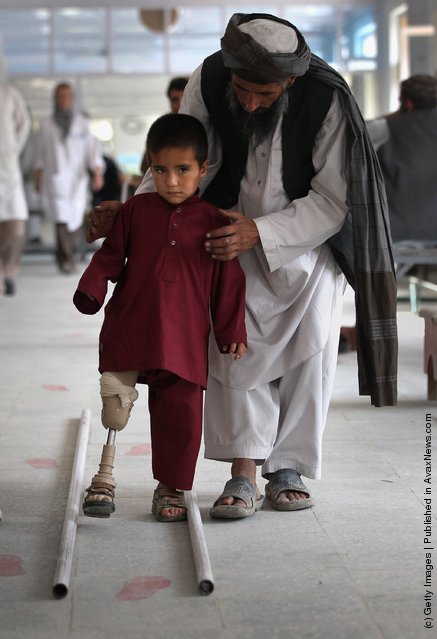
Afghan war amputees

An Afghan child practices walking with his new prosthesis at the International Committee of the Red Cross (ICRC), orthopedic center on September 10, 2011 in Kabul, Afghanistan. After more than 30 years of war and a decade since the 9/11 attacks in the United States, thousands of Afghans, both military and civilian, continue to pay a heavy price from the conflict. The ICRC center makes prosthetics for amputees and helps them, as well as Afghans with spinal injuries and children with congenital birth defects, to learn to walk. (Photo by John Moore/Getty Images)
Details
11 Sep 2011 09:56:00
Magnetic Wallpaper By Sian Zeng

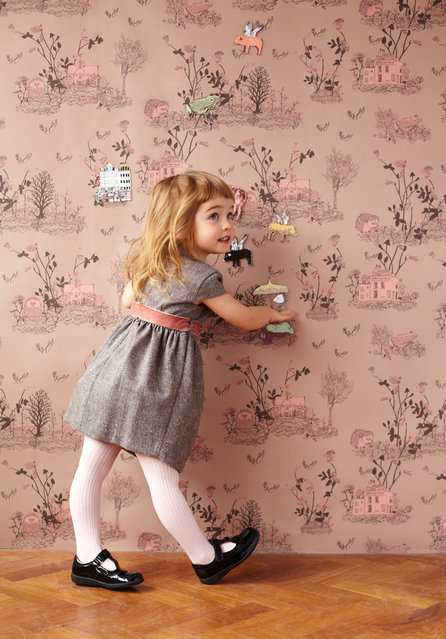
Magnetic Woodlands Wallpaper by Sian Zeng. This magnetic wallpaper will bring fairy tales to life in a child's room. Magical woodlands wallpaper in toile style printed in England with eco friendly inks on paper from sustainable forests. Roll dimensions : 52cm X 10 M Length. Repeat size: 53cm half drop. Magnet receptive liner: 61cm width (no pattern repeat) 2x5m roll a total of 10m. The magnet receptive liner is pasted onto the wall first with pre-mixed wallpaper paste. Once it has dried the Woodlands Wallpaper is pasted on top to create this magnetic woodlands wall.
Details
20 May 2014 10:00:00
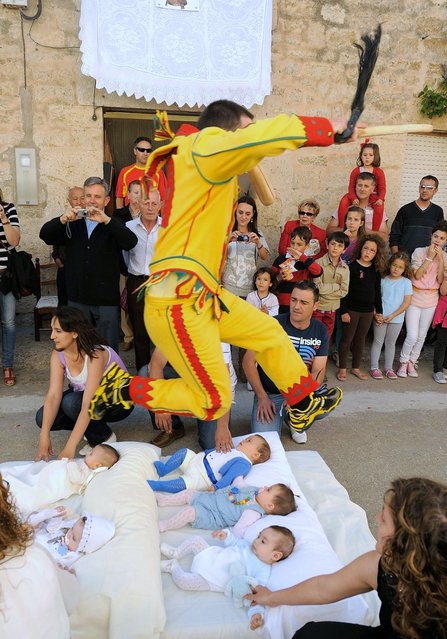
A man representing the devil leaps over babies during the festival of El Colacho in Castrillo de Murcia near Burgos, Spain

A man representing the devil leaps over babies during the festival of El Colacho on June 10, 2012 in Castrillo de Murcia near Burgos, Spain. The festival, held on the first Sunday after Corpus Cristi, represents the devil taking away original sin from the newly born babies by leaping over them. (Photo by Denis Doyle)
Details
11 Jun 2012 10:45:00
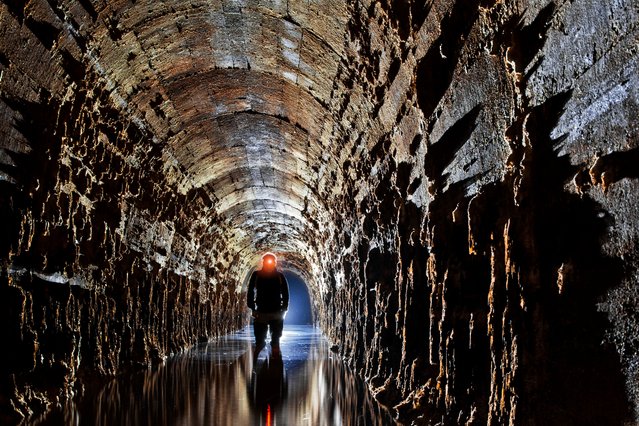
Regenwurmlager, Poland. The Regenwurmlager is an extensive underground fortification area constructed by Germany in 1920s-1940s, now in western Poland, near the city of Międzyrzecz. (Photo by Anna Arinova/Caters News)

Stunning silhouettes under European cities reveal the size and splendor of the continent’s urban foundations. Photographer and content-manager Anna Arinova, 28, from Moscow, captured the awe-inspiring labyrinths in Russia and Germany. Here: Regenwurmlager, Poland. The Regenwurmlager is an extensive underground fortification area constructed by Germany in 1920s-1940s, now in western Poland, near the city of Międzyrzecz. (Photo by Anna Arinova/Caters News)
Details
29 Dec 2016 07:53:00