Loading...
Done
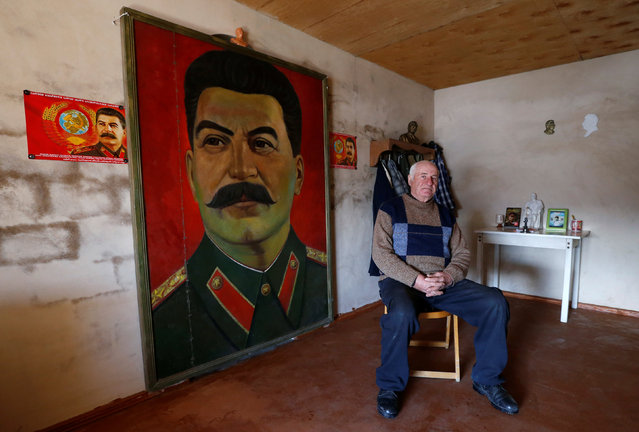
Retired builder Vasili Sidamonidze, 70, poses for a portrait at his home in Gori, Georgia, December 6, 2016. “Unfortunately, Stalin is not popular nowadays. Our people don't respect him. Only we, members of the (Communist) Party, respect him”, Sidamonidze said. “I always try to attend Stalin's birthday anniversaries in Gori. Unfortunately many people don't want to join us even if they live nearby. They look at us from their windows”. Stalin, who was born in Gori in 1878 and died in 1953, is largely reviled today in Georgia, which regained its independence during the 1991 collapse of the Soviet Union. Over the years, his memorials have been dismantled, most recently in 2010 when authorities removed a statue of the dictator from Gori's central square. But Stalin is still revered by a small group of mainly elderly supporters who stress his role in the industrialisation of the Soviet Union and in defeating Nazi Germany in World War Two. Each Dec. 21, a few dozen people mark his birthday by gathering outside a Gori museum dedicated to Stalin, where they make speeches and walk to the square where a 6-meter-high bronze statue of him once stood, calling for it to be reinstated. Opponents say it was a symbol of Moscow's still lingering shadow. In 2008, Russia fought a brief war with Georgia and recognised its breakaway regions of Abkhazia and South Ossetia as independent states. (Photo by David Mdzinarishvili/Reuters)

Retired builder Vasili Sidamonidze, 70, poses for a portrait at his home in Gori, Georgia, December 6, 2016. “Unfortunately, Stalin is not popular nowadays. Our people don't respect him. Only we, members of the (Communist) Party, respect him”, Sidamonidze said. “I always try to attend Stalin's birthday anniversaries in Gori. Unfortunately many people don't want to join us even if they live nearby. They look at us from their windows”. (Photo by David Mdzinarishvili/Reuters)
Details
17 Dec 2016 07:59:00
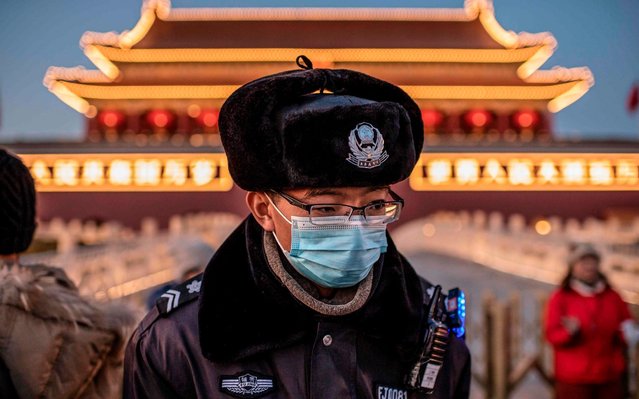
A police officer wearing a protective mask walks past the portrait of late communist leader Mao Zedong (not pictured) at Tiananmen Gate in Beijing on January 23, 2020. Large-scale Lunar New Year events in Beijing have been cancelled as part of national efforts to control the spread of a new SARS-like virus, city authorities announced on January 23. (Photo by Nicolas Asfouri/AFP Photo)

A police officer wearing a protective mask walks past the portrait of late communist leader Mao Zedong (not pictured) at Tiananmen Gate in Beijing on January 23, 2020. Large-scale Lunar New Year events in Beijing have been cancelled as part of national efforts to control the spread of a new SARS-like virus, city authorities announced on January 23. (Photo by Nicolas Asfouri/AFP Photo)
Details
25 Jan 2020 00:03:00
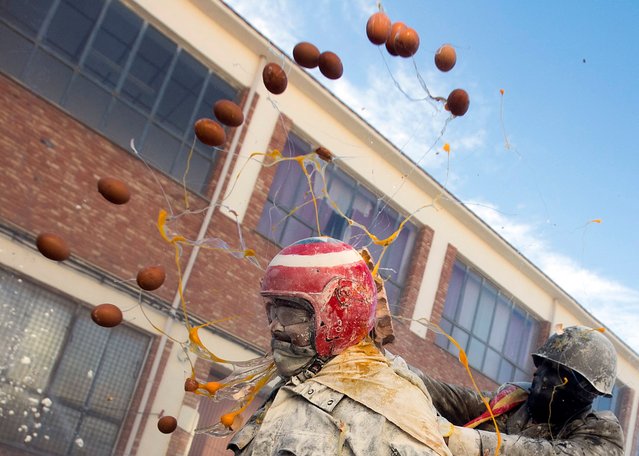
Revellers dressed in mock military garb take part in “Els Enfarinats” food-battle in the southeastern Spanish town of Ibi on December 28, 2022. (Photo by Jaime Reina/AFP Photo)

Revellers dressed in mock military garb take part in “Els Enfarinats” food-battle in the southeastern Spanish town of Ibi on December 28, 2022. (Photo by Jaime Reina/AFP Photo)
Details
30 Dec 2022 06:08:00
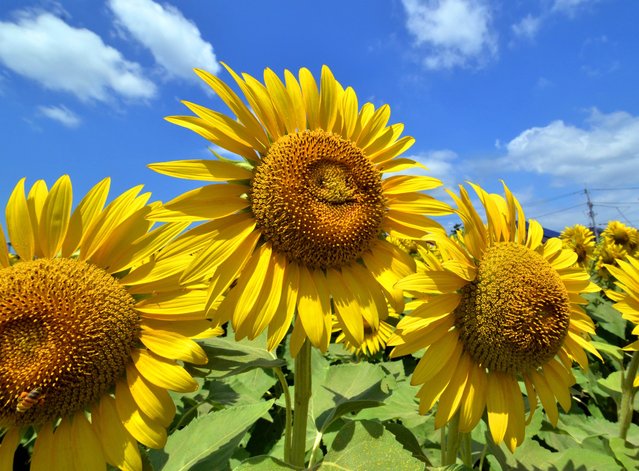
A sunflower “smiles” in a field in Tokyo on August 7, 2014. Some 20,000 sunflowers were enjoyed by visitors to the area this week. (Photo by Yoshikazu Tsuno/AFP Photo)

A sunflower “smiles” in a field in Tokyo on August 7, 2014. Some 20,000 sunflowers were enjoyed by visitors to the area this week. (Photo by Yoshikazu Tsuno/AFP Photo)
Details
09 Aug 2014 11:07:00
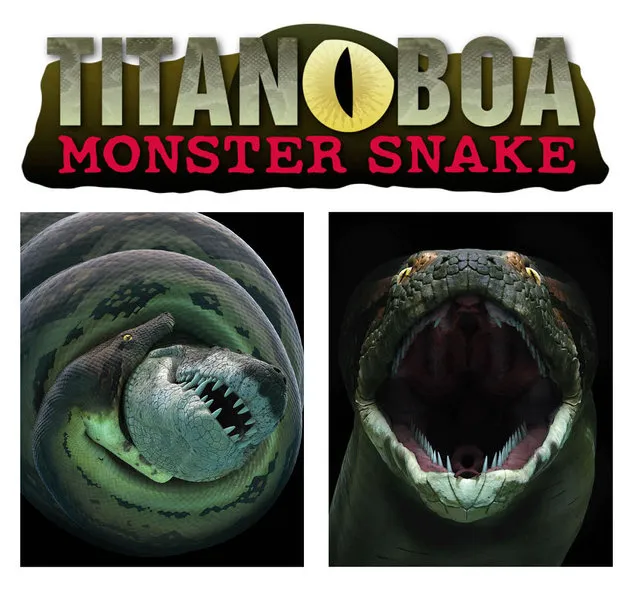
Titanoboa: Monster Snake

Titanoboa, meaning "titanic boa," is an extinct genus of snake that lived approximately 60–58 million years ago, during the Paleocene epoch, a 10-million-year period immediately following the dinosaur extinction event. The only known species is Titanoboa cerrejonensis, the largest, longest, and heaviest snake ever discovered, which supplanted the previous record holder, Gigantophis.

A full-scale model of the snake was unveiled at New York City's Grand Central station before the exhibit opens at the Smithsonian in Washington DC.
Details
06 Feb 2014 12:38:00
Argentine Spanish model Georgina Rodriguez arrives on September 1, 2022 for the screening of the film “Tar” presented in the Venezia 79 competition at the 79th Venice International Film Festival at Lido di Venezia in Venice, Italy. (Photo by Guglielmo Mangiapane/Reuters)

Argentine Spanish model Georgina Rodriguez arrives on September 1, 2022 for the screening of the film “Tar” presented in the Venezia 79 competition at the 79th Venice International Film Festival at Lido di Venezia in Venice, Italy. (Photo by Guglielmo Mangiapane/Reuters)
Details
03 Sep 2022 05:48:00
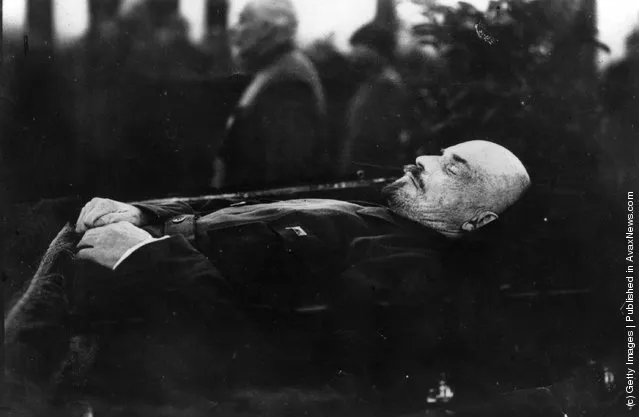
1924:  Vladimir Ilyich Lenin lying in state in the Kremlin

Photo: Vladimir Ilyich Lenin (1870 – 1924) lying in state in the Kremlin. (Photo by Hulton Archive/Getty Images). 1924

Important! For the same article in Russian language click here.

Something quite intriguing is happening within Russian-speaking internet during the last few – should you type a fully academic inquiry (at least, according to Russian academic requirements) in national search engines for "Lenin's mausoleum" – the first thing you get (even in top 10 searches) is website pages talking about black magic and occult. Website authors view this construction differently, but unconditionally agree on one thing: the mausoleum of the "leader of the world proletariat” – the essence of a magical artifact, a sort of “energy vampire”. It was built with a certain purpose: to drain the energy out of miserable Soviet citizens on one hand; and to poison the anthroposphere of one-sixth part of the earth with its vibes (the exact territory that was occupied by the former Soviet Union), depriving the Russian people of will to resist on the other hand. Complete nonsense? No doubt. Nevertheless, an intriguing one. Well, probably because some oddities do exist in mausoleum's history. These oddities are the thing we are going to discuss this time. First, let me refresh you memory on the subject.
Details
16 Oct 2011 11:27:00
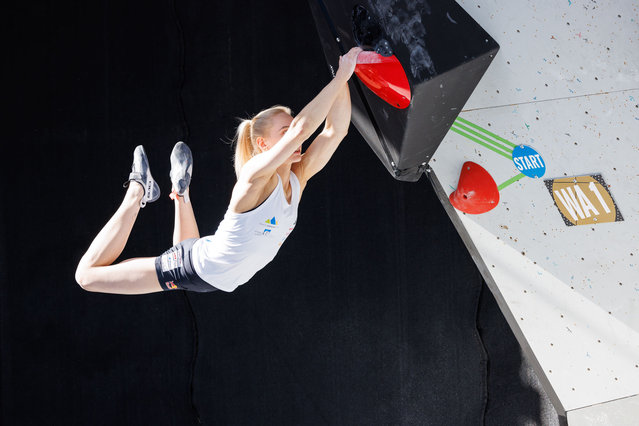
Janja Garnbret of Slovenia competes during the women's boulder qualification of the IFSC World Cup Innsbruck 2024 on June 26, 2024 in Innsbruck, Austria. (Photo by Marco Kost/Getty Images)

Janja Garnbret of Slovenia competes during the women's boulder qualification of the IFSC World Cup Innsbruck 2024 on June 26, 2024 in Innsbruck, Austria. (Photo by Marco Kost/Getty Images)
Details
18 Jul 2024 05:09:00