Loading...
Done
This photo taken on February 26, 2019 shows an aerial view of a tea field in Zhangping in China's eastern Fujian province. (Photo by AFP Photo/China Stringer Network)

This photo taken on February 26, 2019 shows an aerial view of a tea field in Zhangping in China's eastern Fujian province. (Photo by AFP Photo/China Stringer Network)
Details
26 Jun 2019 00:01:00
Participants from a North Korea military band perform during the Spasskaya Tower international military music festival in Red Square in Moscow, Russia, Friday, August 23, 2019. (Photo by Alexander Zemlianichenko/AP Photo)

Participants from a North Korea military band perform during the Spasskaya Tower international military music festival in Red Square in Moscow, Russia, Friday, August 23, 2019. (Photo by Alexander Zemlianichenko/AP Photo)
Details
26 Aug 2019 00:05:00
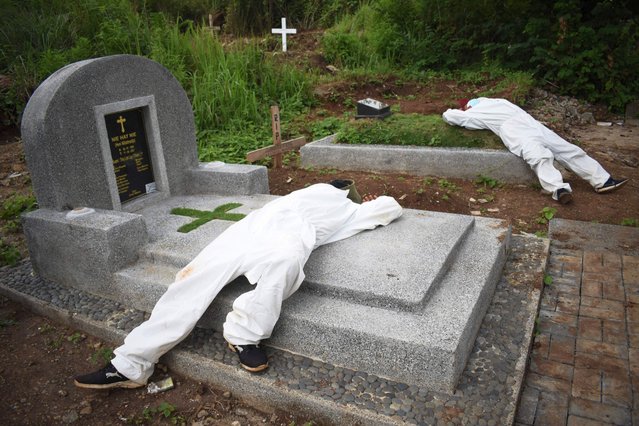
Exhausted grave diggers rest in between funerals at a cemetery designated for Covid-19 victims in Bandung on June 15, 2021, as infection numbers soar in Indonesia. (Photo by Timur Matahari/AFP Photo)

Exhausted grave diggers rest in between funerals at a cemetery designated for Covid-19 victims in Bandung on June 15, 2021, as infection numbers soar in Indonesia. (Photo by Timur Matahari/AFP Photo)
Details
16 Jun 2021 10:33:00
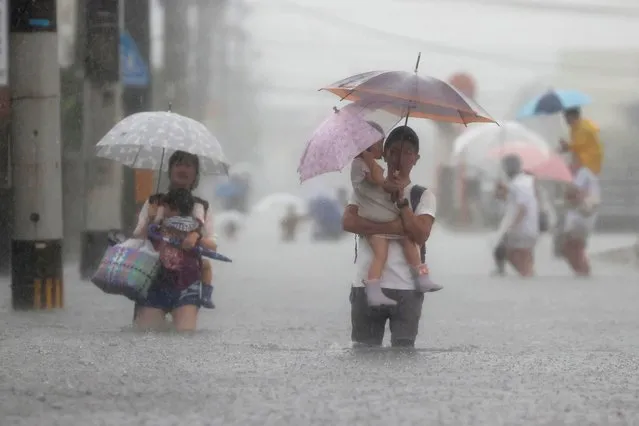
People wade through a road flooded by heavy rain in Kurume, Fukuoka prefecture, western Japan, Saturday, August 14, 2021. Torrential rain pounding southwestern Japan triggered a mudslide early Friday that swallowed some people and was threatening to cause flooding and more landslides in the region. (Photo by Kyodo News via AP Photo)

People wade through a road flooded by heavy rain in Kurume, Fukuoka prefecture, western Japan, Saturday, August 14, 2021. Torrential rain pounding southwestern Japan triggered a mudslide early Friday that swallowed some people and was threatening to cause flooding and more landslides in the region. (Photo by Kyodo News via AP Photo)
Details
14 Aug 2021 08:35:00
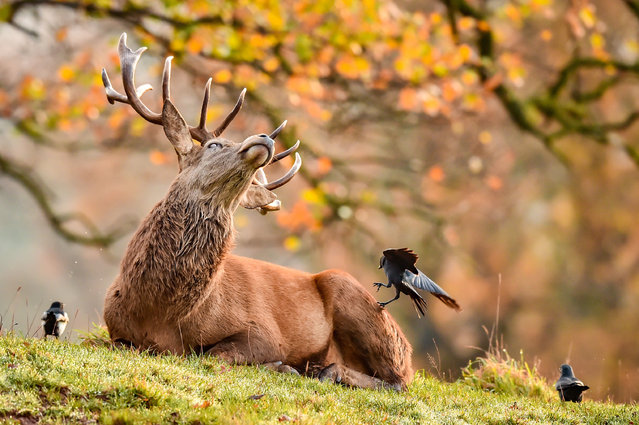
A stag reacts as magpies and crows fuss over a resting stag as they feed on ticks from the fur of the deer herd roaming on the Ashton Court Estate, Bristol, in crisp and cold Autumnal weather on November 23, 2020. (Photo by Ben Birchall/PA Images via Getty Images)

A stag reacts as magpies and crows fuss over a resting stag as they feed on ticks from the fur of the deer herd roaming on the Ashton Court Estate, Bristol, in crisp and cold Autumnal weather on November 23, 2020. (Photo by Ben Birchall/PA Images via Getty Images)
Details
29 Nov 2020 00:03:00
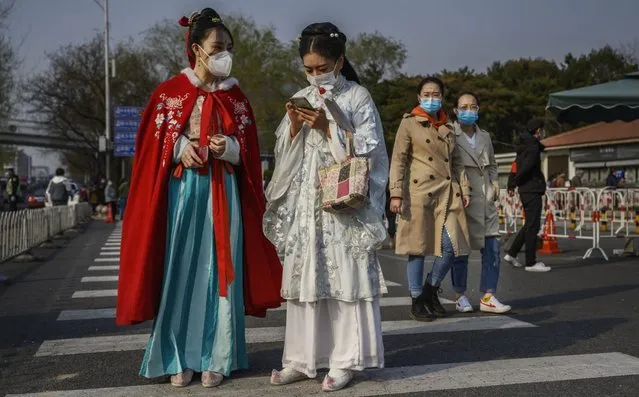
Chinese women wear protective masks as they are dressed in traditional clothing from the Qing Dynasty era outside a park on March 29, 2020 in Beijing, China. A limited section of the iconic tourist site was re-opened to the public this week allowing a smaller number of visitors to reserve tickets online in advance and to enter after passing health screening. With the pandemic hitting hard across the world, China recorded its first day with no new domestic cases of the coronavirus last week, since the government imposed sweeping measures to keep the disease from spreading. For two months, millions of people across China have been restricted in how they move from their homes, while other cities have been locked down in ways that appeared severe at the time but are now being replicated in other countries trying to contain the virus. Officials believe the worst appears to be over in China, though there are concerns of another wave of infections as the government attempts to reboot the worlds second largest economy. In Beijing, it is mandatory to wear masks outdoors, retail stores operate on reduced hours, restaurants employ social distancing among patrons, and tourist attractions at risk of drawing large crowds remain closed. Monitoring and enforcement of virus-related measures and the quarantine of anyone arriving to Beijing is carried out by neighborhood committees and a network of Communist Party volunteers who wear red arm bands. A primary concern for Chinese authorities remains the arrival of flights from Europe and elsewhere, given the exposure of passengers in regions now regarded as hotbeds for transmission. Since January, China has recorded more than 81,000 cases of COVID-19 and at least 3200 deaths, mostly in and around the city of Wuhan, in central Hubei province, where the outbreak first started. (Photo by Kevin Frayer/Getty Images)

Chinese women wear protective masks as they are dressed in traditional clothing from the Qing Dynasty era outside a park on March 29, 2020 in Beijing, China. A limited section of the iconic tourist site was re-opened to the public this week allowing a smaller number of visitors to reserve tickets online in advance and to enter after passing health screening. (Photo by Kevin Frayer/Getty Images)
Details
01 Apr 2020 00:05:00
A vendor wearing a protective face mask looks out of her store selling sugar-coated haws on a stick in Beijing, Sunday, April 12, 2020. (Photo by Andy Wong/AP Photo)

A vendor wearing a protective face mask looks out of her store selling sugar-coated haws on a stick in Beijing, Sunday, April 12, 2020. (Photo by Andy Wong/AP Photo)
Details
01 May 2020 00:05:00
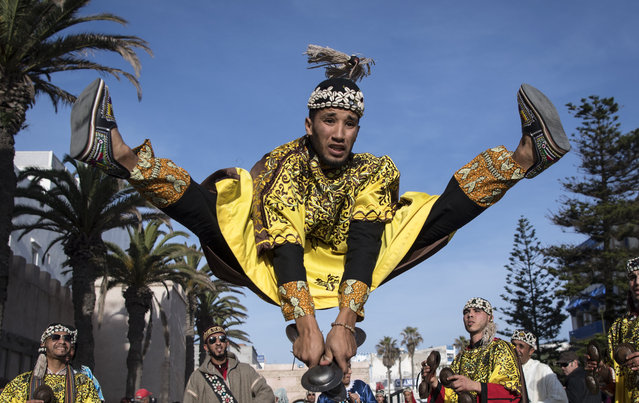
A Gnawa traditional group performs in the city of Essaouira on December 14, 2019, to celebrate the decision of adding the Gnawa culture to UNESCO's list of Intangible Cultural Heritage of Humanity. Gnawa culture, a centuries-old Moroccan practice rooted in music, African rituals and Sufi traditions, was added to UNESCO's list of Intangible Cultural Heritage of Humanity earlier in the week. Gnawa refers to a “set of musical productions, fraternal practices and therapeutic rituals where the secular mixes with the sacred”, according to the nomination submitted by Morocco. Often dressed in colourful outfits, Gnawa musicians play the guenbri, a type of lute with three strings, accompanied by steel castanets called krakebs. (Photo by Fadel Senna/AFP Photo)


A Gnawa traditional group performs in the city of Essaouira on December 14, 2019, to celebrate the decision of adding the Gnawa culture to UNESCO's list of Intangible Cultural Heritage of Humanity. Gnawa culture, a centuries-old Moroccan practice rooted in music, African rituals and Sufi traditions, was added to UNESCO's list of Intangible Cultural Heritage of Humanity earlier in the week. Gnawa refers to a “set of musical productions, fraternal practices and therapeutic rituals where the secular mixes with the sacred”, according to the nomination submitted by Morocco. Often dressed in colourful outfits, Gnawa musicians play the guenbri, a type of lute with three strings, accompanied by steel castanets called krakebs. (Photo by Fadel Senna/AFP Photo)

Details
18 Dec 2019 00:05:00