Loading...
Done
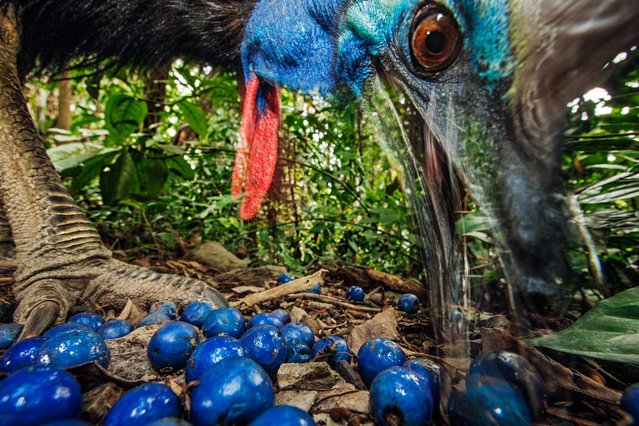
“Cassowaries are large, flightless birds related to emus and (more distantly) to ostriches, rheas, and kiwis”, writes Olivia Judson in the September issue of National Geographic magazine. (Photo by Christian Ziegler/National Geographic)

“Cassowaries are large, flightless birds related to emus and (more distantly) to ostriches, rheas, and kiwis”, writes Olivia Judson in the September issue of National Geographic magazine. How large? People-size: Adult males stand well over five foot five and top 110 pounds. Females are even taller, and can weigh more than 160 pounds. Dangerous when roused, they’re shy and peaceable when left alone. But even birds this big and tough are prey to habitat loss. The dense New Guinea and Australia rain forests where they live have dwindled. Today cassowaries might number 1,500 to 2,000. And because they help shape those same forests – by moving seeds from one place to another – “if they vanish”, Judson writes, “the structure of the forest would gradually change” too. (Photo by Christian Ziegler/National Geographic)
Details
06 Jan 2014 12:21:00


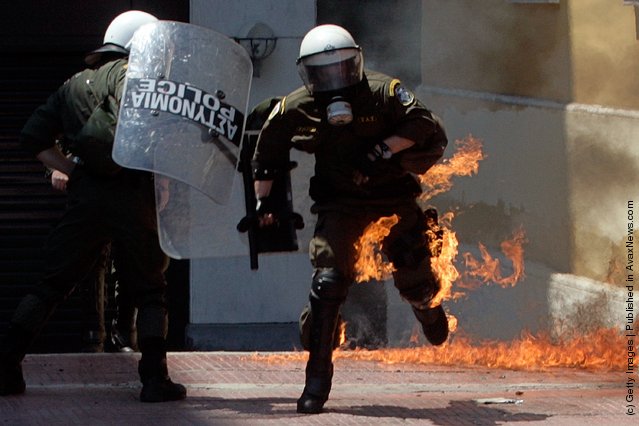
A protester uses molotov cocktails against riot police during May Day protests on May 1, 2010 in Athens, Greece. (Photo by Milos Bicanski /Getty Images)
Details
16 Jun 2011 11:02:00
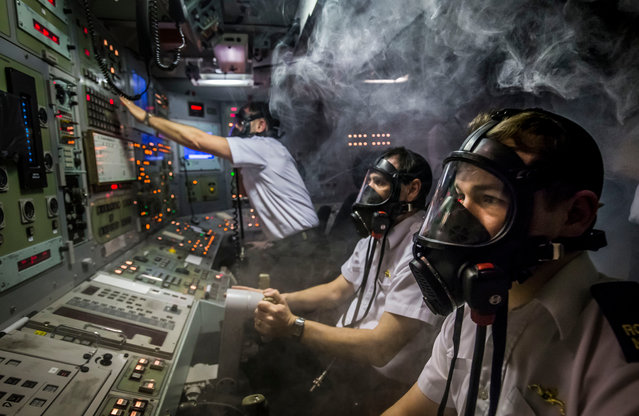
Members of the Royal Navy respond to a simulated fire in a Vanguard-class submarine control room training facility at Clyde naval base in Faslane, Scotland on January 21, 2016. (Photo by Photograph: Danny Lawson/PA Wire)

Members of the Royal Navy respond to a simulated fire in a Vanguard-class submarine control room training facility at Clyde naval base in Faslane, Scotland on January 21, 2016. (Photo by Photograph: Danny Lawson/PA Wire)
Details
22 Jan 2016 11:14:00
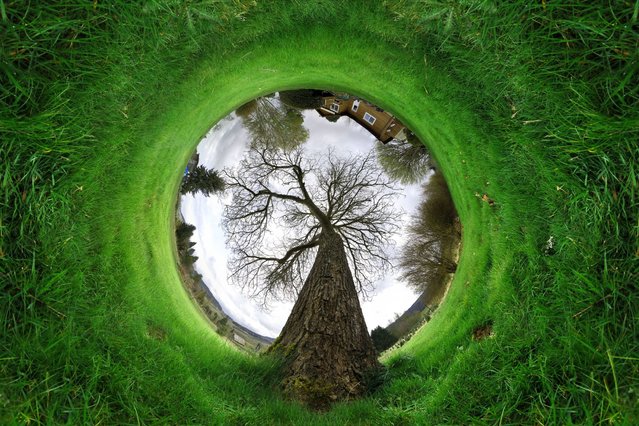
This incredible panoramic photographs are distorted to create miniature worlds and terrifying tunnels. (Photo by Caters News)

This incredible panoramic photographs are distorted to create miniature worlds and terrifying tunnels. (Photo by Caters News)
Details
25 Jan 2014 12:16:00
Lost City Shicheng found Underwater in China

Qiandao Lake (Chinese: 千島湖, lit. Thousand Island Lake), a man-made lake located in Chun'an County, Zhejiang, China, formed after the completion of the Xin'an River hydroelectric station in 1959. 1,078 large islands dot the lake and a few thousand smaller ones are scattered across it. The lake covers an area of 573 km² and has a storage capacity of 17.8 km³. The islands in the lake cover about 86 km²
Details
07 Feb 2014 13:25:00
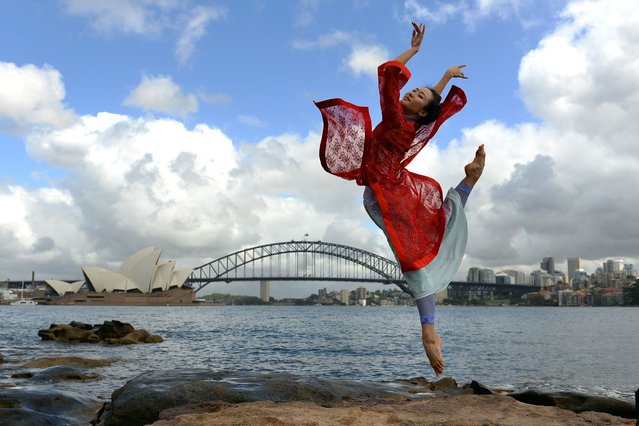
Performer Zhang Yashu from a Chinese ballet company perform during a photo shoot in front of the Australia's iconic landmarks Opera House (L) and Habour Bridge in Sydney on February 17, 2014. One of China's celebrated dance campanies is bringing one of the country's biggest ballet production to Australia for a series of performances in Sydney and Melbourne. (Photo by Saeed Khan/AFP Photo)

Performer Zhang Yashu from a Chinese ballet company perform during a photo shoot in front of the Australia's iconic landmarks Opera House (L) and Habour Bridge in Sydney on February 17, 2014. One of China's celebrated dance campanies is bringing one of the country's biggest ballet production to Australia for a series of performances in Sydney and Melbourne. (Photo by Saeed Khan/AFP Photo)
Details
22 Feb 2014 13:27:00
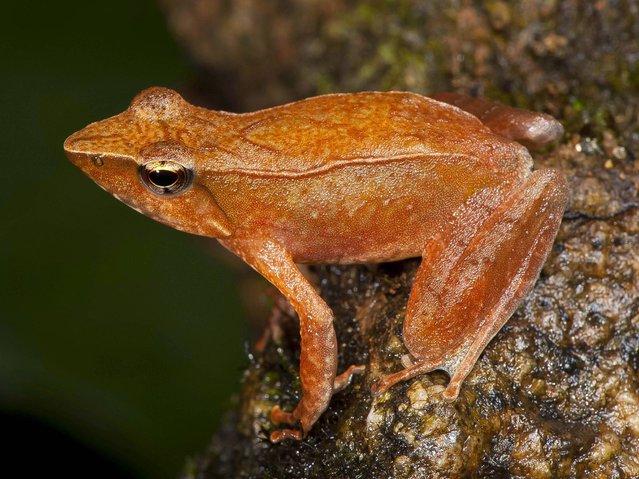
Orange dancing frog discovered by a team headed by University of Delhi professor Sathyabhama Das Biju in the jungle mountains of southern India. (Photo by Satyabhama Das Biju/AP Photo)

This undated photograph shows one of the 14 new species of so-called dancing frogs discovered by a team headed by University of Delhi professor Sathyabhama Das Biju in the jungle mountains of southern India. The study listing the new species brings the number of known Indian dancing frogs to 24 and attempts the first near-complete taxonomic sampling of the single-genus family found exclusively in southern India's lush mountain range called the Western Ghats, which stretches 1,600 kilometers (990 miles) from the west state of Maharashtra down to the country's southern tip. (Photo by Satyabhama Das Biju/AP Photo)
Details
09 May 2014 08:50:00
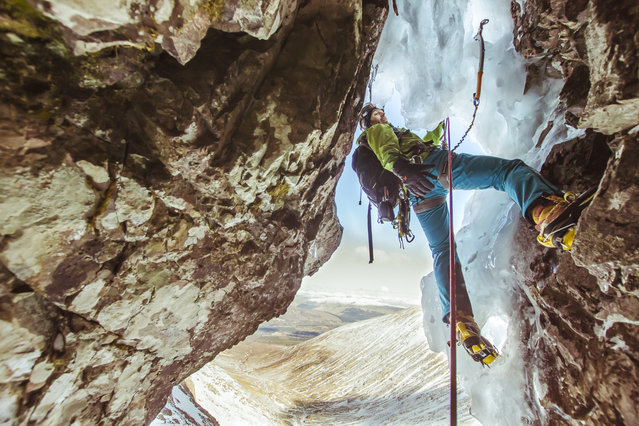
“Winter Climbing from inside Ben Nevis”. The view from inside the mountain, as a winter climber passes through the cave on Minus Three gully. Photo location: Ben Nevis, Fort William, Scotland. (Photo and caption by Daniel Wildey/National Geographic Photo Contest)

“Winter Climbing from inside Ben Nevis”. The view from inside the mountain, as a winter climber passes through the cave on Minus Three gully. Photo location: Ben Nevis, Fort William, Scotland. (Photo and caption by Daniel Wildey/National Geographic Photo Contest)
Details
24 Jun 2014 12:18:00