Loading...
Done


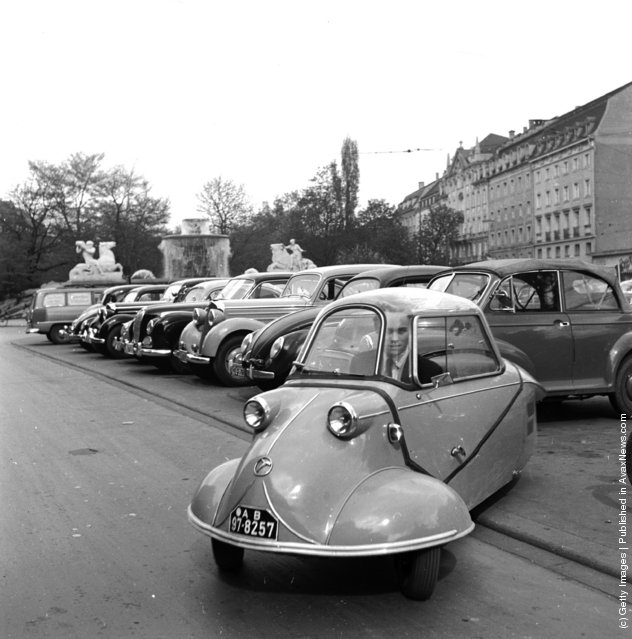
A three wheeled “cabin” scooter manufactured by German aircraft engineers Messerschmitt & Co at factories in Regensburg. (Photo by Hans Enzwieser/BIPs/Getty Images). 1955
Details
22 Jul 2013 19:49:00


In April 2011 last factory in the world on manufacture of typewriters was closed. The epoch of typewriters has ended...

Photo: A model of a commercial typewriter from 1867. (Photo by Topical Press Agency/Getty Images). June 1923
Details
28 Apr 2011 07:25:00


“Kumbh Mela is a mass Hindu pilgrimage in which Hindus gather at the Ganges river. The normal Kumbh Mela is celebrated every 3 years, the Ardh (half) Kumbh Mela is celebrated every six years at Haridwar and Prayag, the Purna (complete) Kumbh takes place every twelve years, at four places (Prayag (Allahabad), Haridwar, Ujjain, and Nashik). The Maha (great) Kumbh Mela which comes after 12 “Purna Kumbh Melas”, or 144 years, is held at Allahabad.

The last Ardh Kumbh Mela was held over a period of 45 days beginning in January 2007, more than 70 million Hindu pilgrims took part in the Ardh Kumbh Mela at Prayag, and on January 15, the most auspicious day of the festival of Makar Sankranti, more than 5 million participated. The previous Maha Kumbh Mela, held in 2001, was attended by around 60 million people, making it at the time the largest gathering anywhere in the world in recorded history”. – Wikipedia

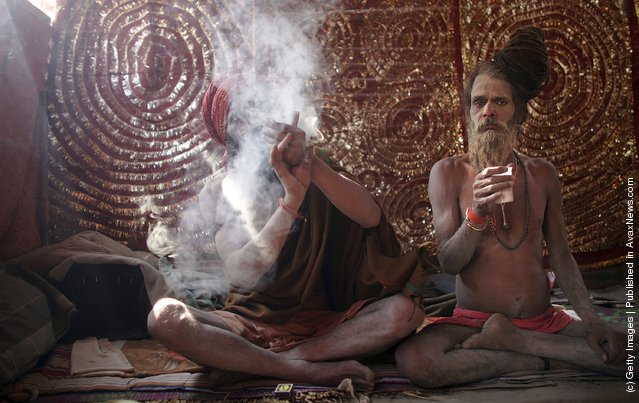
Photo: Sadhus (holy men) smoke at their camp near the ritual site at Sangam, the confluence of the Ganges, Yamuna and mythical Saraswati rivers during the Ardh Kumbh Mela festival (Half Pitcher festival) January 18, 2007 in Allahabad, India. Millions of Hindu pilgrims have flocked to the largest religious gathering in the world which lasts for 45 days in northern India. The festival commemorates the mythical conflict between gods and demons over a pitcher filled with the “nectar of immortality”. Devotees believe that taking a holy dip in the Ganges at this time washes away their sins and paves the path to salvation. (Photo by Mario Tama/Getty Images)
Details
30 Jun 2011 10:27:00
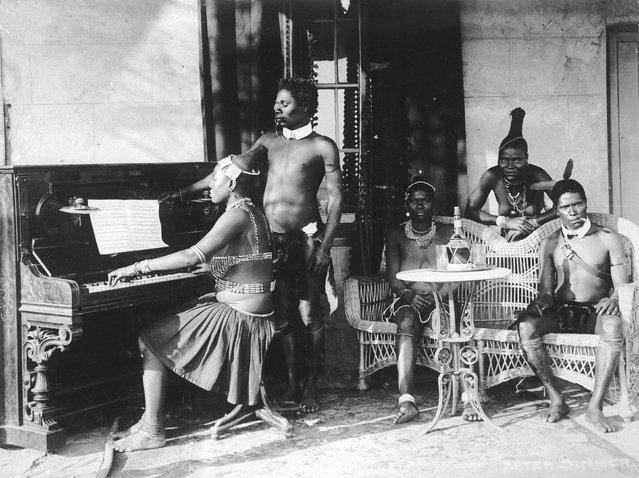
circa 1925:  A Zulu woman playing the piano while a group of others sit and listen.  (Photo by General Photographic Agency/Getty Images)

“The Zulu are the largest South African ethnic group, with an estimated 10–11 million people living mainly in the province of KwaZulu-Natal. Small numbers also live in Zimbabwe, Zambia, and Mozambique. Their language, Zulu, is a Bantu language; more specifically, part of the Nguni subgroup. The Zulu Kingdom played a major role in South African history during the 19th and 20th centuries. Under apartheid, Zulu people were classed as third-class citizens and suffered from state-sanctioned discrimination. They remain today the most numerous ethnic group in South Africa, and now have equal rights along with all other citizens”. – Wikipedia.

Photo: A Zulu woman playing the piano while a group of others sit and listen (to put it briefly, Englishmen scoff over Zulu). South Africa, circa 1925. (Photo by General Photographic Agency)

Details
03 Feb 2014 09:40:00
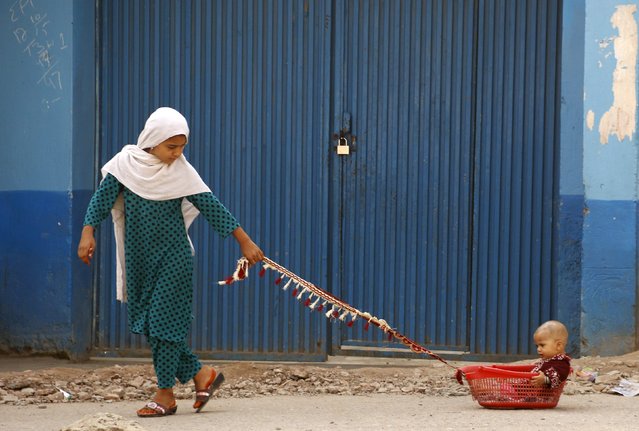
A girl pulls her sister in a discarded basket in the Rashidabad neighborhood of Peshawar, Pakistan October 18, 2015. (Photo by Khuram Parvez/Reuters)

A girl pulls her sister in a discarded basket in the Rashidabad neighborhood of Peshawar, Pakistan October 18, 2015. (Photo by Khuram Parvez/Reuters)
Details
10 Nov 2015 08:02:00
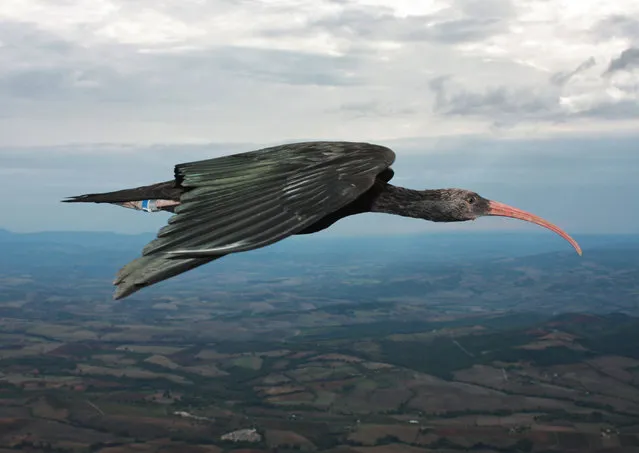
In this undated photo made available by journal Nature on January 15, 2014, a northern bald ibis (Geronticus eremita) flies in Tuscany, Italy. A new study released Wednesday, January 15, 2014 says the birds choreograph the flapping of their wings, getting a boost from an updraft of air in the wake of the flapping wings by flying behind the first bird and off to the side. When a flock of birds take advantage of these aerodynamics, they form a V. (Photo by Markus Unsöld/AP Photo)

In this undated photo made available by journal Nature on January 15, 2014, a northern bald ibis (Geronticus eremita) flies in Tuscany, Italy. A new study released Wednesday, January 15, 2014 says the birds choreograph the flapping of their wings, getting a boost from an updraft of air in the wake of the flapping wings by flying behind the first bird and off to the side. When a flock of birds take advantage of these aerodynamics, they form a V. (Photo by Markus Unsöld/AP Photo)
Details
18 Jan 2014 13:54:00
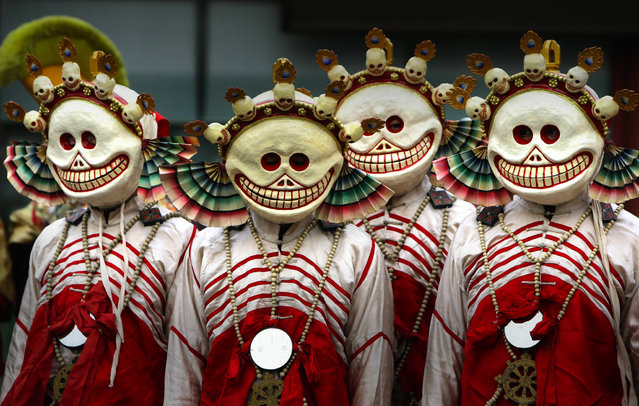
Monks dressed as Tibetan Buddhism characters attend a religious ceremony, known as “Da Gui” or beating ghost, to celebrate the upcoming Tibetan New Year which starts on March 1 at Yonghegong Lama Temple, in Beijing February 28, 2014. This Tibetan ceremony is held annually at the end of the first lunar month with mask dancing to expel ghosts, according to a press release. (Photo by Jason Lee/Reuters)

Monks dressed as Tibetan Buddhism characters attend a religious ceremony, known as “Da Gui” or beating ghost, to celebrate the upcoming Tibetan New Year which starts on March 1 at Yonghegong Lama Temple, in Beijing February 28, 2014. This Tibetan ceremony is held annually at the end of the first lunar month with mask dancing to expel ghosts, according to a press release. (Photo by Jason Lee/Reuters)
Details
01 Mar 2014 13:07:00
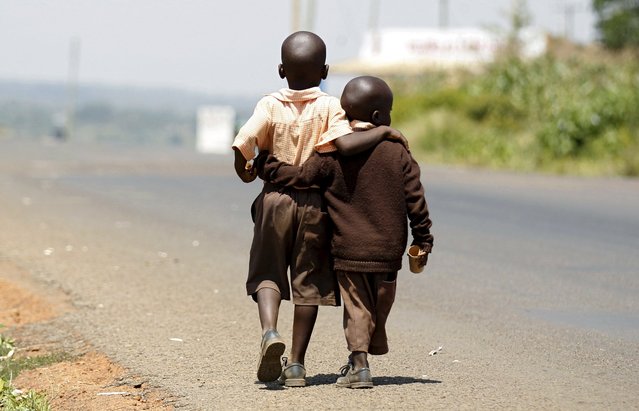
Boys walk home for lunch from school in the village of Kogelo, west of Kenya's capital Nairobi, July 16, 2015. (Photo by Thomas Mukoya/Reuters)

Boys walk home for lunch from school in the village of Kogelo, west of Kenya's capital Nairobi, July 16, 2015. U.S. President Barack Obama visits Kenya and Ethiopia later this month. His ancestral home of Kogelo is home to Sarah Hussein Obama, his step-grandmother. The Kenyan village, burial place of Obama's father, features an open-pit goldmine, a pork butcher's, a school named after their most famous son and outdoor market stalls. Villagers get around by motorbike taxi or on foot while a donkey-cart transports water. Children, some of them named Obama in honour of the President, walk to and from school together. (Photo by Thomas Mukoya/Reuters)
Details
24 Jul 2015 11:46:00