Loading...
Done
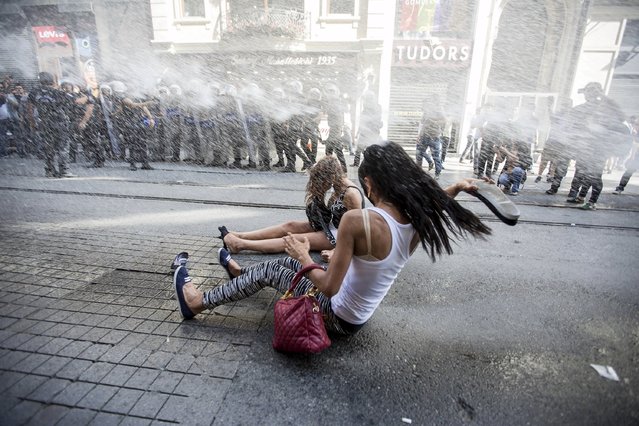
Riot police use a water cannon to disperse LGBT rights activist before a Gay Pride Parade in central Istanbul, Turkey, June 28, 2015. (Photo by Kemal Aslan/Reuters)

Riot police use a water cannon to disperse LGBT rights activist before a Gay Pride Parade in central Istanbul, Turkey, June 28, 2015. Turkish police fired water cannon and rubber pellets to disperse a crowd gathered in central Istanbul for the city's annual gay pride parade, a Reuters cameraman at the scene said. The police appeared intent on stopping the crowd gathering near Taksim Square, the cameraman said. Taksim is a traditional rallying ground for demonstrators and saw weeks of unrest in 2013. (Photo by Kemal Aslan/Reuters)
Details
29 Jun 2015 12:57:00
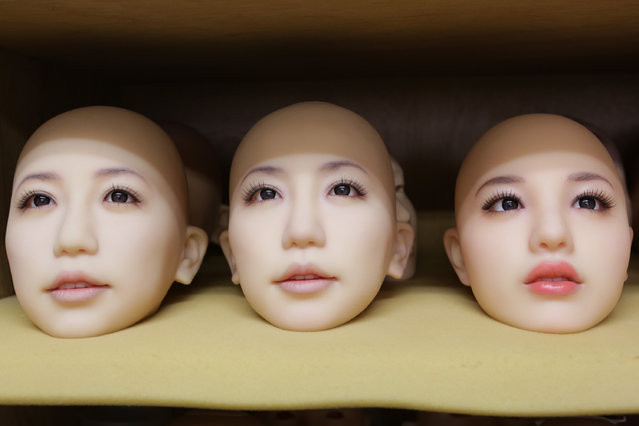
Heads of love dolls are seen on the shelf on March 9, 2017 in Tokyo, Japan. Japan's oldest and largest “love doll” maker Orient Industry, has been producing silicone love dolls since 1977, and has seen there is a trend for intimate relationships with silicone dolls in Japan. The Orient Industry's factory produces approximately 500 life size hand-made per year, and one doll, costs up to 600,000JPY (approx. 6,000 USD), takes four to five weeks to be finished. Originally, the company was marketing love dolls for disabled people, and the company continues to support the community by providing discounts and consulting their sexual urges. (Photo by Taro Karibe/Getty Images)

Heads of love dolls are seen on the shelf on March 9, 2017 in Tokyo, Japan. Japan's oldest and largest “love doll” maker Orient Industry, has been producing silicone love dolls since 1977, and has seen there is a trend for intimate relationships with silicone dolls in Japan. (Photo by Taro Karibe/Getty Images)
Details
18 Mar 2017 10:32:00
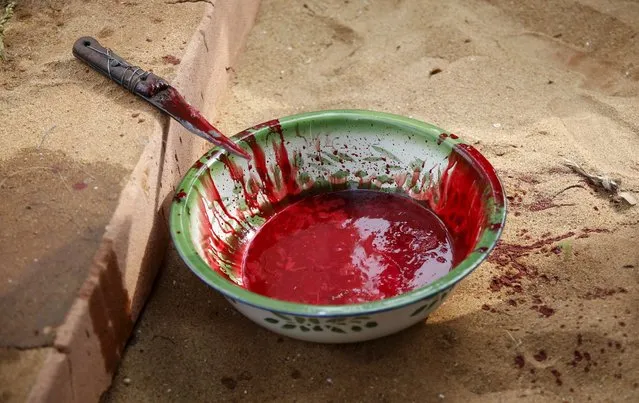
A knife is seen beside a bowl containing blood after a ram was killed as a sacrifice in front of a shrine at the annual voodoo festival in Ouidah, Benin, January 10, 2016. (Photo by Akintunde Akinleye/Reuters)

A knife is seen beside a bowl containing blood after a ram was killed as a sacrifice in front of a shrine at the annual voodoo festival in Ouidah, Benin, January 10, 2016. In Ouidah, a small town and former slave port in the West African country of Benin, the annual voodoo festival gathers visitors from far and wide. It's a week that brings together priests and dignitaries, rich and poor, locals and visitors from as far afield as the Caribbean and France. The festival commemorates the estimated 60 million people who lost their homelands and their freedom during the African slave trade. (Photo by Akintunde Akinleye/Reuters)
Details
23 Jan 2016 12:55:00
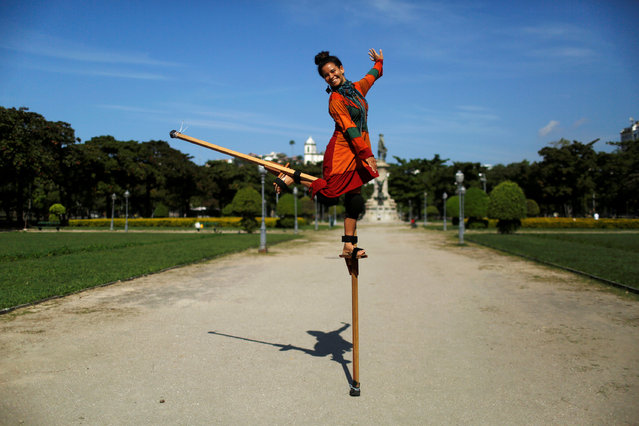
Raquel Poti, a 32-year-old street artist, poses at a park in Rio de Janeiro, Brazil, June 25, 2016. Raquel thinks the Olympics promotes a lifestyle that combines sports, culture and education. She is concerned about the large investment for the event while the population needs improvements in basic services. (Photo by Pilar Olivares/Reuters)

Just a week before Rio de Janeiro hosts South America's first Olympics, city residents expressed mixed feelings about the cost and security of the Games, while holding out hope they will bring joy to a nation facing economic and political crises. The conflicted thoughts mirror a recent survey by the Datafolha polling group showing that half of Brazilians were opposed to holding the Games, while 63 percent think the costs of hosting the event will outweigh benefits. (Photo by Pilar Olivares/Reuters)
Details
03 Aug 2016 11:51:00
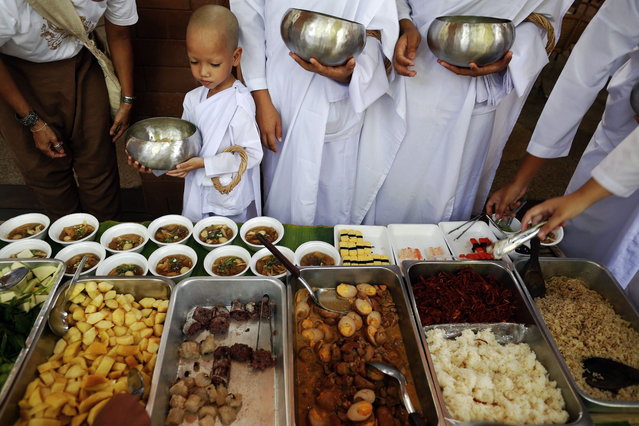
A girl joins other novice nuns for a lunch at the Sathira-Dhammasathan Buddhist meditation centre in Bangkok April 21, 2013. A group of Thai girls are choosing to spend part of their school holidays as Buddhist nuns, down to having their heads shaven at the meditation centre. The centre, founded in 1987, is a learning community for peace and harmony that has programs open to people regardless of age and gender. (Photo by Damir Sagolj/Reuters)

A girl joins other novice nuns for a lunch at the Sathira-Dhammasathan Buddhist meditation centre in Bangkok April 21, 2013. A group of Thai girls are choosing to spend part of their school holidays as Buddhist nuns, down to having their heads shaven at the meditation centre. The centre, founded in 1987, is a learning community for peace and harmony that has programs open to people regardless of age and gender. (Photo by Damir Sagolj/Reuters)
Details
25 Apr 2013 12:41:00
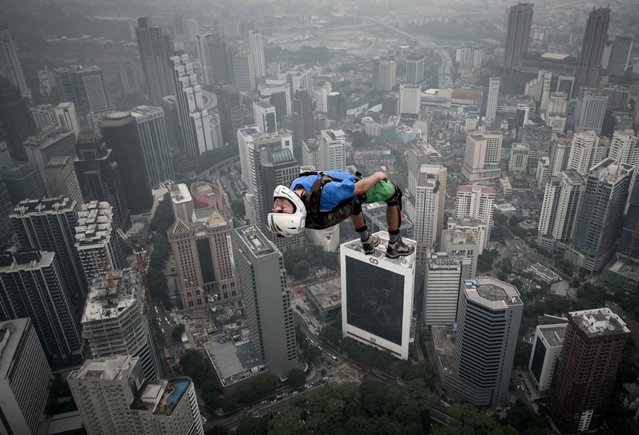
Base jumper Denis Odintsov from Russian leaps from the 300-meters Open Deck of the Malaysia's landmark Kuala Lumpur Tower during the International Tower Jump in Kuala Lumpur on September 27, 2013. Some 103 professional base jumpers from 20 countries are taking part in the annual event. (Photo by Mohd Rasfan/AFP Photo)

Base jumper Denis Odintsov from Russian leaps from the 300-meters Open Deck of the Malaysia's landmark Kuala Lumpur Tower during the International Tower Jump in Kuala Lumpur on September 27, 2013. Some 103 professional base jumpers from 20 countries are taking part in the annual event. (Photo by Mohd Rasfan/AFP Photo)
Details
28 Sep 2013 09:30:00


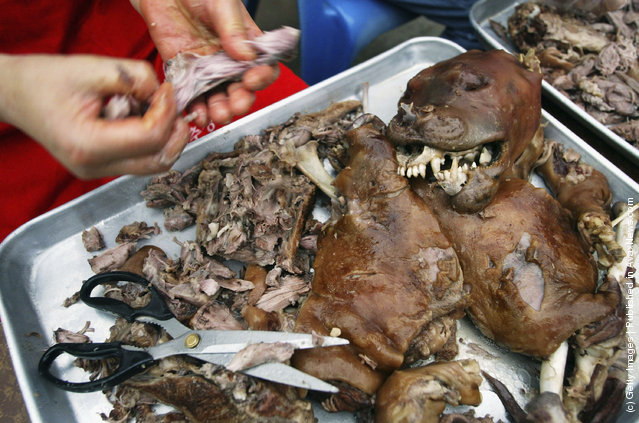
“Dog meat refers to edible parts and the flesh derived from (predominantly domestic) dogs. Human consumption of dog meat has been recorded in many parts of the world, including ancient China, ancient Mexico, and ancient Rome. According to contemporary reports, dog meat is consumed in a variety of countries such as Switzerland, China, Vietnam, the Philippines, and Korea. In addition, dog meat has also been used as survival food in times of war and/or other hardships”. – Wikipedia

Photo: A chef prepares dog meat at a restaurant on July 4, 2005 in Gwacheon, South Korea. Dog meat is a traditional dish in Korea dating back to the Samkuk period (period of the three kingdoms BC 57 – AD 668). Although many recipes existed historically for dog meat, now chefs only make soups, or dishes using boiled or roasted meat. Koreans traditionally eat dog meat on the hottest day of the summer, for it's reputed benefits of virility, invigoration and health. (Photo by Chung Sung-Jun/Getty Images)
Details
24 Jul 2011 13:21:00
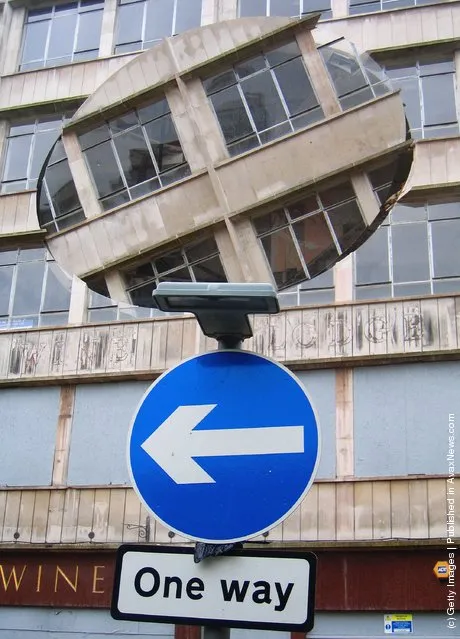
An installation by the artist Richard Wilson, entitled 'Turning the Place Over', is built into the condemned Cross Keys House in Moorfields as part of the Capital of Culture for 2008

“Richard Wilson (born May 24, 1953) is a sculptor, installation artist and musician. Wilson's work is characterised by architectural concerns with volume, illusionary spaces and auditory perception”. – Wikipedia

Photo: An installation by the artist Richard Wilson, entitled “Turning the Place Over”, is built into the condemned Cross Keys House in Moorfields as part of the Capital of Culture for 2008, on June 25, 2007 in Liverpool, England. The piece consists of an 8 metre ovoid cut from the building's facade that oscillates in three dimensions. (Photo by Jim Dyson/Getty Images)
Details
27 Mar 2012 10:31:00