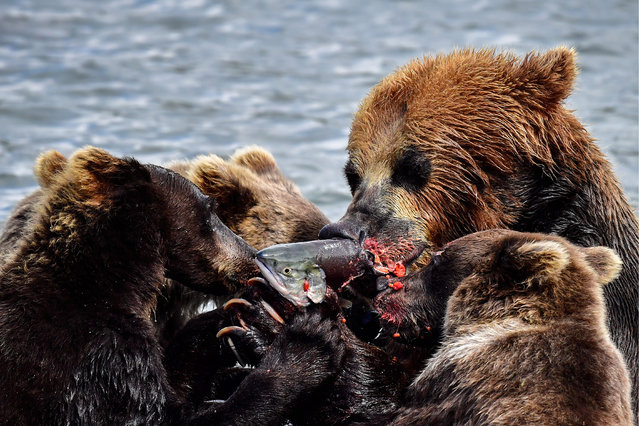
A female brown bear with cubs fishing on Lake Kronotskoye as part of the South Kamchatka, Russia on Sanctuary, August 13, 2017. (Photo by TASS/Barcroft Images)
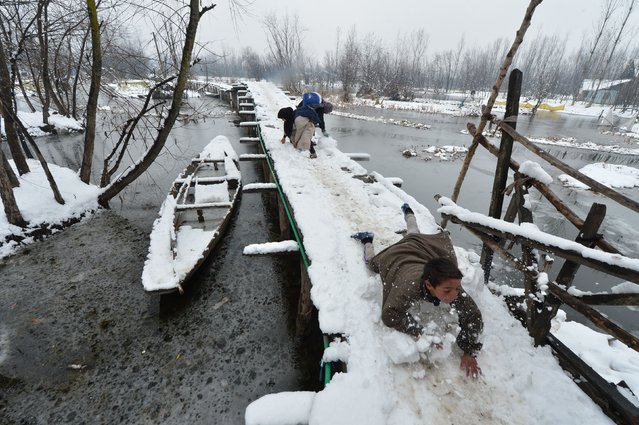
Kashmiri children play with snow on a wooden foot bridge in the interiors of Dal Lake in Srinagar on January 16, 2017. A cold wave has further tightened its grip in Jammu and Kashmir, with most places in the state recording sub-zero temperatures. (Photo by Tauseef Mustafa/AFP Photo)
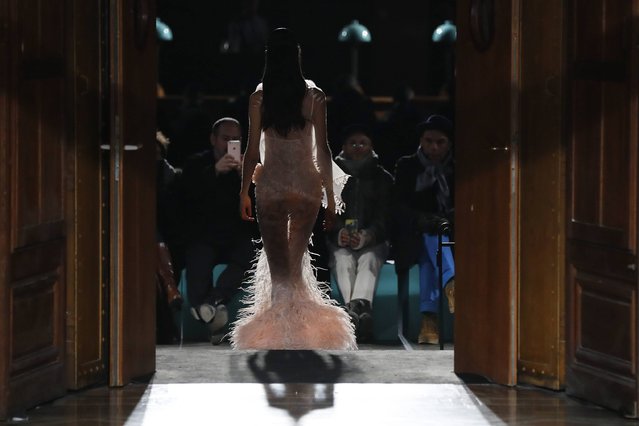
A model presents a creation by Givenchy during men's Fashion Week for the Fall/Winter 2017/2018 collection in Paris on January 20, 2017. (Photo by Patrick Kovarik/AFP Photo)
Fr. Denis Crosby blesses a live lamb during a Pattern Day mass to St. Brigid at the holy well of St. Brigid in Liscannor, Ireland February 1, 2017. (Photo by Clodagh Kilcoyne/Reuters)
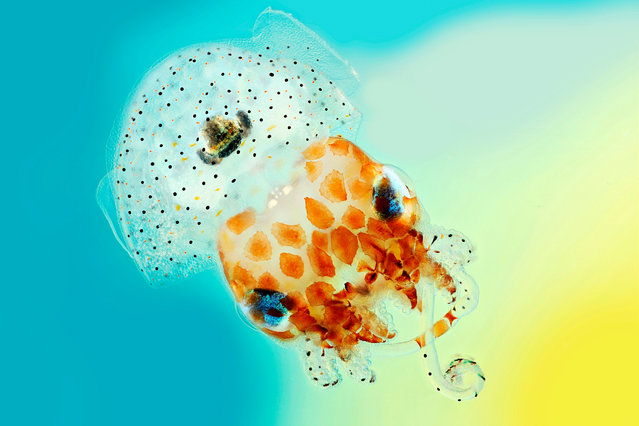
With its huge eyes, comical name and diminutive size, Mark R. Smith’s image of a baby Hawaiian bobtail squid can’t help but raise a smile. A curiously endearing creature, the cephalopod is just 1.5cm across, its mantle cavity bearing more than a passing resemblance to a rather natty shower cap. But it is also a beautiful example of symbiosis – nature’s version of “I’ll scratch your back if you scratch mine” – for on the underside of the squid is a light organ which houses bioluminescent bacteria. The squid offers the bacteria protection and food, while the bacteria emit a glow – a handy trait that the squid uses to offset its silhouette, helping it to evade predators in the depths below. Mark R. Smith’s entry combines several images of a Hawaiian bobtail squid with different focus lengths to create a final picture with greater depth of field than normal. (Photo by Mark R. Smith/Wellcome Images/Macroscopic Solutions)
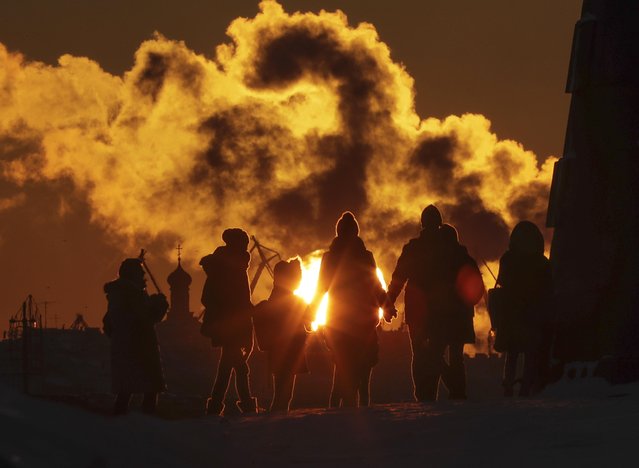
People walk along the Neva River at sunset in St.Petersburg, Russia, Tuesday, December 6, 2016. The temperature in St.Petersburg is –9C ( 15.8 °F). (Photo by Dmitri Lovetsky/AP Photo)
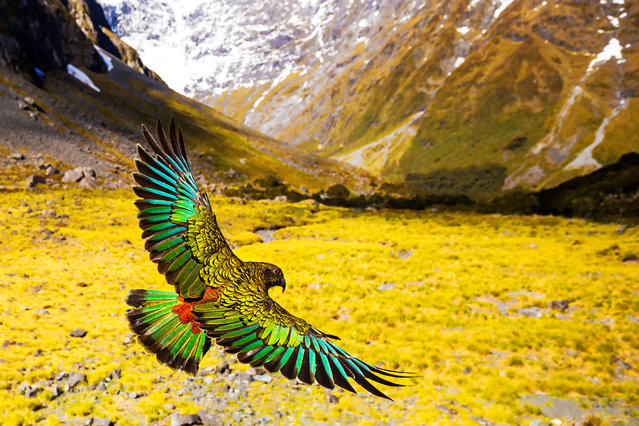
Kea are the only true alpine parrots in the world and thrive as cunning opportunists in the freezing conditions of the Southern Alps. Kea are thought to have developed their wide array of food-finding strategies during the last great ice age, where they learned to adapt using their unusual powers of curiosity. (Photo by Tom Walker/BBC Pictures/The Guardian)
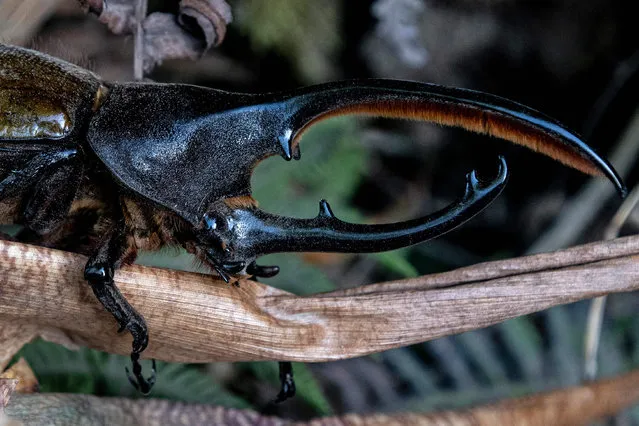
A Hercules beetle, one of the largest species of its kind, in seen at the Monteverde Cloud Forest Biological Reserve, in Puntarenas, Costa Rica, on May 23, 2023. In the Monteverde cloud forest, dense fog among the lush vegetation is increasingly rare and temperatures are increasing each year due to climate change. (Photo by Ezequiel Becerra/AFP Photo)