Loading...
Done
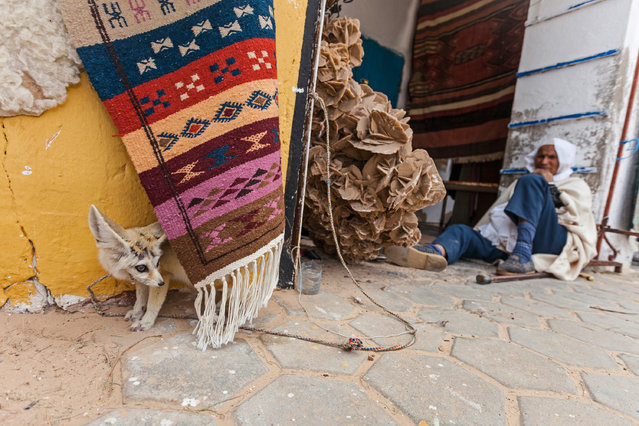
Sultan, a famous captive fennec that is displayed tied on a rope in front of a tourist shop, is the main attraction in the souk of Douz, a desert town in Tunisia. By the display of such a charismatic animal, tourists are often lured to buy things or pay for pictures. On inquiry, although Sultan has been caught as a pup in the wild, the owners of the shop reassure the foreigners stating that the animal is ‘domestic’. (Photo by Bruno D’Amicis/Fritz Pölking Prize/GDT EWPY 2015)

Sultan, a famous captive fennec that is displayed tied on a rope in front of a tourist shop, is the main attraction in the souk of Douz, a desert town in Tunisia. By the display of such a charismatic animal, tourists are often lured to buy things or pay for pictures. On inquiry, although Sultan has been caught as a pup in the wild, the owners of the shop reassure the foreigners stating that the animal is ‘domestic’. (Photo by Bruno D’Amicis/Fritz Pölking Prize/GDT EWPY 2015)
Details
23 Nov 2015 08:02:00
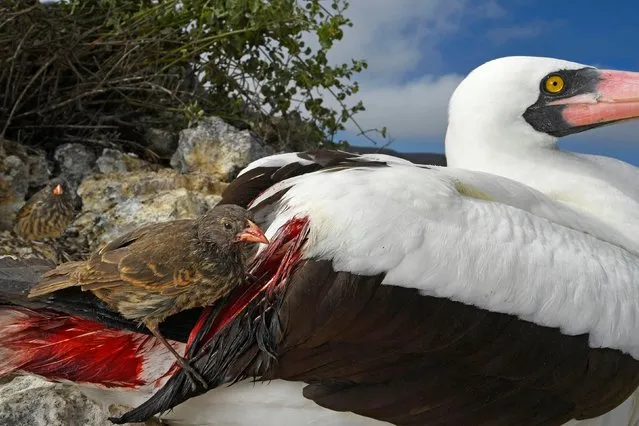
Bloodthirsty by Thomas P Peschak, Germany/South Africa — winner, Behaviour: birds. When rations run short on Wolf Island, in the remote northern Galápagos, the sharp-beaked ground finches become vampires. Their sitting targets are Nazca boobies and other large birds. The finches rely on a scant diet of seeds and insects, which regularly dries up, so they drink blood to survive. ‘I’ve seen more than half a dozen finches drinking from a single Nazca booby,’ says Tom. Rather than leave their nests the boobies tolerate the vampires, and the blood loss doesn’t seem to cause permanent harm. (Photo by Thomas P Peschak/2018 Wildlife Photographer of the Year)

Bloodthirsty by Thomas P. Peschak, Germany/South Africa — winner, Behaviour: birds. When rations run short on Wolf Island, in the remote northern Galápagos, the sharp-beaked ground finches become vampires. Their sitting targets are Nazca boobies and other large birds. The finches rely on a scant diet of seeds and insects, which regularly dries up, so they drink blood to survive. ‘I’ve seen more than half a dozen finches drinking from a single Nazca booby,’ says Tom. Rather than leave their nests the boobies tolerate the vampires, and the blood loss doesn’t seem to cause permanent harm. (Photo by Thomas P. Peschak/2018 Wildlife Photographer of the Year)
Details
19 Oct 2018 00:05:00
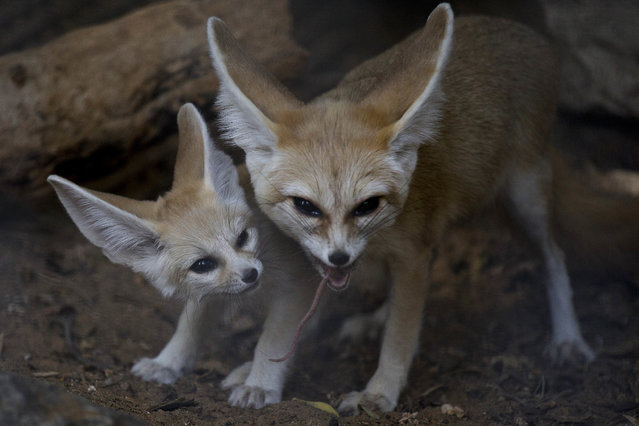
A 6-week old Fennec fox, the smallest species of foxes, and a native to the Sahara desert in Africa, looks as its mother eats in the Ramat Gan Safari Park near Tel Aviv, Israel, Sunday, November 6, 2016. Sagit Horowitz, the safari spokeswoman said four Fennec foxes were born about six weeks ago. (Photo by Ariel Schalit/AP Photo)

A 6-week old Fennec fox, the smallest species of foxes, and a native to the Sahara desert in Africa, looks as its mother eats in the Ramat Gan Safari Park near Tel Aviv, Israel, Sunday, November 6, 2016. Sagit Horowitz, the safari spokeswoman said four Fennec foxes were born about six weeks ago. (Photo by Ariel Schalit/AP Photo)
Details
13 Nov 2016 10:00:00
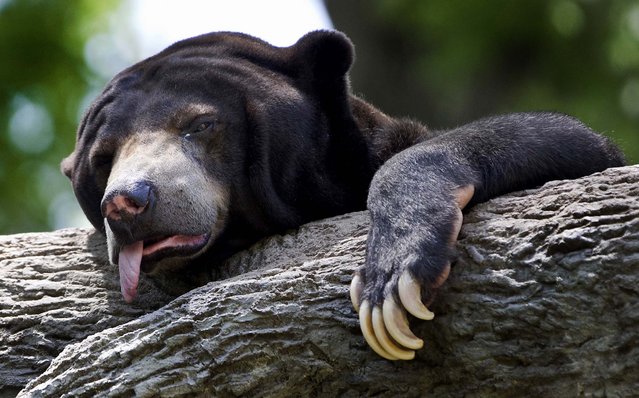
A sun bear reacts to triple-digit temperatures at the Henry Doorly Zoo in Omaha, Nebraska, where the temperature reached 103 degrees Fahrenheit

A sun bear reacts to triple-digit temperatures at the Henry Doorly Zoo in Omaha, Nebraska, where the temperature reached 103 degrees Fahrenheit on July 6, 2012. (Photo by Nati Harnik/Associated Press)
Details
15 Jul 2012 07:15:00
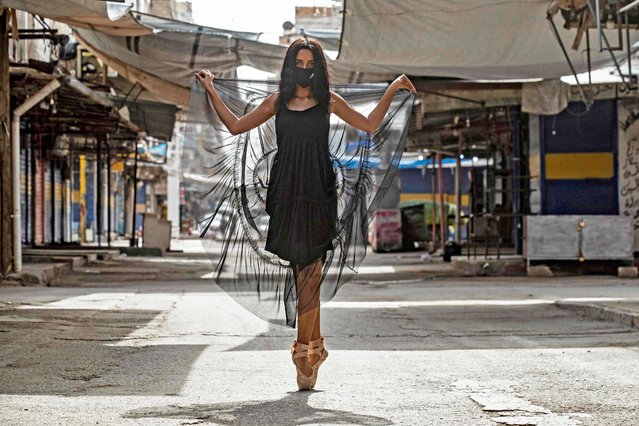
A Syrian Kurdish ballet dancer performs in an empty market during a lockdown to curb the spread of the Covid-19 coronavirus in Syria's northeastern city of Qamishli on April 7, 2021. (Photo by Delil Souleiman/AFP Photo)

A Syrian Kurdish ballet dancer performs in an empty market during a lockdown to curb the spread of the Covid-19 coronavirus in Syria's northeastern city of Qamishli on April 7, 2021. (Photo by Delil Souleiman/AFP Photo)
Details
01 Feb 2022 07:37:00
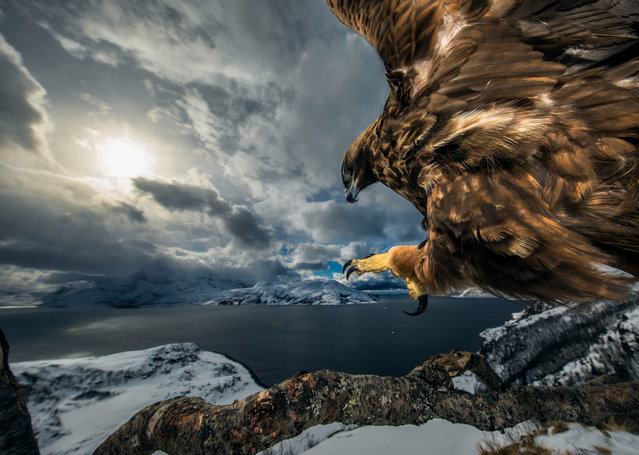
Birds behaviour winner: Land of the Eagle by Audun Rikardsen, Norway. High on a ledge, on the coast near his home in northern Norway, Rikardsen carefully positioned an old tree branch that he hoped would make a perfect golden eagle lookout. To this, he bolted a tripod head with a camera, flashes and motion sensor attached, and built himself a hide a short distance away. From time to time, he left road‑kill carrion nearby. Very gradually – over the next three years – a golden eagle got used to the camera and started to use the branch regularly to survey the coast below. (Photo by Audun Rikardsen/2019 Wildlife Photographer of the Year)

Birds behaviour winner: Land of the Eagle by Audun Rikardsen, Norway. High on a ledge, on the coast near his home in northern Norway, Rikardsen carefully positioned an old tree branch that he hoped would make a perfect golden eagle lookout. To this, he bolted a tripod head with a camera, flashes and motion sensor attached, and built himself a hide a short distance away. From time to time, he left road‑kill carrion nearby. Very gradually – over the next three years – a golden eagle got used to the camera and started to use the branch regularly to survey the coast below. (Photo by Audun Rikardsen/2019 Wildlife Photographer of the Year)
Details
17 Oct 2019 00:03:00
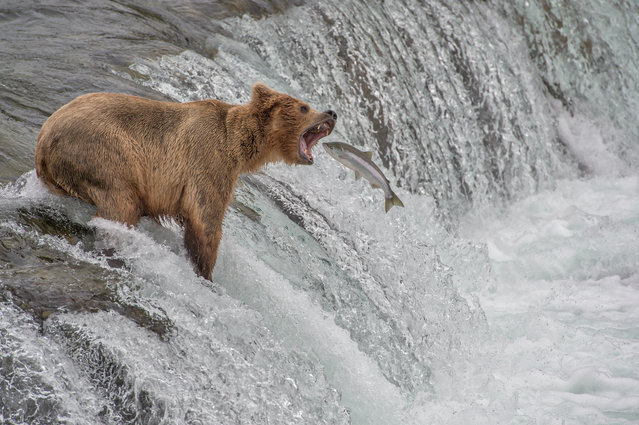
“Catch of the Decade”. Can you guess what happened next? Photo location: Katmai National Park, Alaska, USA. (Photo and caption by Aaron Baggenstos/National Geographic Photo Contest)

“Catch of the Decade”. Can you guess what happened next? Photo location: Katmai National Park, Alaska, USA. (Photo and caption by Aaron Baggenstos/National Geographic Photo Contest)
Details
30 Sep 2014 08:47:00
Lioness and hyena posture to one another, in Masai Mara, Kenya, August 2015. (Photo by Ingo Gerlach/Barcroft Images)

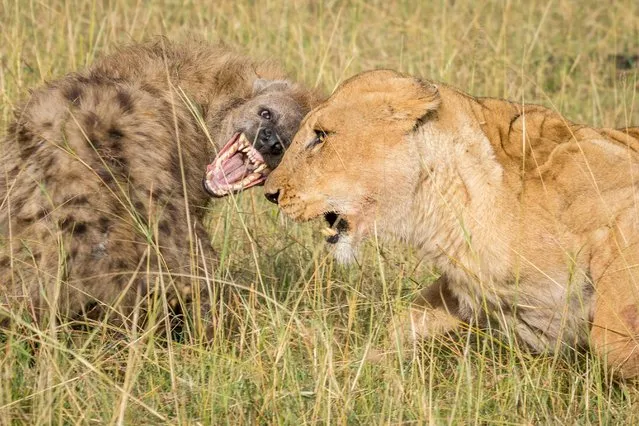
Lioness and hyena posture to one another, in Masai Mara, Kenya, August 2015. A photographer captured one of the oldest rivalries in the animal kingdom as a pair of lions went head to head with a pack of hungry hyenas. (Photo by Ingo Gerlach/Barcroft Images)
Details
18 Jan 2017 07:57:00