Loading...
Done
Burning Man Festival

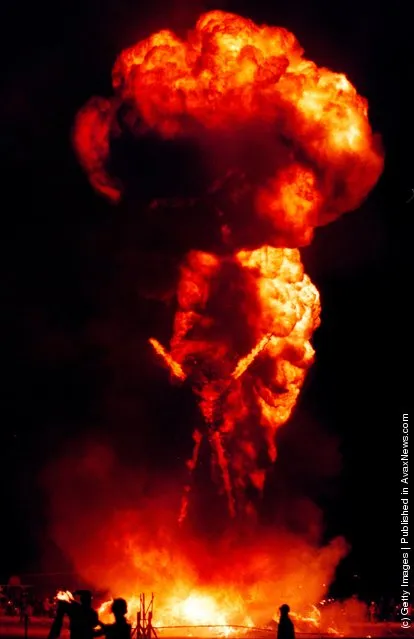
“Burning Man is a week-long annual event held in the Black Rock Desert in northern Nevada, in the United States. The event starts on the Monday before the American Labor Day holiday, and ends on the holiday itself. It takes its name from the ritual burning of a large wooden effigy on Saturday evening. The event is described by many participants as an experiment in community, radical self-expression, and radical self-reliance”. – Wikipedia

Photo: A fireball billows up from a 52-foot tall wooden man as it goes up in flames September 2, 2000 during the15th annual Burning Man festival in the Black Rock Desert near Gerlach, Nevada. Despite high winds, dust storms, and a bit of rain, some 27,000 people camped out on a remote desert playa, or dry lake, for the week-long counter-cultural celebration of art and “radical self-expression”. (Photo by David McNew/Newsmakers)
Details
15 Oct 2011 10:41:00
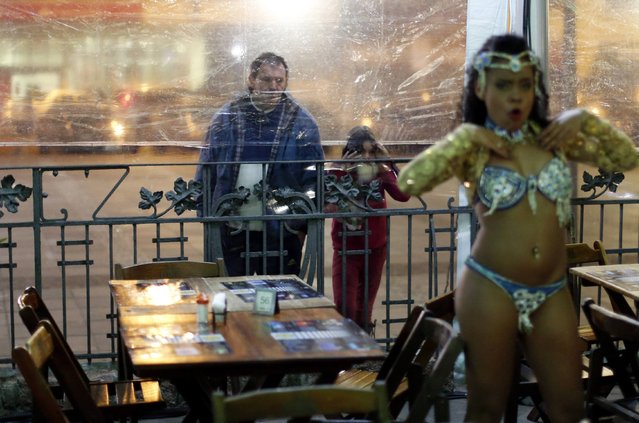
People watch from outside as a dancer performs inside a bar in Porto Alegre June 21, 2014. In a project called “On The Sidelines” Reuters photographers share pictures showing their own quirky and creative view of the 2014 World Cup in Brazil. (Photo by Marko Djurica/Reuters)

As national soccer teams and the photographers who have been covering them start to trickle home from the Brazil World Cup, it’s time to revisit the “On the Sidelines” project. This Reuters Pictures project was billed as a chance for photographers to share “their own quirky and creative view of the World Cup”. Photo: People watch from outside as a dancer performs inside a bar in Porto Alegre June 21, 2014. In a project called “On The Sidelines” Reuters photographers share pictures showing their own quirky and creative view of the 2014 World Cup in Brazil. (Photo by Marko Djurica/Reuters)
Details
09 Jul 2014 13:04:00
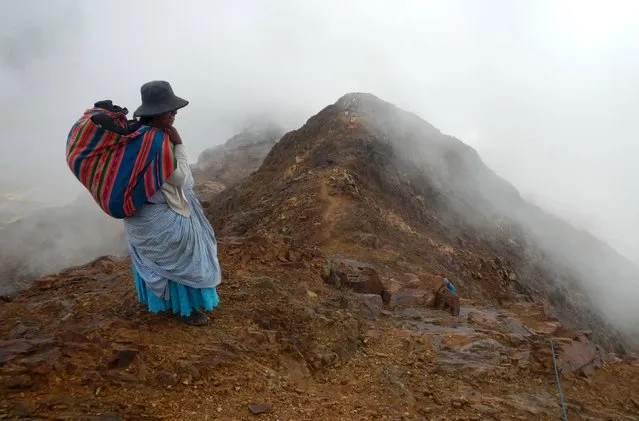
A porter stands at the bottom of the Illimani mountain, on the outskirts of La Paz, Bolivia, April 16, 2016. (Photo by David Mercado/Reuters)

A porter stands at the bottom of the Illimani mountain, on the outskirts of La Paz, Bolivia, April 16, 2016. For years, Lydia Huayllas, 48, has worked as a cook at base camps and mountain-climbing refuges on the steep, glacial slopes of Huayna Potosi, a 19,974-foot (6,088-meter) Andean peak outside of La Paz, Bolivia. But two years ago, she and 10 other Aymara indigenous women, ages 42 to 50, who also worked as porters and cooks for mountaineers, put on crampons – spikes fixed to a boot for climbing – under their wide traditional skirts and started to do their own climbing. (Photo by David Mercado/Reuters)
Details
22 Apr 2016 12:33:00
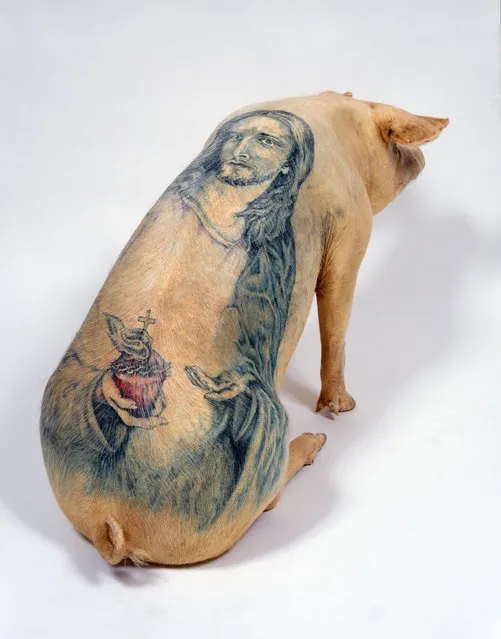
Tattooing Pigs By Wim Delvoye

Wim Delvoye is a notorious tattoo artist, who became famous when he started tattooing live pigs. He first began in 1997 and after animal rights activists found out about what he was doing, he had to move to China to continue his business. There is nothing special about the tattoos that Wim Delvoye creates, they look mediocre at best, and the only reason why he’s famous is his acts of animal cruelty. Nevertheless, Wim states that the pigs feel just fine and are well fed and taken care off. Full anesthesia is used to ensure that the pig doesn’t feel pain during the course of the whole procedure. During this time three tattoo artists work on the tattoo simultaneously to complete it as quickly as possible. Skins of those pigs are then sold for as much as £50k a piece.
Details
02 Apr 2015 09:06:00
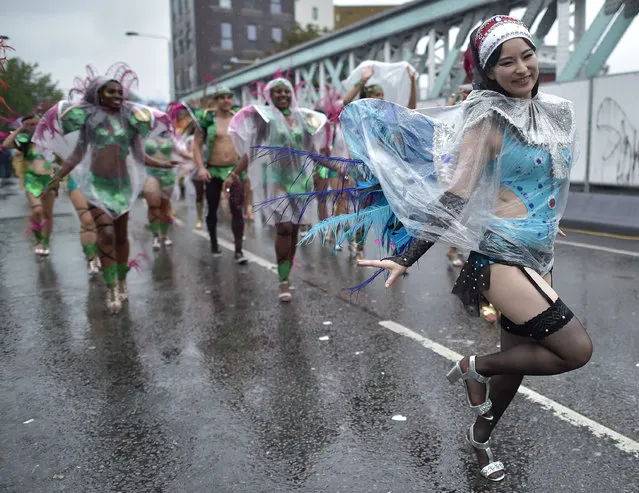
Performers in costume perform in the rain during the parade on the second day of the Notting Hill Carnival in west London on August 31, 2015. Nearly one million people are expected by the organizers Sunday and Monday in the streets of west London's Notting Hill to celebrate Caribbean culture at a carnival considered the largest street demonstration in Europe.  (Photo by Leon Neal/AFP Photo)

Performers in costume perform in the rain during the parade on the second day of the Notting Hill Carnival in west London on August 31, 2015. Nearly one million people are expected by the organizers Sunday and Monday in the streets of west London's Notting Hill to celebrate Caribbean culture at a carnival considered the largest street demonstration in Europe. The Notting Hill Carnival started in the 1960s, when the area had a large population of immigrants recently arrived from the Caribbean and was notorious for its slums – a far cry from today when it is one of London's most expensive places to live. (Photo by Leon Neal/AFP Photo)
Details
01 Sep 2015 15:17:00
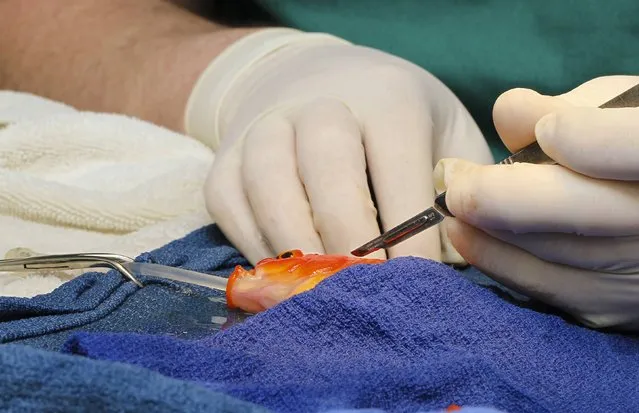
A 10-year-old pet goldfish named George undergoes veterinarian Tristan Rich's scalpel to remove a life-threatening head tumor in this handout picture taken September 11, 2014 and provided to Reuters by the Lort Smith Animal Hospital in Melbourne, Australia. (Photo by Reuters/Lort Smith Animal Hospital)

A 10-year-old pet goldfish named George undergoes veterinarian Tristan Rich's scalpel to remove a life-threatening head tumor in this handout picture taken September 11, 2014 and provided to Reuters by the Lort Smith Animal Hospital in Melbourne, Australia. In a 45-minute long procedure described by Rich as “fiddly”, the fish was sedated by water laced with anaesthetic, the tumour removed and the wound sealed with tissue glue followed by antibiotics and painkillers. (Photo by Reuters/Lort Smith Animal Hospital)
Details
16 Sep 2014 12:24:00
Music Stores

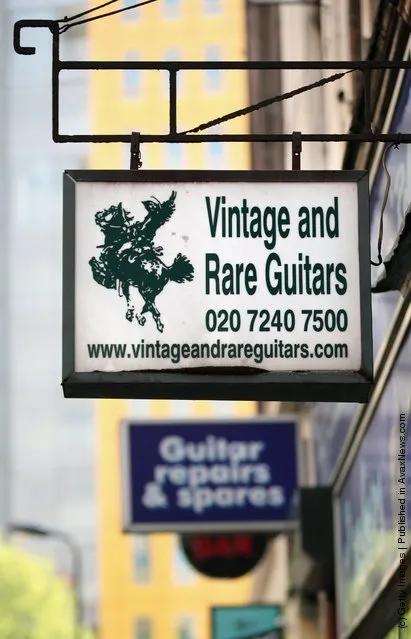
A general view of the Vintage and Rare Guitars shop on Denmark Street on April 20, 2011 in London, England. Denmark Street, in the Soho area of central London, traces its musical connections back to the 1890s and is famous for its connection to contemporary British music after recording studios started setting up there in the 1960s. Many world-renowned recording artists, including: Jimi Hendrix, The s*x Pistols and Elton John have played and recorded in the street. The Rolling Stones recorded their first album in 1964 at the street's Regent Sounds Studio's. Known as London's 'Tin Pan Alley' Denmark Street is regarded as one of, if not the, best music streets in Europe and contains numerous specialist music shops, with many boasting of a long and prestigious musical history.
Details
24 Apr 2011 15:41:00
Roma Community In Romania

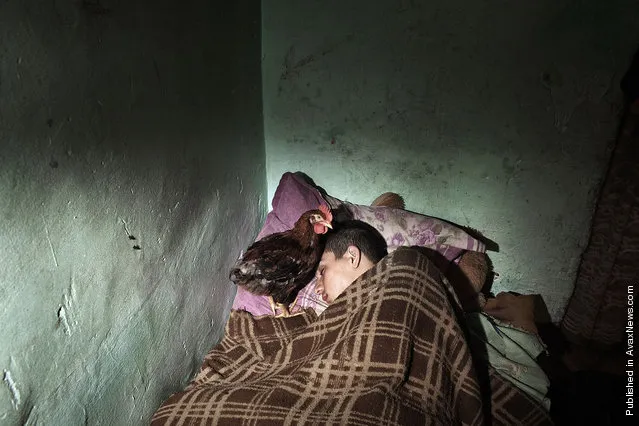
“Inspired by the French authorities' solution to move Romas from point A to point B, Romanian authorities planned and started forced evictions of Roma informal settlements in cities like Cluj-Napoca and Baia Mare. Some of these settlements date back to the early 1990’s. These communities were tolerated by the authorities who verbally encouraged Romas to build in the area, meanwhile, reassuring them nothing bad would ever happen to them. However, the the reality today is that during political campaigns, authorities are planning forced evictions without reasons other than ethnic cleansing of the cities. My home documents the every day life of Roma communities in Romania, 2011”. – Mugur Varzariu. (Photo by Mugur Varzariu, 2011 FotoVisura Grant Finalist)
Details
20 Apr 2012 13:22:00