Loading...
Done
An Iraqi woman and foreigners use  pair of compact discs as a filter to watch the partial solar eclipse in war-torn Baghdad, 29 March 2006. Without access to proper equipment to protect their eyes from the sun's rays, eclipse watchers in Iraq used makeshift filters.  The moon blotted out the sun over northwest Africa early Wednesday, turning day into night in a total solar eclipse as it swept a shadowy path from the outer tip of Brazil to the steppes of Mongolia. (Photo by Hassan Ammar/AFP Photo)

An Iraqi woman and foreigners use pair of compact discs as a filter to watch the partial solar eclipse in war-torn Baghdad, 29 March 2006. Without access to proper equipment to protect their eyes from the sun's rays, eclipse watchers in Iraq used makeshift filters. The moon blotted out the sun over northwest Africa early Wednesday, turning day into night in a total solar eclipse as it swept a shadowy path from the outer tip of Brazil to the steppes of Mongolia. (Photo by Hassan Ammar/AFP Photo)
Details
25 Jul 2017 09:31:00
Kyrgyz men on horseback compete during their traditional game of “Oodarysh” during the celebrations of the 90th anniversary formation of the Chui region in the village of Kuntu some 20 kms from Bishkek on May 27, 2016. (Photo by Vyacheslav Oseledko/AFP Photo)

Kyrgyz men on horseback compete during their traditional game of “Oodarysh” during the celebrations of the 90th anniversary formation of the Chui region in the village of Kuntu some 20 kms from Bishkek on May 27, 2016. (Photo by Vyacheslav Oseledko/AFP Photo)
Details
28 May 2016 12:31:00
A dog wears fake eyes while riding a motorcycle in Samut Sakhon, Thailand June 23, 2016. (Photo by Jorge Silva/Reuters)

A dog wears fake eyes while riding a motorcycle in Samut Sakhon, Thailand June 23, 2016. (Photo by Jorge Silva/Reuters)
Details
24 Jun 2016 14:14:00
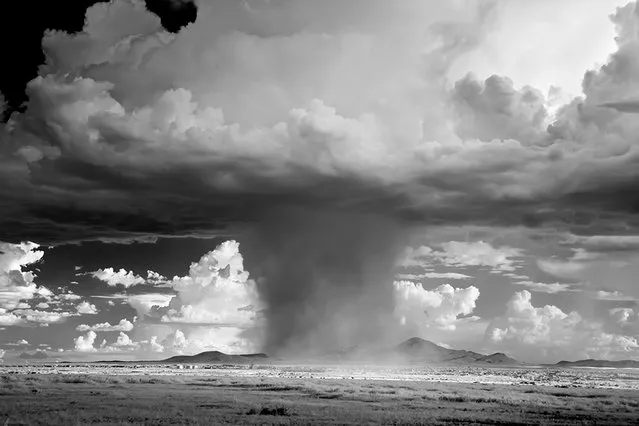
“My goal was to capture the image of a storm that emulated an atomic explosion”, Dobrowner says of this picture. Here: “Monsoon”, Lordsburg, N.M., 2010. (Photo by Roger Hill)

“My goal was to capture the image of a storm that emulated an atomic explosion”, Dobrowner says of this picture. Here: “Monsoon”, Lordsburg, N.M., 2010. (Photo by Roger Hill)
Details
18 Aug 2014 09:13:00
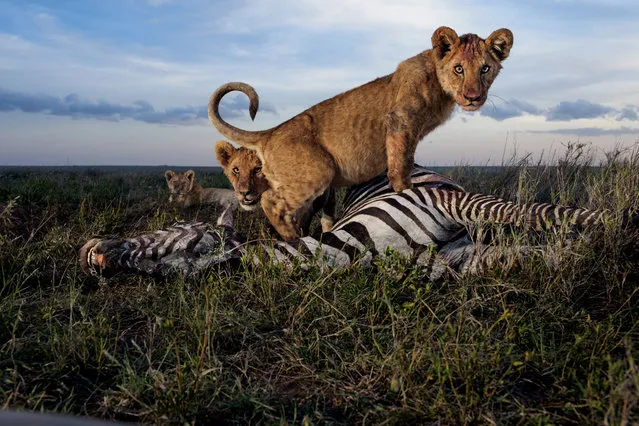
Cubs of the Simba East pride: too young to kill but old enough to crave meat. Adult females, and sometimes males, do the hunting. Zebras and wildebeests rank high as chosen prey in the rainy season. (Photo by Michael Nichols/National Geographic via The Atlantic)

“Serengeti National Park encompasses 5,700 square miles of grassy plains and woodlands near the northern border of Tanzania, and is home to more than 3,500 lions grouped into a couple dozen prides. Photographer Nick Nichols and videographer Nathan Williamson made several extended trips to the Serengeti between July 2011 and January 2013, determined to break new visual ground in their coverage of the Serengeti Lions”. Photo: Cubs of the Simba East pride: too young to kill but old enough to crave meat. Adult females, and sometimes males, do the hunting. Zebras and wildebeests rank high as chosen prey in the rainy season. (Photo by Michael Nichols/National Geographic via The Atlantic)
Details
09 Aug 2013 08:15:00
“Red Arrows” at the 2016 royal air tattoo, RAF Fairford, UK. By Jonny Williams, finalist: action. (Photo by Jonny Williams/UK National Geographic Traveller Photography Competition 2018)

“Red Arrows” at the 2016 royal air tattoo, RAF Fairford, UK. By Jonny Williams, finalist: action. (Photo by Jonny Williams/UK National Geographic Traveller Photography Competition 2018)
Details
02 Mar 2018 00:01:00
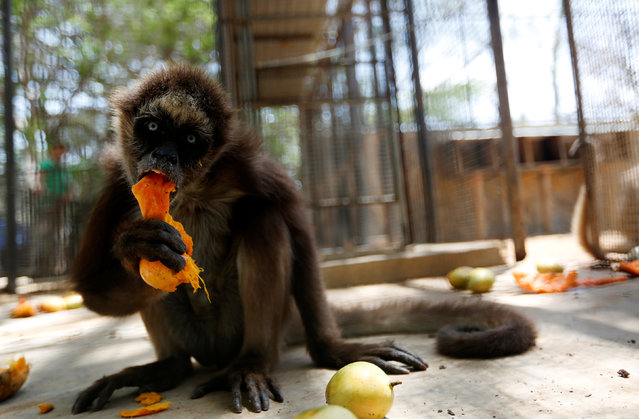
A spider monkey eats a mango at the Paraguana zoo in Punto Fijo, Venezuela July 22, 2016. (Photo by Carlos Jasso/Reuters)

A spider monkey eats a mango at the Paraguana zoo in Punto Fijo, Venezuela July 22, 2016. Some 50 animals have starved to death in the last six months at one of Venezuela's main zoos due to chronic food shortages that have plagued the crisis-stricken South American nation. (Photo by Carlos Jasso/Reuters)
Details
28 Jul 2016 13:48:00
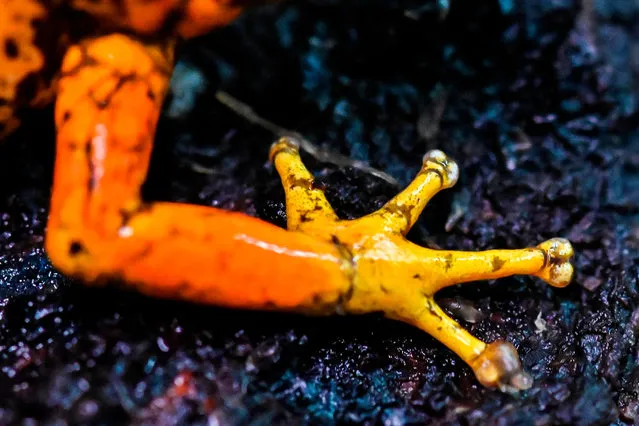
A leg of a “diablito” frog (Oophaga sylvatica) is photographed in a laboratory at a laboratory in the zoo of Cali, Colombia, on July 19, 2019. Colombia is the second country with the largest number of amphibians in the world after Brazil. More than 40% of amphibian species worldwide are in danger of extinction. (Photo by Luis Robayo/AFP Photo)

A leg of a “diablito” frog (Oophaga sylvatica) is photographed in a laboratory at a laboratory in the zoo of Cali, Colombia, on July 19, 2019. Colombia is the second country with the largest number of amphibians in the world after Brazil. More than 40% of amphibian species worldwide are in danger of extinction. (Photo by Luis Robayo/AFP Photo)
Details
28 Nov 2020 00:03:00