Loading...
Done
In this picture taken on Saturday, January 31, 2015, Zohreh Etezadossaltaneh, center, talks on her mobile phone, held with her foot, during a meeting at her friend's home in Tehran, Iran. Now 52 years old, the retired Iranian teacher who was born without arms has dedicated herself to helping others with similar disabilities live full and satisfying lives. (Photo by Ebrahim Noroozi/AP Photo)

In this picture taken on Saturday, January 31, 2015, Zohreh Etezadossaltaneh, center, talks on her mobile phone, held with her foot, during a meeting at her friend's home in Tehran, Iran. Now 52 years old, the retired Iranian teacher who was born without arms has dedicated herself to helping others with similar disabilities live full and satisfying lives. (Photo by Ebrahim Noroozi/AP Photo)
Details
03 May 2015 11:52:00
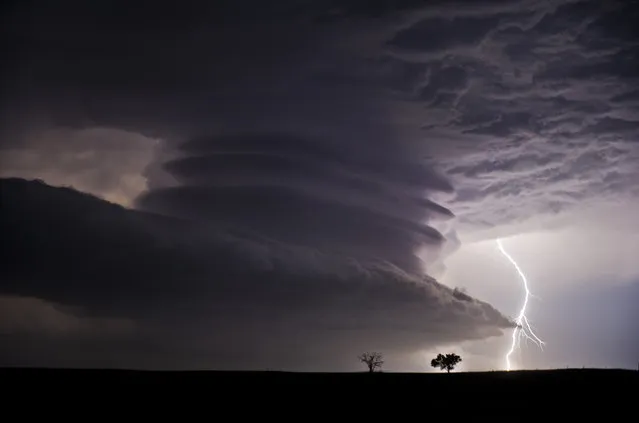
“Stacked Supercell with Lightning”. This huge mesocyclone supercell was near the Nebraska / Kansas border on the night of June 22nd, 2012. What a stunning structure! (Photo and caption by Jennifer Brindley/National Geographic Traveler Photo Contest)

“Stacked Supercell with Lightning”. This huge mesocyclone supercell was near the Nebraska / Kansas border on the night of June 22nd, 2012. What a stunning structure! (Photo and caption by Jennifer Brindley/National Geographic Traveler Photo Contest)

ATTENTION! All pictures are presented in high resolution. To see Hi-Res images – just TWICE click on any picture. In other words, click small picture – opens the BIG picture. Click BIG picture – opens VERY BIG picture.
Details
25 Jun 2013 13:12:00
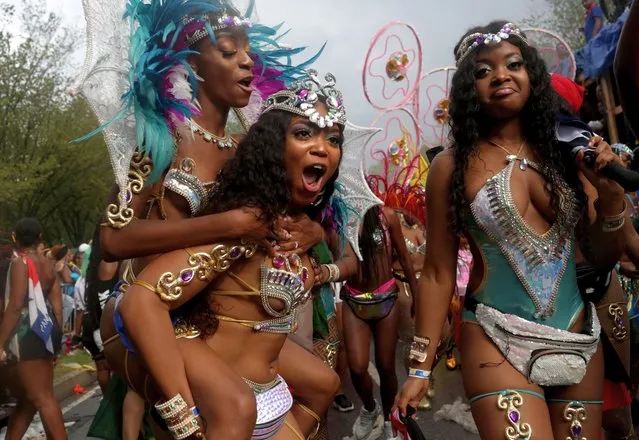
Parade-goers walk in the annual West Indian Day Parade on September 02, 2019 in the Brooklyn borough of New York City. The annual celebration of Caribbean culture is one of the largest of its kind and features dozens of floats and costumed participants that make their way down Flatbush Avenue. (Photo by Yana Paskova/Getty Images)

Parade-goers walk in the annual West Indian Day Parade on September 02, 2019 in the Brooklyn borough of New York City. The annual celebration of Caribbean culture is one of the largest of its kind and features dozens of floats and costumed participants that make their way down Flatbush Avenue. (Photo by Yana Paskova/Getty Images)
Details
21 Jan 2020 00:03:00
Snowflakes can possess unending beauty and details even in a single crystal that measures only a few millimeters in diameter. (Photo by Don Komarechka/Caters News Agency)

These images capture the intricate details of minuscule snowflakes, moments before they melt. The shots were taken by Don Komarechka, 31, who has had a lifelong fascination with all things macro – especially snowflakes. The professional photographer says people often don’t believe that his pictures are real because they’re so perfect. (Photo by Don Komarechka/Caters News Agency)
Details
06 Jan 2018 08:54:00
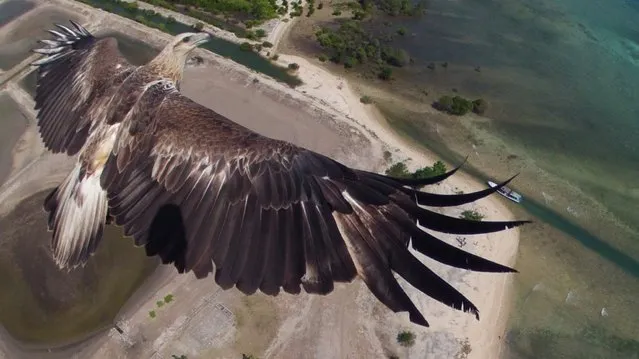
First prize. Taken over Bali Barat National Park, Denpasar, Bali. Made with a GoPro Hero 2 camera. (Photo by Capungaero)

First prize. Taken over Bali Barat National Park, Denpasar, Bali. Made with a GoPro Hero 2 camera. (Photo by Capungaero)
Details
18 Jul 2014 11:47:00
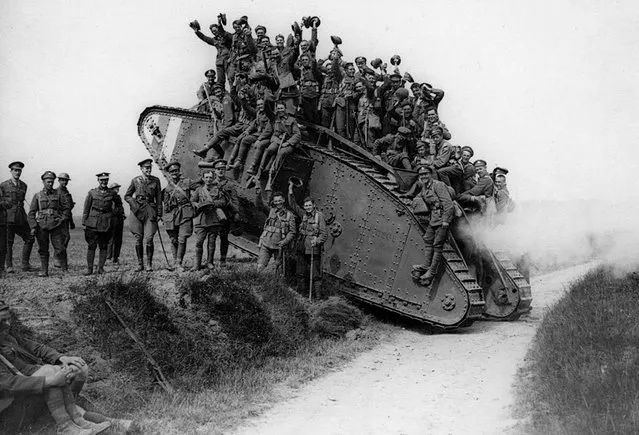
These black-and-white photos are taken from the new book “Armoured Warfare in the First World War 1916 – 1918” by Anthony Tucker-Jones and published by Pen & Sword Military. “Interestingly the British, French and Germans took completely different approaches with varying results”. The British military produced “Little Willie” in Autumn 1915 weighing 18 tonnes, which had a crew of two plus four gunners. “Inspired by a tracked artillery tractor “Little Willie” was referred to as a water tank – hence the name tank – to ensure secrecy”, said Anthony. “This led to the strange looking Mark I with its peculiar rhomboid shape, designed to cross trenches with guns in sponsons on either side. The Germans saw the tank as unchivalrous and were slow to grasp its utility. They favoured the Stormtrooper (specialist soldiers used to infiltrate enemy trenches) and artillery, not the tank”, said Anthony. “However, they didn’t hesitate to make use of captured British tanks. Although the tank helped secure victory and German soldiers dubbed it “Germany’s Downfall” the country was ultimately brought to its knees by the Allies blockade”. Here: British troops hitch a ride on a Mark IV after the massed tank fleet spearheading attack at Cambrai on November 20, 1917. (Photo by Anthony Tucker-Jones/Mediadrumworld.com)

These black-and-white photos are taken from the new book “Armoured Warfare in the First World War 1916 – 1918” by Anthony Tucker-Jones and published by Pen & Sword Military. Here: British troops hitch a ride on a Mark IV after the massed tank fleet spearheading attack at Cambrai on November 20, 1917. (Photo by Anthony Tucker-Jones/Mediadrumworld.com)
Details
23 Feb 2017 00:02:00
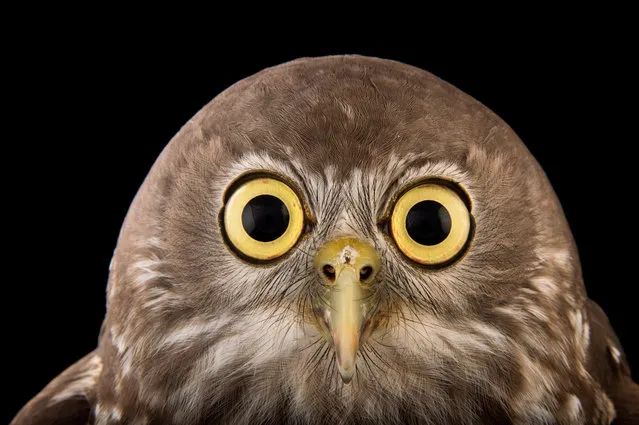
The National Geographic Photo Ark is a travelling exhibition of photographer Joel Sartore’s quest to create a photo archive of biodiversity around the world. So far, Sartore has captured studio portraits of more than 6,000 species – a number that he hopes to double. On 1 July, the ark will open at Melbourne zoo – the first time it has been exhibited in the southern hemisphere. More than 50 portraits will be on display, including many of Australian endangered animals being protected by programs at the zoo itself. These captions have been edited from text supplied by Melbourne zoo. Here: Barking owl. So-named because its call sounds like a barking dog, these birds are native to Australia, Indonesia and Papua New Guinea. In Victoria they are listed as an endangered species, and in 2003 there were estimated to be fewer than 50 breeding pairs. The main threat to the species in Victoria is loss of habitat, especially large trees with hollows in which they can nest and on which many of their prey depend. Apart from a bark, they may utter a chilling scream when they feel threatened. (Photo by Joel Sartore/National Geographic Photo Ark/The Guardian)

The National Geographic Photo Ark is a travelling exhibition of photographer Joel Sartore’s quest to create a photo archive of biodiversity around the world. So far, Sartore has captured studio portraits of more than 6,000 species – a number that he hopes to double. On 1 July, the ark will open at Melbourne zoo – the first time it has been exhibited in the southern hemisphere. More than 50 portraits will be on display, including many of Australian endangered animals being protected by programs at the zoo itself. These captions have been edited from text supplied by Melbourne zoo. Here: Barking owl. (Photo by Joel Sartore/National Geographic Photo Ark/The Guardian)
Details
01 Jul 2017 07:45:00
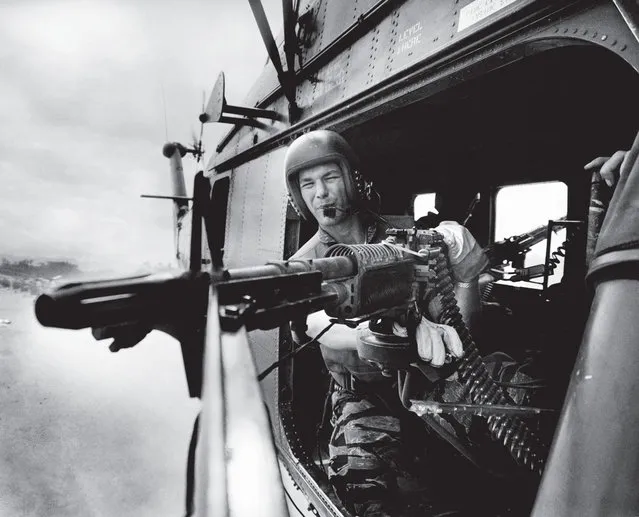
Man your battle stations: The crew chief of helicopter Yankee Papa 13, lance corporal James C. Farley, mans an M-60 machine gun during a mission near Da Nang, Vietnam on March 31, 1965. (Photo by Larry Burrows/Time & Life Pictures)

In the spring of 1965, within weeks of 3,500 American Marines arriving in Vietnam, a 39-year-old Briton named Larry Burrows began work on a feature for LIFE magazine, chronicling the day-to-day experience of U.S. troops on the ground – and in the air – in the midst of the rapidly widening war. The photographs in this gallery focus on a calamitous March 31, 1965, helicopter mission; Burrows’ “report from Da Nang”, featuring his pictures and his personal account of the harrowing operation, was published two weeks later as a now-famous cover story in the April 16, 1965, issue of LIFE.

Photo: Man your battle stations: The crew chief of helicopter Yankee Papa 13, lance corporal James C. Farley, mans an M-60 machine gun during a mission near Da Nang, Vietnam on March 31, 1965. (Photo by Larry Burrows/Time & Life Pictures)
Details
07 Apr 2013 07:08:00