Loading...
Done
In this handout image supplied by Qatar 2022  The Al-Rayyan stadium  is pictured in this artists impression as Qatar 2022 World Cup bid unveils it's stadiums on September 16, 2010 in Doha, Qatar. It has been designed to include a “media facade” that includes a membrane that acts as a screen for projections; news, commercials, sports updates and current tournament information and matches. (Photo by Qatar 2022 via Getty Images)

In this handout image supplied by Qatar 2022 The Al-Rayyan stadium is pictured in this artists impression as Qatar 2022 World Cup bid unveils it's stadiums on September 16, 2010 in Doha, Qatar. It has been designed to include a “media facade” that includes a membrane that acts as a screen for projections; news, commercials, sports updates and current tournament information and matches. (Photo by Qatar 2022 via Getty Images)
Details
13 Jul 2014 10:29:00
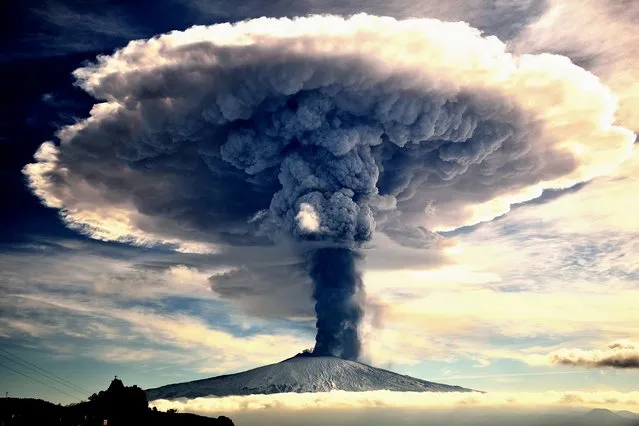
“The power of nature”. Magma, ash and gas erupt from Mount Etna in December 2015, rising to a height of several kilometres. Winner: Nature. (Photo by Giuseppe Mario Famiani/SIPA Contest)

“The power of nature”. Magma, ash and gas erupt from Mount Etna in December 2015, rising to a height of several kilometres. Winner: Nature. (Photo by Giuseppe Mario Famiani/SIPA Contest)
Details
31 Oct 2016 11:49:00


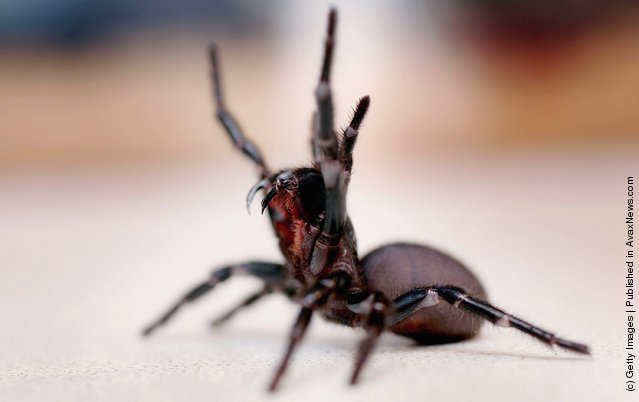
A Funnel Web spider is pictured at the Australian Reptile Park January 23, 2006 in Sydney, Australia. The Funnel Web is one of Australia's deadliest animals, with a venom that is packed with at least 40 different toxic proteins. A bite from a Funnel Web causes massive electrical over-load in the body's nervous system. Finally, fatalities occur from either heart attack or a pulmonary oedema, where the capillaries around the lungs begin to leak fluid and the patient effectively drowns. Death can come as quickly as two hours after a bite if no medical treatment is sought. Due to advances in anti-venom, there has been no death from a Funnel Web bite in Australia since 1980. Australia is home to some of the most deadly and poisonous animals on earth. (Photo by Ian Waldie/Getty Images)
Details
25 Apr 2011 07:49:00
The Art Of FeiGiap

There's something inherently Ghibli-esque about Chong FeiGiap's beautiful paintings, capturing that sense of wonder typically present in the best animes the studio had to offer, as well as a dash of Tekkon Kinkreet's amazingly colorful, complex cities.
Details
03 Oct 2013 11:12:00
Students dressed up as Hindu gods Lord Krishna and Lord Shiva participate in a cultural event in their school in Mumbai on August 21, 2019. (Photo by Indranil Mukherjee/AFP Photo)

Students dressed up as Hindu gods Lord Krishna and Lord Shiva participate in a cultural event in their school in Mumbai, India on August 21, 2019. (Photo by Indranil Mukherjee/AFP Photo)
Details
26 Aug 2019 00:01:00
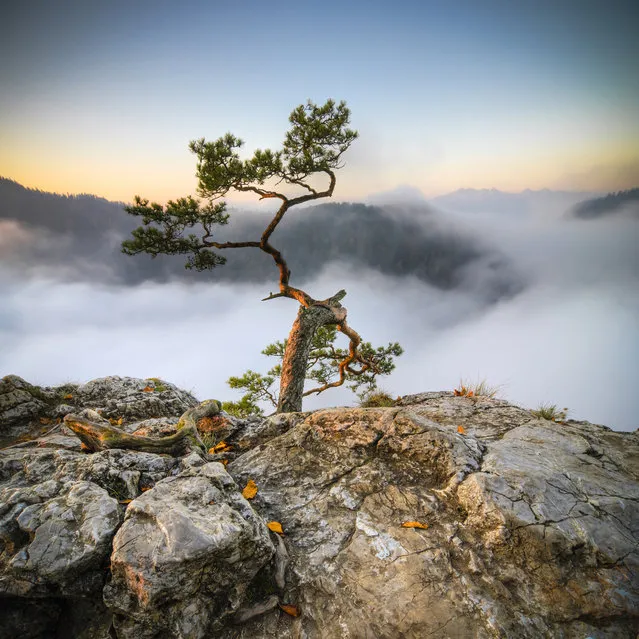
“Sokolica”. Sokolica, Poland. (Photo and caption by Marcin Kęsek/National Geographic Traveler Photo Contest)

“Sokolica”. Sokolica, Poland. (Photo and caption by Marcin Kęsek/National Geographic Traveler Photo Contest)

ATTENTION! All pictures are presented in high resolution. To see Hi-Res images – just TWICE click on any picture. In other words, click small picture – opens the BIG picture. Click BIG picture – opens VERY BIG picture.
Details
25 Jun 2013 09:13:00
Yurakucho, 2013. (Davide Filippini)

Yurakucho, 2013. (Photo by Davide Filippini)
Details
02 Jul 2013 09:29:00
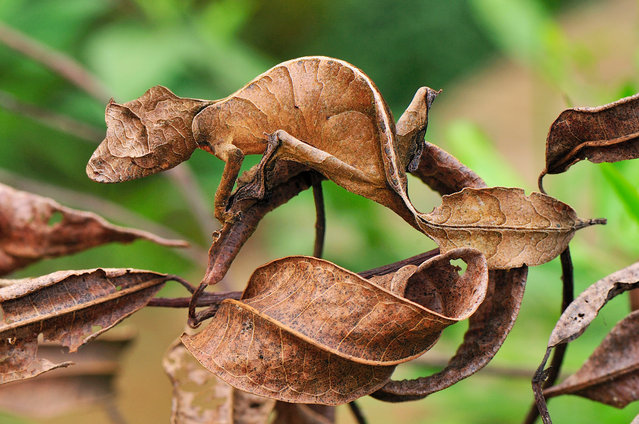
Is it a leaf? Is it tree bark? No, it’s the Satanic leaf-tailed gecko. Cleverly disguised as a rotting leaf, Madagascar’s camouflage king has red eyes, pointy horns and a taste for night hunting: it’s nature’s most devilish deceiver. (Photo by Thomas Marent/ARDEA)

Is it a leaf? Is it tree bark? No, it’s the Satanic leaf-tailed gecko. Cleverly disguised as a rotting leaf, Madagascar’s camouflage king has red eyes, pointy horns and a taste for night hunting: it’s nature’s most devilish deceiver. The twisted body and veiny skin echo the detail of a dry leaf, which ensures the gecko blends in with its forest home. The mottled tail appears to have sections missing, as though it has withered over time. This mini-monster epitomises survival of the fittest, having adapted gradually to become today’s extraordinary leaf impersonator. (Photo by Thomas Marent/ARDEA)
Details
20 Nov 2015 08:03:00