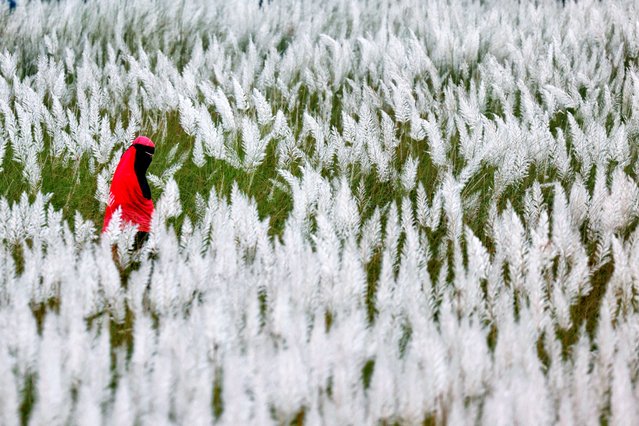
A woman wearing a burka, walks along a kans grass flower field, at Sarighat area in Dhaka, Bangladesh, on September 19, 2025. (Photo by Mohammad Ponir Hossain/Reuters)
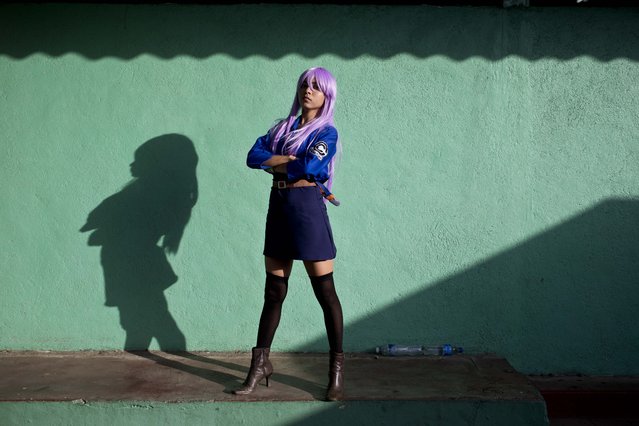
Cosplayer Monzerath Gutierrez, who portrays Dragon Ball Z character Trunks, female version, poses for a portrait during the 4th edition of the MiniCon Anime convention, at the School of Dance, in Managua, Nicaragua, Sunday, July, 26, 2015. (Photo by Esteban Felix/AP Photo)
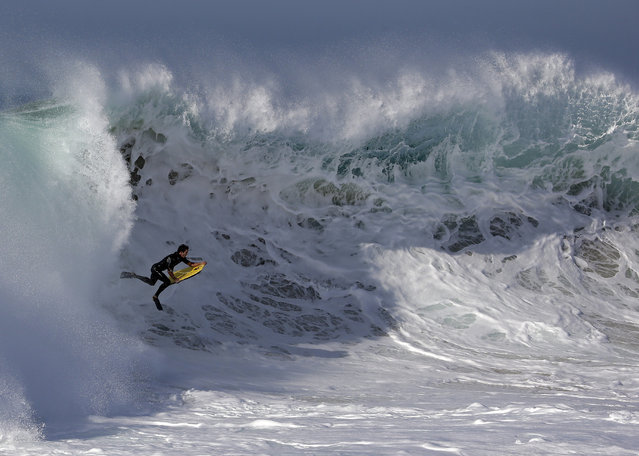
A bogieboarder rides a wave at the wedge in Newport Beach, Calif., Wednesday, August 27, 2014. Southern California beachgoers experienced much higher than normal surf, brought on by Hurricane Marie spinning off the coast of Mexico. (Photo by Chris Carlson/AP Photo)
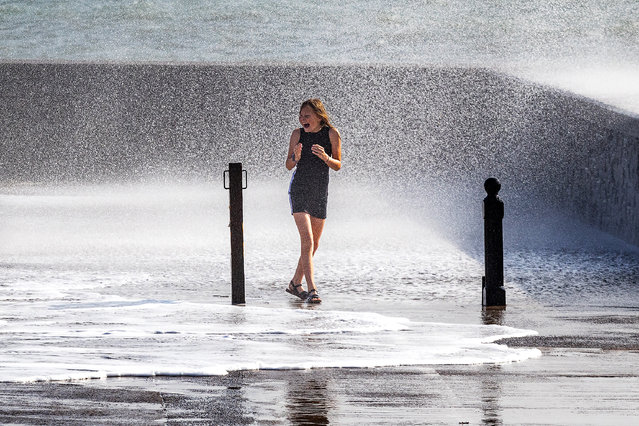
Waves batter the North Devon coast at Ilfracombe, UK on August 23, 2024, as Storm Lilian hits the UK and the Met Office issues a yellow weather warning. (Photo by Mark Passmore Photography)
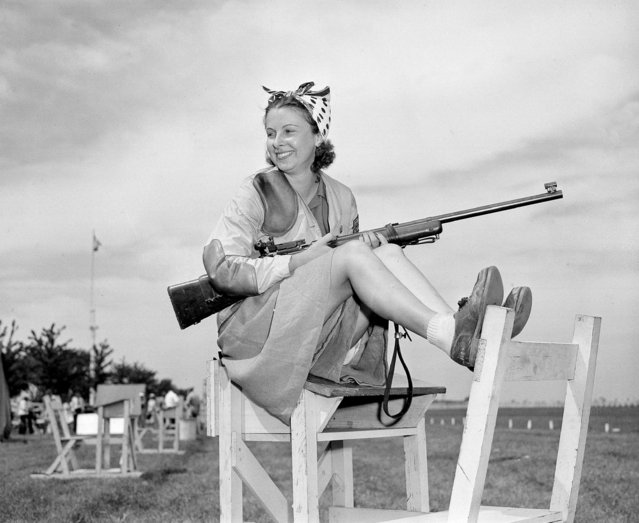
Doris Dean of Chicago, Ill., sits with her gun shortly after she won a 50 meter, 40-shot event for women with a perfect 400 score at the National Rifle Association (NRA) matches at Camp Perry, near Toledo, Ohio, September 7, 1941. (Photo by AP Photo/DW)
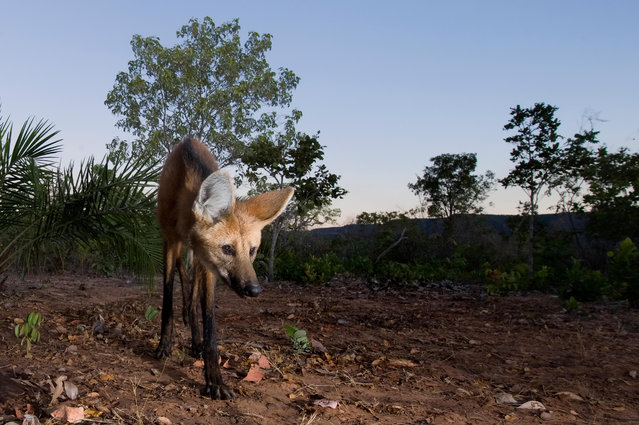
Global wildlife populations will decline by 67% by 2020 unless urgent action is taken to reduce human impact on species and ecosystems, warns the biennial Living Planet Index report from WWF (World Wide Fund for Nature) and ZSL (Zoological Society of London). From elephants to eels, here are some of the wildlife populations most affected by human activity. Here: The maned wolf is among the large mammals in the Brazilian Cerrado that are threatened by the increasing conversion of grasslands into farmland for grazing and growing crops. (Photo by Ben Cranke/Nature Picture Library/Alamy Stock Photo)