Loading...
Done


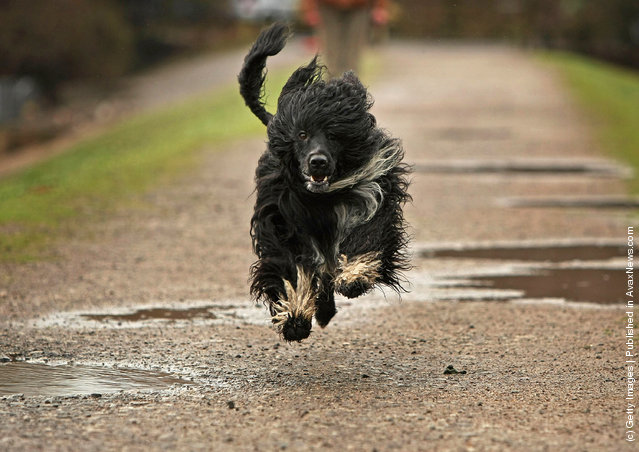
“The Portuguese Water Dog is a breed of working dog as classified by the American Kennel Club. Portuguese Water Dogs are originally from the Portuguese region of the Algarve, from where the breed expanded to all around Portugal's coast, where they were taught to herd fish into fishermen's nets, to retrieve lost tackle or broken nets, and to act as couriers from ship to ship, or ship to shore. Portuguese Water Dogs rode in bobbing fishing trawlers as they worked their way from the warm Atlantic waters of Portugal to the frigid fishing waters off the coast of Iceland where the fleets caught cod to bring home. Portuguese Water Dogs were often taken with sailors during the Portuguese discoveries”. – Wikipedia

Photo: Kix, a Portuguese Water Dog , enjoys a walk around the muddy fields near his home before the grooming and preparation starts for this years Crufts on March 3, 2009 in Telford, England. (Photo by Christopher Furlong/Getty Images)
Details
26 Jul 2011 11:27:00
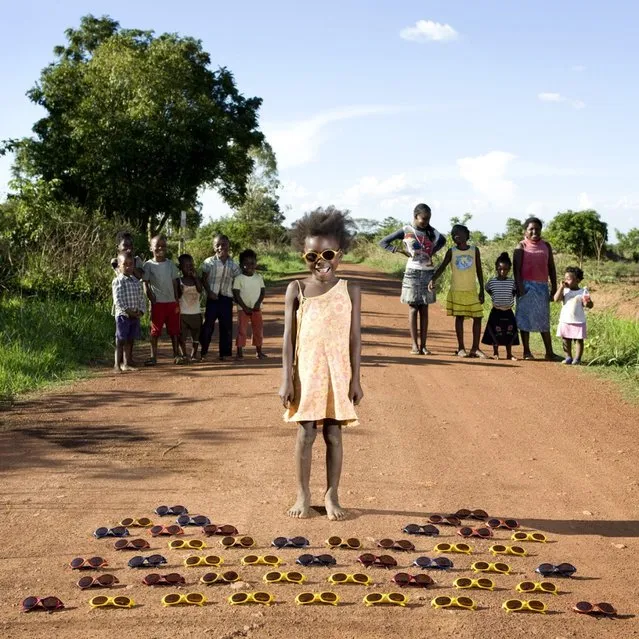
Maudy – Kalulushi, Zambia. Maudy was born in a hut in a small village close to Kalulushi, in Zambia. She grew up playing in the street with the other children in the village, who all attend the same school, where students ages 3 to 10 years old are in the same class. The village has no shops, restaurants or hotels, and just a few children are lucky enough to have toys. Maudy and her friends found a box full of sunglasses on the street, which quickly became their favorite toys. “Toy Stories” project. (Gabriele Galimberti)

Maudy – Kalulushi, Zambia. Maudy was born in a hut in a small village close to Kalulushi, in Zambia. She grew up playing in the street with the other children in the village, who all attend the same school, where students ages 3 to 10 years old are in the same class. The village has no shops, restaurants or hotels, and just a few children are lucky enough to have toys. Maudy and her friends found a box full of sunglasses on the street, which quickly became their favorite toys. “Toy Stories” project. (Photo and caption by Gabriele Galimberti)
Details
05 Dec 2013 07:54:00
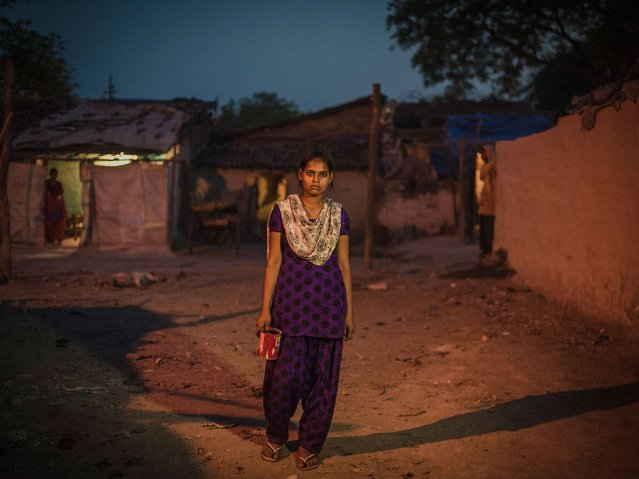
Some 300 girls and women in India still practise open defecation. Over half the country’s population, 800 million people, do not have access to a toilet that meets basic standards. (Photo by Poulomi Basu/WaterAid)

Some 300 girls and women in India still practise open defecation. Over half the country’s population, 800 million people, do not have access to a toilet that meets basic standards. (Photo by Poulomi Basu/WaterAid)
Details
24 Jun 2014 12:01:00
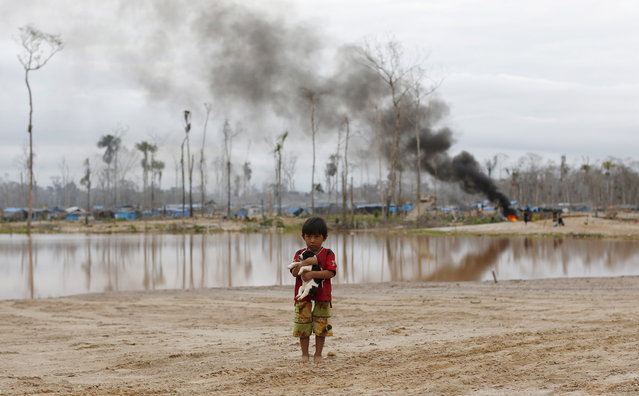
A boy carries a dog as he stands after a Peruvian police operation to destroy illegal gold mining camps in a zone known as Mega 14, in the southern Amazon region of Madre de Dios July 14, 2015. Peruvian police razed dozens of illegal gold mining camps at the edge of an Amazonian nature reserve this week, part of a renewed bid to halt the spread of wildcatting in a remote rainforest region. (Photo by Janine Costa/Reuters)

A boy carries a dog as he stands after a Peruvian police operation to destroy illegal gold mining camps in a zone known as Mega 14, in the southern Amazon region of Madre de Dios July 14, 2015. Peruvian police razed dozens of illegal gold mining camps at the edge of an Amazonian nature reserve this week, part of a renewed bid to halt the spread of wildcatting in a remote rainforest region. (Photo by Janine Costa/Reuters)
Details
18 Jul 2015 12:29:00
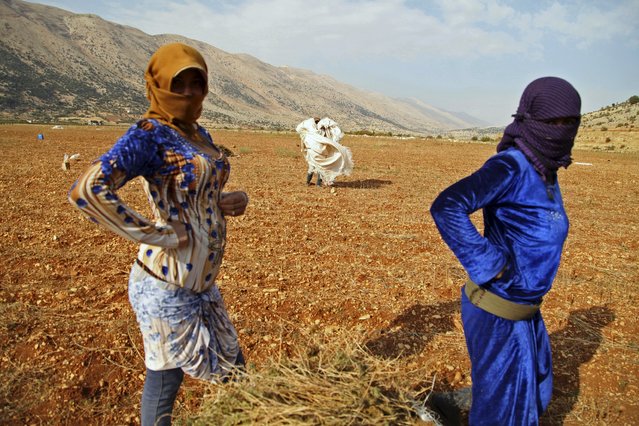
Aisha, 15, (L) (who asked to withhold her last name), a Syrian refugee from Raqqa, waits with a fellow refugee while harvesting cannabis in the Bekaa valley, Lebanon October 19, 2015. Syrian refugees work to harvest and process spiky-leafed cannabis plants in neighbouring Lebanon’s Bekaa Valley. (Photo by Alia Haju/Reuters)

Aisha, 15, (L) (who asked to withhold her last name), a Syrian refugee from Raqqa, waits with a fellow refugee while harvesting cannabis in the Bekaa valley, Lebanon October 19, 2015. Syrian refugees work to harvest and process spiky-leafed cannabis plants in neighbouring Lebanon’s Bekaa Valley. Often farmers of cotton and wheat back home in Raqqa province – now the de facto capital of Islamic State – the conflict in Syria drove them to seek safety in a region where Syrian migrant workers used to spend a few months a year before returning home. (Photo by Alia Haju/Reuters)
Details
24 Dec 2015 08:03:00
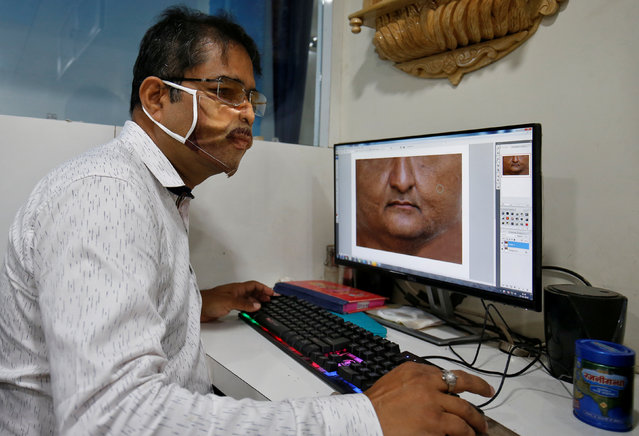
A man designs a face mask with the photograph of a customer printed on it, amid the spread of the coronavirus disease (COVID-19), at a photo studio in Gandhinagar, India, May 27, 2020. (Photo by Amit Dave/Reuters)

A man designs a face mask with the photograph of a customer printed on it, amid the spread of the coronavirus disease (COVID-19), at a photo studio in Gandhinagar, India, May 27, 2020. (Photo by Amit Dave/Reuters)
Details
29 May 2020 00:07:00
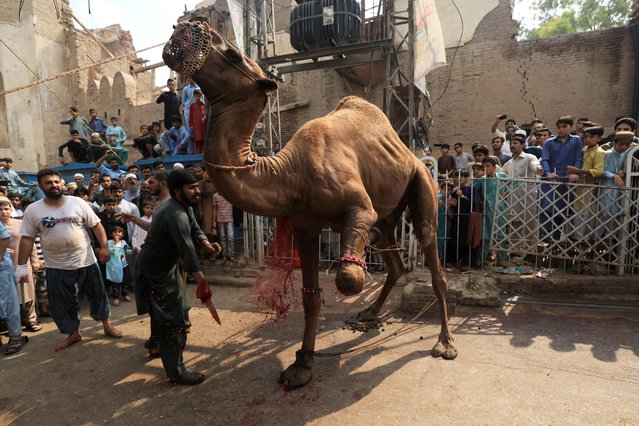
Men and children gather as a camel is being slaughtered in celebration of Eid al-Adha, in Peshawar, Pakistan on August 12, 2019. (Photo by Fayaz Aziz/Reuters)

Men and children gather as a camel is being slaughtered in celebration of Eid al-Adha, in Peshawar, Pakistan on August 12, 2019. (Photo by Fayaz Aziz/Reuters)
Details
07 Sep 2019 00:03:00
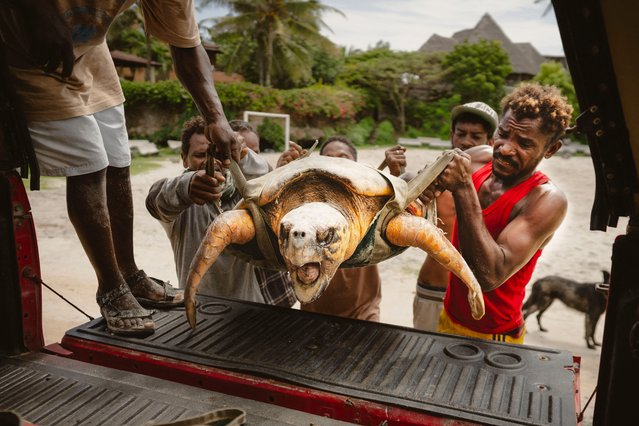
Staff from Local Ocean Conservation and fishermen lifting a mature Loggerhead sea turtle into a car, after the turtle was hooked out on the open water and needs to be taken to observation in the rehabilitation centre before being released back into the ocean, in Watamu, Kenya on May 22, 2025. (Photo by Fredrik Lerneryd/AFP Photo)

Staff from Local Ocean Conservation and fishermen lifting a mature Loggerhead sea turtle into a car, after the turtle was hooked out on the open water and needs to be taken to observation in the rehabilitation centre before being released back into the ocean, in Watamu, Kenya on May 22, 2025. (Photo by Fredrik Lerneryd/AFP Photo)
Details
08 Jun 2025 03:18:00