Loading...
Done
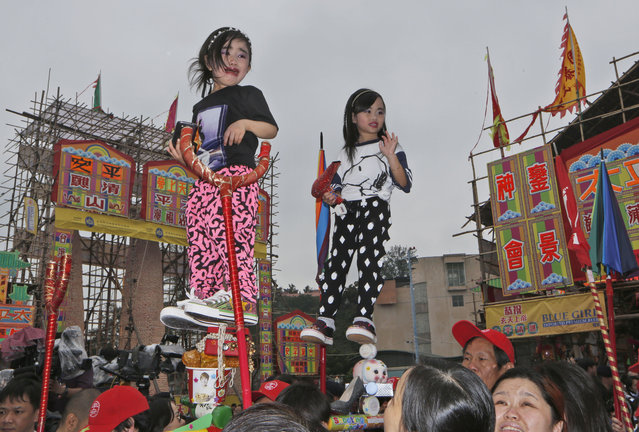
A young performer cries as she parades during the Bun Festival on Cheung Chau island in Hong Kong Tuesday, May 6, 2014. Bun Festival, the Taoist God of the Sea, is worshipped and evil spirits are believed to be scared away by loud gongs and drums during the procession. The celebration includes bun scrambling, parades, opera performances, and children dressed in colorful costumes. (Photo by Kin Cheung/AP Photo)

A young performer cries as she parades during the Bun Festival on Cheung Chau island in Hong Kong Tuesday, May 6, 2014. Bun Festival, the Taoist God of the Sea, is worshipped and evil spirits are believed to be scared away by loud gongs and drums during the procession. The celebration includes bun scrambling, parades, opera performances, and children dressed in colorful costumes. (Photo by Kin Cheung/AP Photo)
Details
08 May 2014 07:31:00
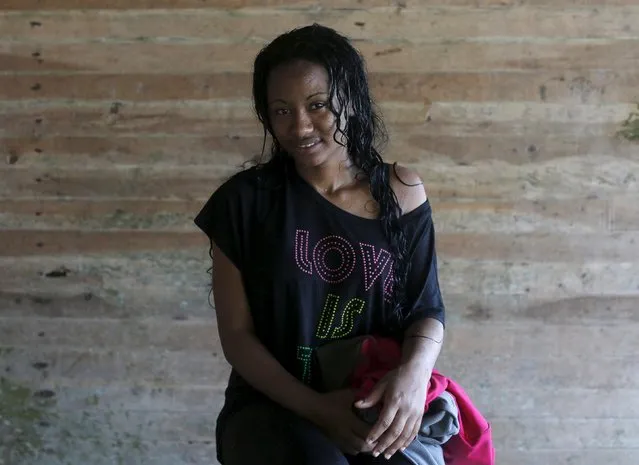
Cuban Daymara A., 20, poses for a photograph after she crossed the border from Colombia through the jungle into La Miel, in the province of Guna Yala, Panama December 2, 2015.  According to local authorities in La Miel, some 100 to 150 Cubans have been entering Panama from Colombia every day for the last three months. Scores of Cubans have come to Panama as they seek overland passage towards the United States fearing a recent detente between Washington and Havana could end their preferential treatment. (Photo by Carlos Jasso/Reuters)

Cuban Daymara A., 20, poses for a photograph after she crossed the border from Colombia through the jungle into La Miel, in the province of Guna Yala, Panama December 2, 2015. According to local authorities in La Miel, some 100 to 150 Cubans have been entering Panama from Colombia every day for the last three months. Scores of Cubans have come to Panama as they seek overland passage towards the United States fearing a recent detente between Washington and Havana could end their preferential treatment. (Photo by Carlos Jasso/Reuters)
Details
05 Dec 2015 08:00:00
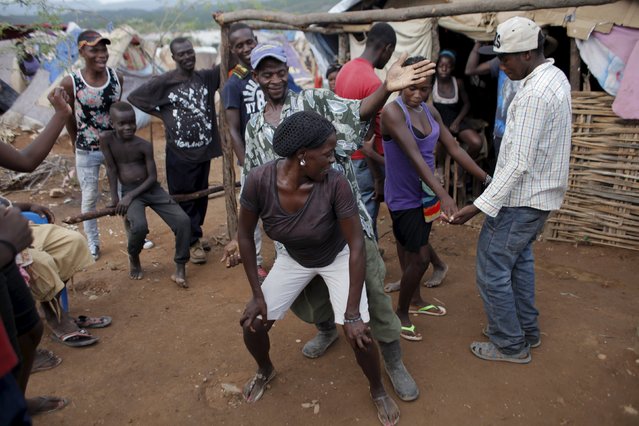
People enjoy themselves as they dance to Dominican music at a refugee camp for Haitians returning from the Dominican Republic on the outskirts of Anse-a-Pitres, Haiti, September 6, 2015. (Photo by Andres Martinez Casares/Reuters)

People enjoy themselves as they dance to Dominican music at a refugee camp for Haitians returning from the Dominican Republic on the outskirts of Anse-a-Pitres, Haiti, September 6, 2015. Dominican officials last month began implementing a controversial immigration program targeting Haitian migrants and Dominican-born people of Haitian descent. The program centers on round-ups and deportations that have triggered concerns about a slow-growing border migration crisis in the poorest country in the Americas. So far about 1,500 people have been deported at a pace of 50 to 100 per day, according to relief officials with access to records supplied by the Dominican government. (Photo by Andres Martinez Casares/Reuters)
Details
21 Sep 2015 11:29:00
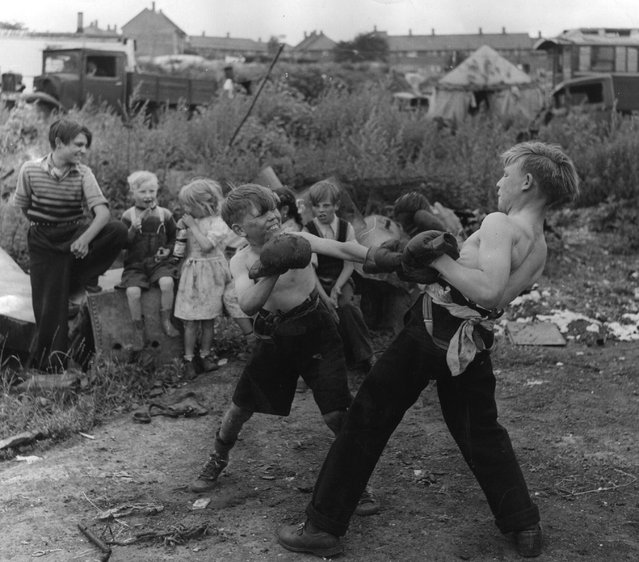
The unromantic gypsies. Children boxing in a gypsy camp in Kent, England on July 1, 1951. Like all boys these gypsy lads like to try their hand at boxing. Encouraged by their friends they fight it out on Corke's Meadow. Few Romanies now live a life of wandering romance. Most are like the three hundred squatters of Corke's Meadow, Kent, which is part of a “gypsy problem” that involves about 100,000 today. Of those about 25,000 can be rightly called gypsies, the rest are Mumpers and Posh-rats and Hobos. Corke's Meadow has both kinds. “Picture Post” cameraman Bert Hardy photographs the Corke's Meadow gypsies in their encampment. (Photo by Hulton-Deutsch Collection/Corbis via Getty Images)

The unromantic gypsies. Children boxing in a gypsy camp in Kent, England on July 1, 1951. Like all boys these gypsy lads like to try their hand at boxing. Encouraged by their friends they fight it out on Corke's Meadow. Few Romanies now live a life of wandering romance. Most are like the three hundred squatters of Corke's Meadow, Kent, which is part of a “gypsy problem” that involves about 100,000 today. Of those about 25,000 can be rightly called gypsies, the rest are Mumpers and Posh-rats and Hobos. Corke's Meadow has both kinds. “Picture Post” cameraman Bert Hardy photographs the Corke's Meadow gypsies in their encampment. (Photo by Hulton-Deutsch Collection/Corbis via Getty Images)
Details
12 Mar 2017 00:01:00
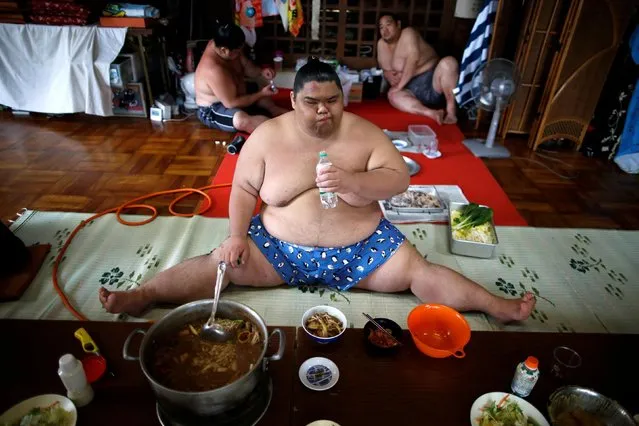
Sumo wrestler Kaiho eats a “chanko” meal in Nagoya, Japan on July 18, 2017. After ending practice at 10:30 a.m., the wrestlers mingle with fans, sign autographs and pose for photos before the first of their two daily meals. (Photo by Issei Kato/Reuters)

Sumo wrestler Kaiho eats a “chanko” meal in Nagoya, Japan on July 18, 2017. After ending practice at 10:30 a.m., the wrestlers mingle with fans, sign autographs and pose for photos before the first of their two daily meals. (Photo by Issei Kato/Reuters)
Details
20 Jul 2017 07:49:00
Military policemen take part in an operation at Cidade de Deus favela in Rio de Janeiro, Brazil, on February 01, 2018. (Photo by Mauro Pimentel/AFP Photo)

Military policemen take part in an operation at Cidade de Deus favela in Rio de Janeiro, Brazil, on February 01, 2018. (Photo by Mauro Pimentel/AFP Photo)
Details
02 Feb 2018 08:16:00
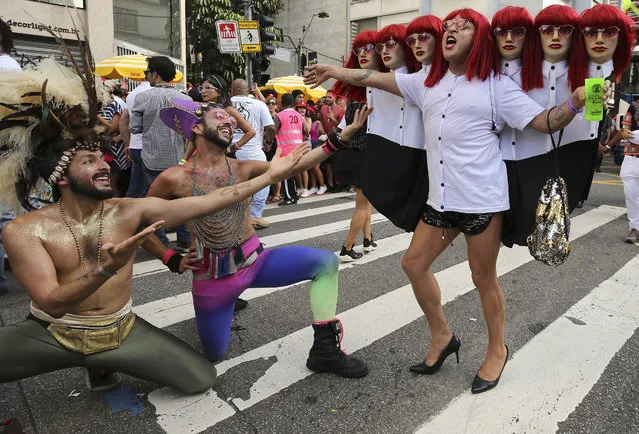
Carnival revelers perform during the Academicos do Baixo Augustaa carnival “bloco” parade in Sao Paulo, Brazil, Sunday, February 24, 2019. (Photo by Andre Penner/AP Photo)

Carnival revelers perform during the Academicos do Baixo Augustaa carnival “bloco” parade in Sao Paulo, Brazil, Sunday, February 24, 2019. (Photo by Andre Penner/AP Photo)
Details
24 Dec 2019 00:01:00
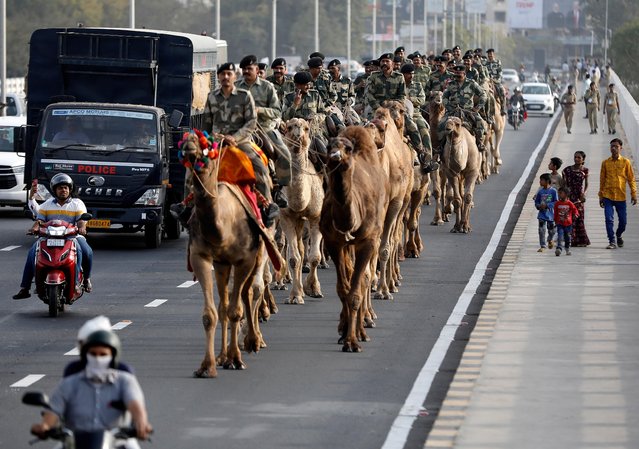
Border Security Force (BSF) soldiers ride their camels as they take part in a rehearsal for a road show ahead of the visit of U.S. President Donald Trump, in Ahmedabad, India, February 21, 2020. (Photo by Amit Dave/Reuters)

Border Security Force (BSF) soldiers ride their camels as they take part in a rehearsal for a road show ahead of the visit of U.S. President Donald Trump, in Ahmedabad, India, February 21, 2020. (Photo by Amit Dave/Reuters)
Details
26 Feb 2020 00:03:00