Loading...
Done
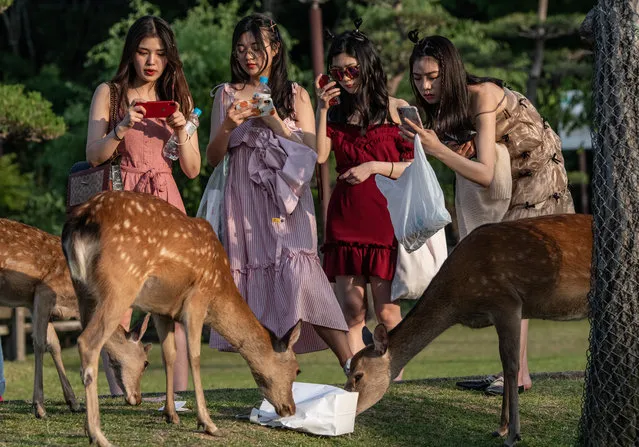
Tourists take photographs as a wild sika deer eats a bag on June 6, 2019 in Nara, Japan. Nara's free-roaming deer have become a huge attraction for tourists. However, an autopsy on a deer that was recently found dead near one of the city's famous temples discovered 3.2kg of plastic in its stomach and caused concern at the effect of tourism as Japan struggles to cope with a huge increase in domestic and international tourists. Alongside a growing Japanese tendency to holiday domestically, a record 31 million people visited the country in 2018 up 8.7 percent from the previous year, with many people now worrying about the environmental impact caused by such large visitor numbers. (Photo by Carl Court/Getty Images)

Tourists take photographs as a wild sika deer eats a bag on June 6, 2019 in Nara, Japan. Nara's free-roaming deer have become a huge attraction for tourists. However, an autopsy on a deer that was recently found dead near one of the city's famous temples discovered 3.2kg of plastic in its stomach and caused concern at the effect of tourism as Japan struggles to cope with a huge increase in domestic and international tourists. (Photo by Carl Court/Getty Images)
Details
19 Jun 2019 00:03:00
Supporters of Venezuela's President Nicolas Maduro take part in a rally in support of the government in Caracas, Venezuela on May 20, 2019. (Photo by Ivan Alvarado/Reuters)

Supporters of Venezuela's President Nicolas Maduro take part in a rally in support of the government in Caracas, Venezuela on May 20, 2019. (Photo by Ivan Alvarado/Reuters)
Details
15 Jul 2019 00:01:00
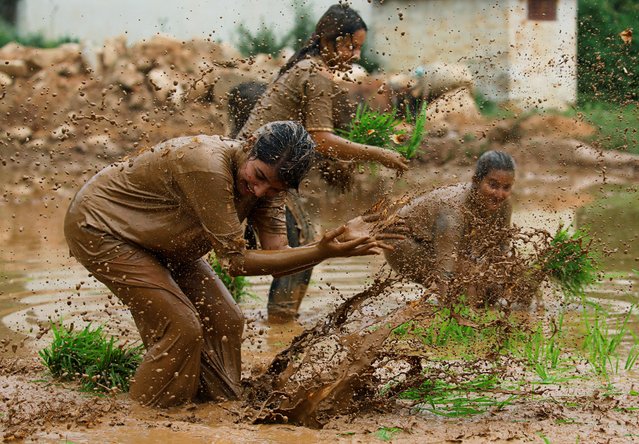
Participants play in the mud as they plant rice samplings during National Paddy Day, also called Asar Pandra, that marks the commencement of rice crop planting in paddy fields as monsoon season arrives, in Dhading, Nepal, June 30, 2019. (Photo by Navesh Chitrakar/Reuters)

Participants play in the mud as they plant rice samplings during National Paddy Day, also called Asar Pandra, that marks the commencement of rice crop planting in paddy fields as monsoon season arrives, in Dhading, Nepal, June 30, 2019. (Photo by Navesh Chitrakar/Reuters)
Details
22 Aug 2019 00:01:00
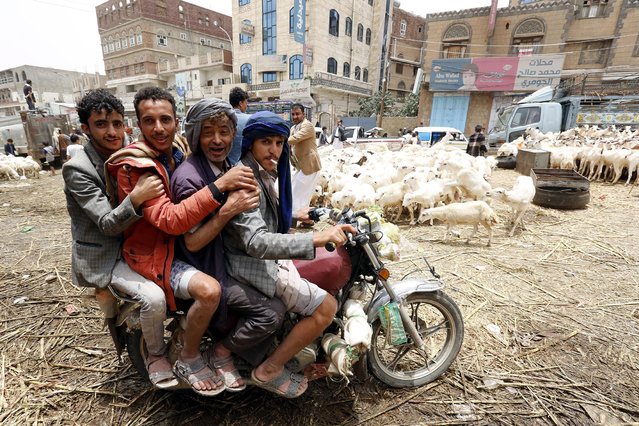
Four men ride a motorbike past sacrificial animals displayed for sale ahead of the Eid al-Adha festival at a livestock market in Sana'a, Yemen, 08 August 2019. Eid al-Adha is the holiest of the two Muslims holidays celebrated each year; it marks the yearly Muslim pilgrimage (Hajj) to visit Mecca, Islam's holiest place. Muslims slaughter a sacrificial animal and split the meat into three parts: one for family, one for friends and relatives, and one for the poor and needy. (Photo by Yahya Arhab/EPA/EFE)

Four men ride a motorbike past sacrificial animals displayed for sale ahead of the Eid al-Adha festival at a livestock market in Sana'a, Yemen, 08 August 2019. Eid al-Adha is the holiest of the two Muslims holidays celebrated each year; it marks the yearly Muslim pilgrimage (Hajj) to visit Mecca, Islam's holiest place. Muslims slaughter a sacrificial animal and split the meat into three parts: one for family, one for friends and relatives, and one for the poor and needy. (Photo by Yahya Arhab/EPA/EFE)
Details
29 Aug 2019 00:03:00
Tourists pose for a selfie in Cancun, October 13, 2015. Cancun's transformation in the 1970s from a small Caribbean fishing village into a strip of nightclubs and high-rise hotels has reduced biodiversity and polluted water resources as infrastructure struggles to keep up. (Photo by Edgard Garrido/Reuters)

Tourists pose for a selfie in Cancun, October 13, 2015. Cancun's transformation in the 1970s from a small Caribbean fishing village into a strip of nightclubs and high-rise hotels has reduced biodiversity and polluted water resources as infrastructure struggles to keep up. (Photo by Edgard Garrido/Reuters)
Details
15 Nov 2015 08:03:00
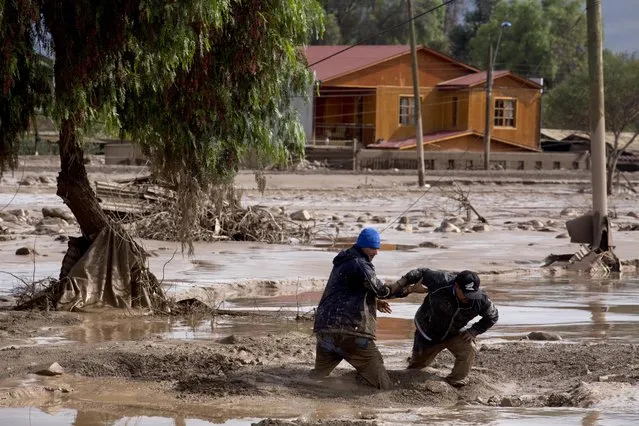
Two men help each other cross a street covered in deep mud in Copiapo, Chile, Thursday, March 26, 2015. (Photo by Pablo Sanhueza/AP Photo)

Two men help each other cross a street covered in deep mud in Copiapo, Chile, Thursday, March 26, 2015. Unusually heavy thunder storms and torrential rains that began on Tuesday have blocked roads, caused power outages and affected some 600 people on this normally dry region. (Photo by Aton Chile/Marcelo Hernandez/AP Photo)
Details
27 Mar 2015 12:52:00
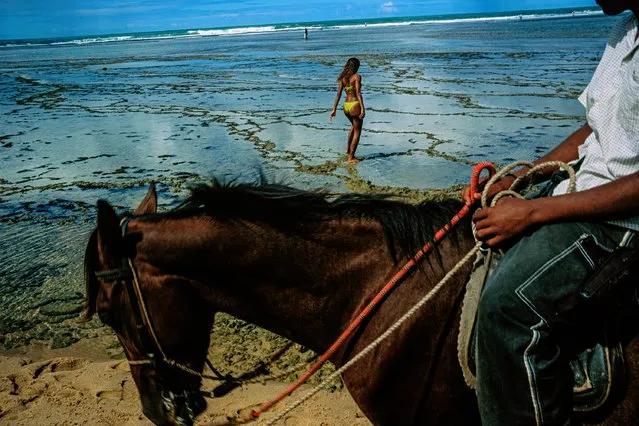
Praia du Forte, Bahia. “This was the lead picture for a National Geographic story on Bahia, because it was both mysterious as well as a “geography” picture showing where the slaves arrived from Nigeria. Beach pictures seem like they should be easy to take, but for me they are actually quite difficult. Too easy to fall into cliche. When I saw the kid coming on the horse, I quickly ran to see if I could make something with a woman in a bikini that was not a bikini shot”. (Photo by David Alan Harvey/The Guardian)

Praia du Forte, Bahia. “This was the lead picture for a National Geographic story on Bahia, because it was both mysterious as well as a “geography” picture showing where the slaves arrived from Nigeria. Beach pictures seem like they should be easy to take, but for me they are actually quite difficult. Too easy to fall into cliche. When I saw the kid coming on the horse, I quickly ran to see if I could make something with a woman in a bikini that was not a bikini shot”. (Photo by David Alan Harvey/The Guardian)
Details
20 Aug 2016 11:35:00
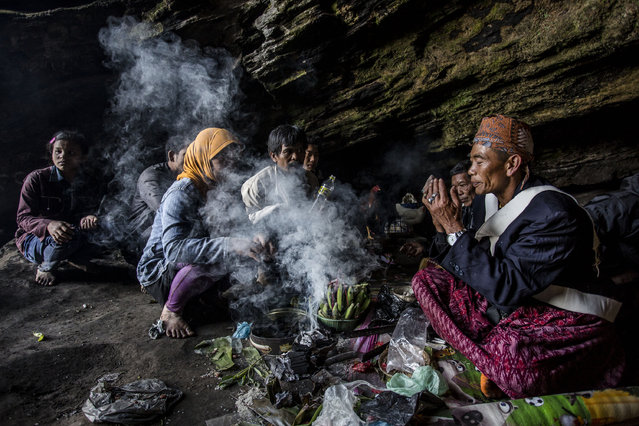
A Tenggerese shaman praying for worshippers at Widodaren cave during the Tenggerese Hindu Yadnya Kasada festival on July 31, 2015 in Probolinggo, East Java, Indonesia. The festival is the main festival of the Tenggerese people and lasts about a month. On the fourteenth day, the Tenggerese make the journey to Mount Bromo to make offerings of rice, fruits, vegetables, flowers and livestock to the mountain gods by throwing them into the volcano's caldera. (Photo by Ulet Ifansasti/Getty Images)

A Tenggerese shaman praying for worshippers at Widodaren cave during the Tenggerese Hindu Yadnya Kasada festival on July 31, 2015 in Probolinggo, East Java, Indonesia. The festival is the main festival of the Tenggerese people and lasts about a month. On the fourteenth day, the Tenggerese make the journey to Mount Bromo to make offerings of rice, fruits, vegetables, flowers and livestock to the mountain gods by throwing them into the volcano's caldera. The origin of the festival lies in the 15th century when a princess named Roro Anteng started the principality of Tengger with her husband Joko Seger, and the childless couple asked the mountain Gods for help in bearing children. The legend says the Gods granted them 24 children but on the provision that the 25th must be tossed into the volcano in sacrifice. The 25th child, Kesuma, was finally sacrificed in this way after initial refusal, and the tradition of throwing sacrifices into the caldera to appease the mountain Gods continues today. (Photo by Ulet Ifansasti/Getty Images)

Details
01 Aug 2015 12:07:00