Loading...
Done
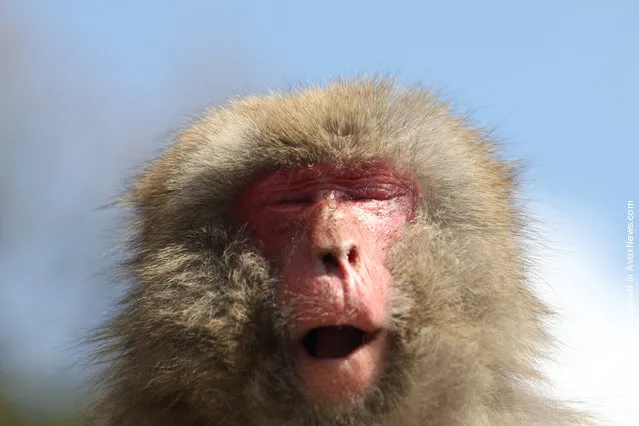
A 19-year-old Japanese macaque monkey named Monday sneezes while suffering an allergy to pollen from the cedar tree, at Awajishima Monkey Center

A 19-year-old Japanese macaque monkey named Monday sneezes while suffering an allergy to pollen from the cedar tree, at Awajishima Monkey Center on March 26, 2012 in Sumoto, Hyogo, Japan. Some twenty monkeys are suffering the effects of hay fever at this time of the year, with the typical symptoms being the same as with humans. (Photo by Buddhika Weerasinghe/Getty Images)
Details
27 Mar 2012 10:01:00
Sculptures By Hu Shaoming

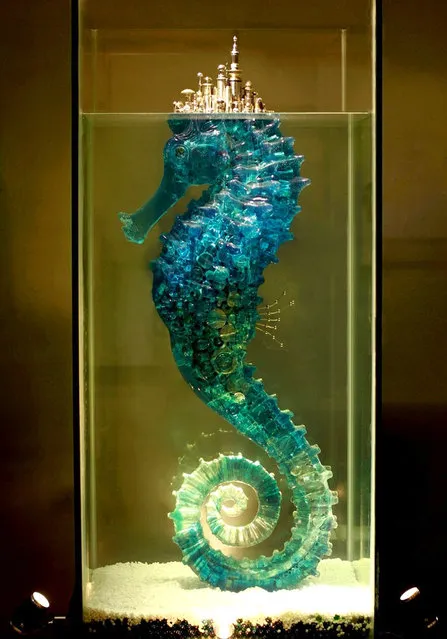
Hu Shaoming is a fantastic artist from China, who has learnt Fine Arts at Guangzhou Academy. The most complex sculpture of all his works is a mechanical seahorse, constructed from many tiny details. The whole composition consists of two complete opposites, including the top part of the seahorse`s head that looks like a golden town, and the bottom which resembles an amazing blue creature. An important problem is reflected in such an idea; it shows how a man forces the nature into submission. The contrast in the opposition of the human buildings and conquered Mother Nature suggests the thought of keeping our natural environment safe.
Details
01 Mar 2015 13:02:00
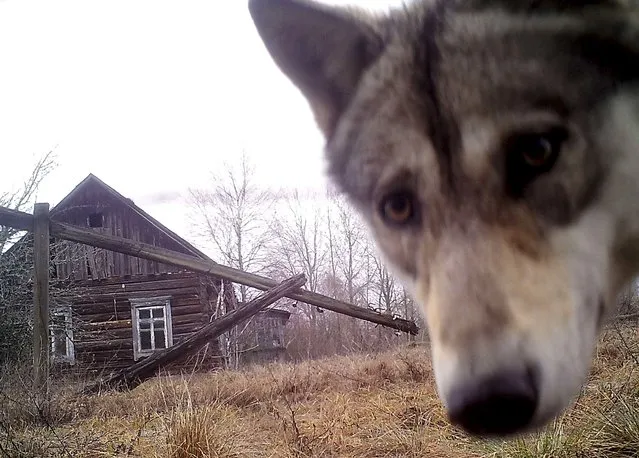
A wolf looks into the camera at the 30 km (19 miles) exclusion zone around the Chernobyl nuclear reactor in the abandoned village of Orevichi, Belarus, March 2, 2016. (Photo by Vasily Fedosenko/Reuters)

A wolf looks into the camera at the 30 km (19 miles) exclusion zone around the Chernobyl nuclear reactor in the abandoned village of Orevichi, Belarus, March 2, 2016. What happens to the environment when humans disappear? Thirty years after the Chernobyl nuclear disaster, booming populations of wolf, elk and other wildlife in the vast contaminated zone in Belarus and Ukraine provide a clue. (Photo by Vasily Fedosenko/Reuters)
Details
08 Apr 2016 15:13:00
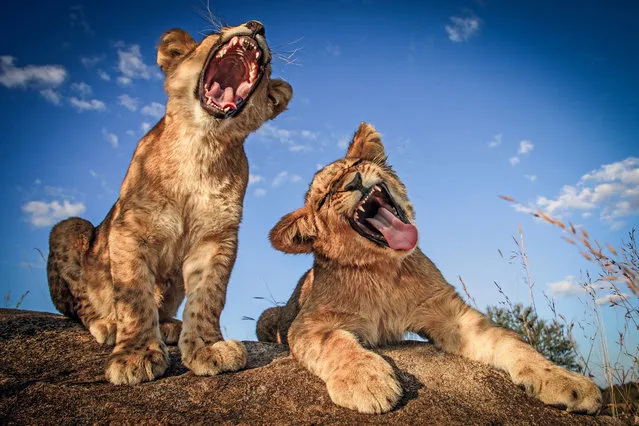
The two lion cubs singing their hearts out  at Antelope park in Zimbabwe. (Photo by David Jenkins/Caters News Agency)

They say a picture is worth a thousand words, and these striking images of 2017 are no exception. The photo highlights include incredible snapshots of the natural world as well as some awesome animal and human encounters. The vibrant gallery also shows thrill-seekers pushing themselves to the limit with breathtaking stunts captured in perfect clarity. The pictures have been taken by a host of photographers from around the world. Here: The two lion cubs singing their hearts out at Antelope park in Zimbabwe. (Photo by David Jenkins/Caters News Agency)
Details
03 Jan 2018 07:27:00
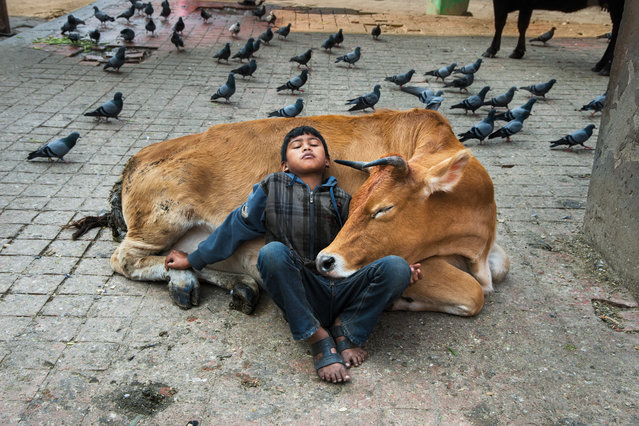
A boy rests against a cow, Kathmandu, Nepal, 2013. “Cows have been designated the national animal in Nepal. They roam freely, and are considered sacred by the 80% of Nepalis who are Hindu”. (Photo by Steve McCurry/The Guardian)

The legendary US photographer’s favourite shots of creatures and how they interact with humans feature in “Animals”, his latest book. Here: A boy rests against a cow, Kathmandu, Nepal, 2013. “Cows have been designated the national animal in Nepal. They roam freely, and are considered sacred by the 80% of Nepalis who are Hindu”. (Photo by Steve McCurry/The Guardian)
Details
07 Nov 2019 00:01:00
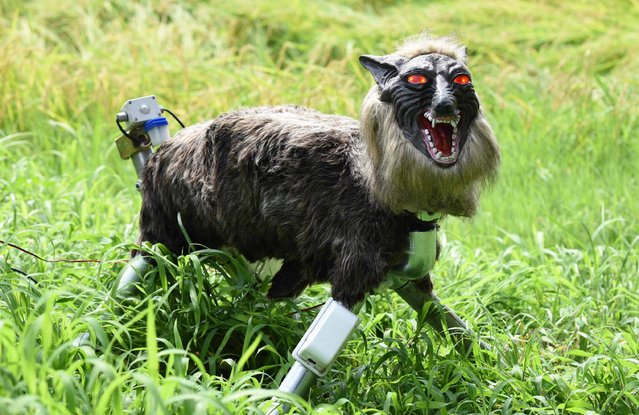
A wolf-like robot “Super Monster Wolf” stands beside a rice field to drive away wild animals that cause damages to crops in Kisarazu, Chiba prefecture, on August 25, 2017. The agricultural coopetative association JA Kisarazu-shi introduced the 65cm-long and 50cm-high robot recently on a trial basis which can detect wild animals such as boars and deers with an infrared ray sensor when they approach and intimidates them, flashing the red LED eyes and blaring 48 types of sounds including a wolf growl and human voice. (Photo by Toru Yamanaka/AFP Photo)

A wolf-like robot “Super Monster Wolf” stands beside a rice field to drive away wild animals that cause damages to crops in Kisarazu, Chiba prefecture, on August 25, 2017. The agricultural coopetative association JA Kisarazu-shi introduced the 65cm-long and 50cm-high robot recently on a trial basis which can detect wild animals such as boars and deers with an infrared ray sensor when they approach and intimidates them, flashing the red LED eyes and blaring 48 types of sounds including a wolf growl and human voice. (Photo by Toru Yamanaka/AFP Photo)
Details
27 Aug 2017 07:17:00
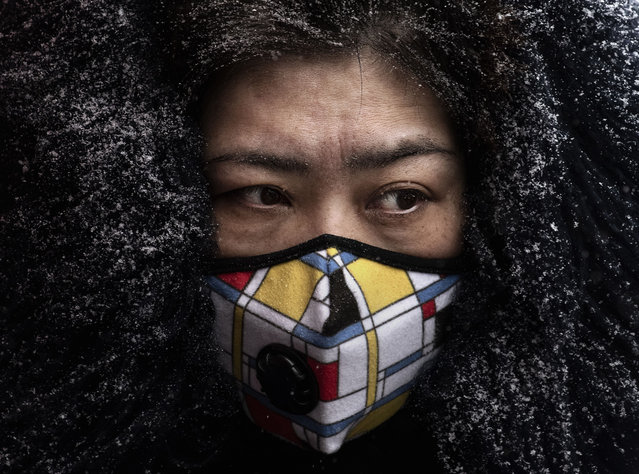
A Chinese woman wears a protective mask as she shops in a market on February 6, 2020 in Beijing, China. The number of cases of a deadly new coronavirus rose to more than 28000 in mainland China Thursday, days after the World Health Organization (WHO) declared the outbreak a global public health emergency. China continued to lock down the city of Wuhan in an effort to contain the spread of the pneumonia-like disease which medicals experts have confirmed can be passed from human to human. In an unprecedented move, Chinese authorities have put travel restrictions on the city which is the epicenter of the virus and municipalities in other parts of the country affecting tens of millions of people. The number of those who have died from the virus in China climbed to over 564 on Thursday, mostly in Hubei province, and cases have been reported in other countries including the United States, Canada, Australia, Japan, South Korea, India, the United Kingdom, Germany, France and several others. The World Health Organization has warned all governments to be on alert and screening has been stepped up at airports around the world. Some countries, including the United States, have put restrictions on Chinese travelers entering and advised their citizens against travel to China. (Photo by Kevin Frayer/Getty Images)

A Chinese woman wears a protective mask as she shops in a market on February 6, 2020 in Beijing, China. The number of cases of a deadly new coronavirus rose to more than 28000 in mainland China Thursday, days after the World Health Organization (WHO) declared the outbreak a global public health emergency. (Photo by Kevin Frayer/Getty Images)
Details
09 Feb 2020 00:07:00
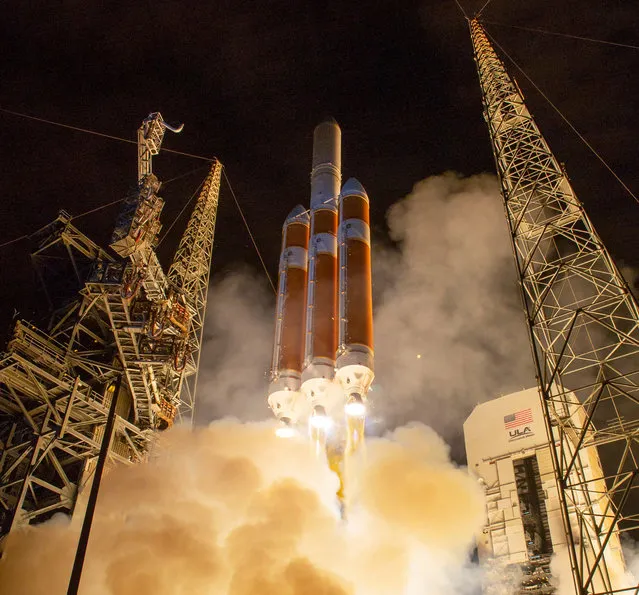
A handout photo made available by the NASA shows the United Launch Alliance Delta IV Heavy rocket launches NASA's Parker Solar Probe to touch the Sun, from Launch Complex 37 at Cape Canaveral Air Force Station, Florida, USA, 12 August 2018. Parker Solar Probe is humanity’s first-ever mission into a part of the Sun’s atmosphere called the corona. Here it will directly explore solar processes that are key to understanding and forecasting space weather events that can impact life on Earth. (Photo by Bill Ingalls/EPA-EFE/NASA)

A handout photo made available by the NASA shows the United Launch Alliance Delta IV Heavy rocket launches NASA's Parker Solar Probe to touch the Sun, from Launch Complex 37 at Cape Canaveral Air Force Station, Florida, USA, 12 August 2018. Parker Solar Probe is humanity’s first-ever mission into a part of the Sun’s atmosphere called the corona. Here it will directly explore solar processes that are key to understanding and forecasting space weather events that can impact life on Earth. (Photo by Bill Ingalls/EPA-EFE/NASA)
Details
13 Aug 2018 07:26:00