Loading...
Done
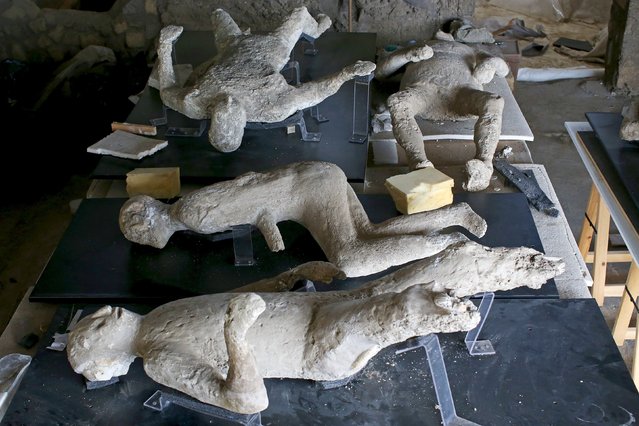
Plaster cast moulds of victims of the Mount Vesuvius eruption lie on a display table in a laboratory at Pompeii October 13, 2015. An expert team made up of archaeologists, radiologists, orthodontists and anthropologists began on September 2015 to use CAT scan technology (computerised axial tomography) to peer inside the plaster cast moulds of Pompeii's victims, in a study that has added more detail to previous findings. (Photo by Alessandro Bianchi/Reuters)

Plaster cast moulds of victims of the Mount Vesuvius eruption lie on a display table in a laboratory at Pompeii October 13, 2015. An expert team made up of archaeologists, radiologists, orthodontists and anthropologists began on September 2015 to use CAT scan technology (computerised axial tomography) to peer inside the plaster cast moulds of Pompeii's victims, in a study that has added more detail to previous findings. A 16-layer scan had to be used in order to penetrate the hardened plaster but the results showed up impressive skeletal remains and near perfect teeth. (Photo by Alessandro Bianchi/Reuters)
Details
22 Oct 2015 08:02:00
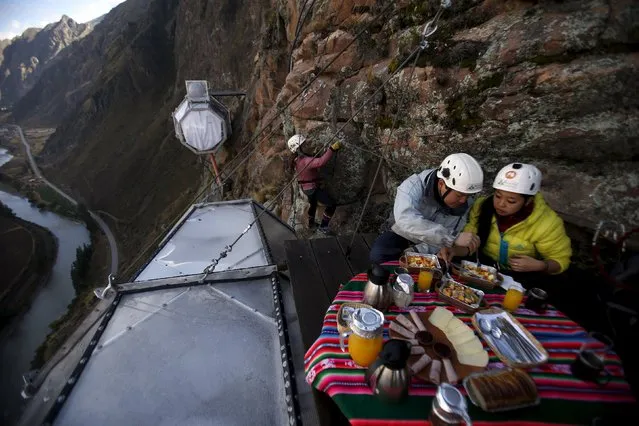
Guests have breakfast as another guest climbs to gather at the Skylodge Adventure Suites in the Sacred Valley in Cuzco, Peru, August 14, 2015. Tourists taking on an arduous climb up the steep cliff face of Peru's Sacred Valley are being rewarded for their efforts by being able to spend the night in transparent mountaintop sleeping pods at the “Skylodge Adventure Suites”. (Photo by Pilar Olivares/Reuters)

Guests have breakfast as another guest climbs to gather at the Skylodge Adventure Suites in the Sacred Valley in Cuzco, Peru, August 14, 2015. Tourists taking on an arduous climb up the steep cliff face of Peru's Sacred Valley are being rewarded for their efforts by being able to spend the night in transparent mountaintop sleeping pods at the “Skylodge Adventure Suites”. To reach the pods, visitors need to climb 400 metres of via ferrata (a steel cable and rungs) up the valley side or hike an intrepid trail through zip lines. (Photo by Pilar Olivares/Reuters)
Details
19 Aug 2015 12:53:00
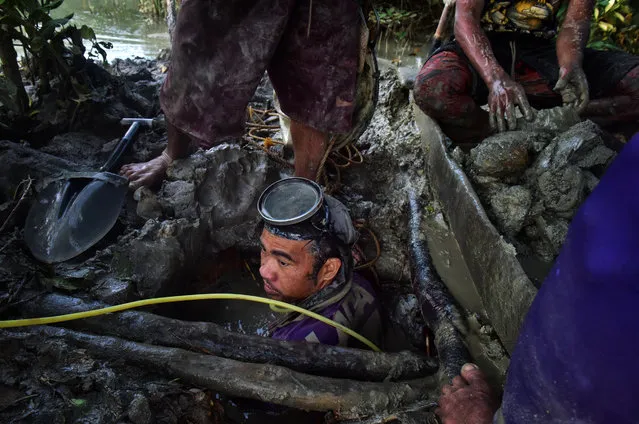
Christian Balderosdasco, 31, is being pulled up a mud pit after diving for 3 hours to look for gold on March 22, 2017 in Paracale, Philippines. (Photo by Jes Aznar/Getty Images)

Christian Balderosdasco, 31, is being pulled up a mud pit after diving for 3 hours to look for gold on March 22, 2017 in Paracale, Philippines. Apart from tunneling and sifting sand, locals dive down murky swamps with the aid of a compressor with air flowing in a small tube for breathing, as they blindly swim under the mud for up to four hours to look for tiny rocks containing gold particles. For decades, local residents at Paracale town work in hazardous conditions scavenging under the earth and diving into tunnels filled with mud using only makeshift tools to mine for gold, often placing their health and lives at risk. (Photo by Jes Aznar/Getty Images)
Details
06 Apr 2017 09:21:00
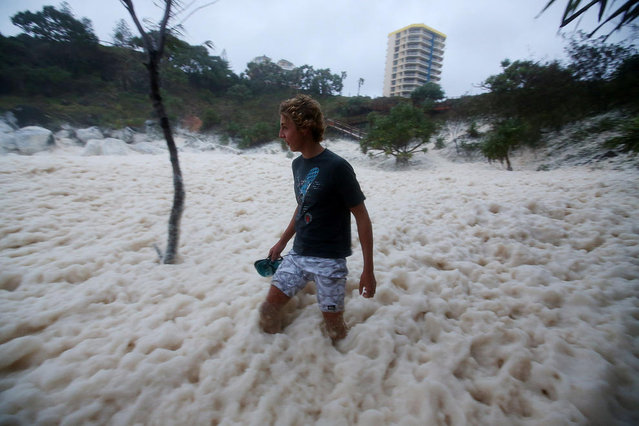
Cyclone Leaves Mooloolaba Covered In Foam

Wild weather in the Australian state of Queensland has led to a small town becoming covered in foam whipped up by rough seas.
Residents and visitors could be seen playing in the foam and taking pictures of the unusual phenomenon in Mooloolaba on the Sunshine Coast.
Details
06 Feb 2013 13:14:00
Genetic Portraits By Ulric Collette

Canada-based photographer and graphic designer Ulric Collette came up with probably the coolest family photo shoot idea ever.
Details
11 Jul 2013 08:23:00
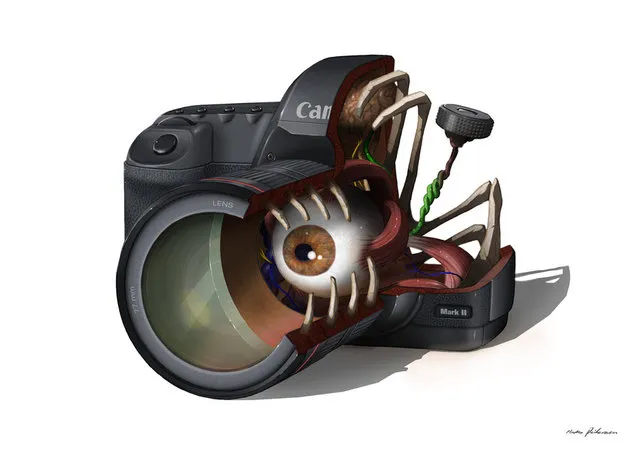
Anatomy of Tech Gadgets

Mads Peitersen, a professional artist from Denmark, came up with a clever idea of illustrating the anatomy of technology gadgets. Some of the following drawings are commissioned by the manufacturer and some are just for fun. Enjoy!
Details
31 Jul 2012 06:01:00


A member of the German wireless police picks up signals on the radio equipment he carries on his back, while his colleague takes notes. (Photo by General Photographic Agency/Getty Images). Circa 1925
Details
22 Jul 2013 22:48:00


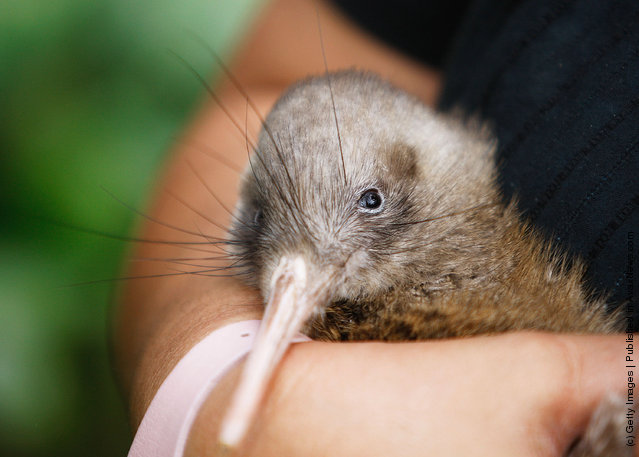
One of ten little spotted kiwi is released on Motuihe Island, a conservation pest-free island close to Auckland, on March 21, 2009 in Auckland, New Zealand. Eventually up to 40 endangered kiwi birds will be relocated to the island. (Photo by Hannah Johnston/Getty Images)
Details
03 Apr 2011 15:13:00