Loading...
Done
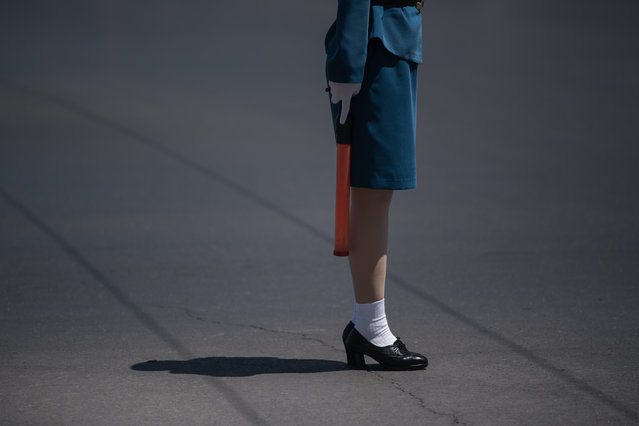
In a photo taken on June 5, 2017 a traffic security officer stands on duty at an intersection in Pyongyang. Officially known as traffic security officers but universally referred to as traffic ladies, they are chosen for their looks in a society that remains traditionalist in many respects. They must leave the role if they marry, and have a finite shelf-life, with compulsory retirement looming at just 26. The 300-odd ladies are unique to Pyongyang, which North Korean authorities are always keen to present in the best possible light despite their nuclear-armed country's impoverished status, and ensure a steady supply of photogenic young women who are the favourite subject of visiting tourists and journalists. (Photo by Ed Jones/AFP Photo)

In a photo taken on June 5, 2017 a traffic security officer stands on duty at an intersection in Pyongyang. Officially known as traffic security officers but universally referred to as traffic ladies, they are chosen for their looks in a society that remains traditionalist in many respects. They must leave the role if they marry, and have a finite shelf-life, with compulsory retirement looming at just 26. (Photo by Ed Jones/AFP Photo)
Details
21 May 2018 00:03:00
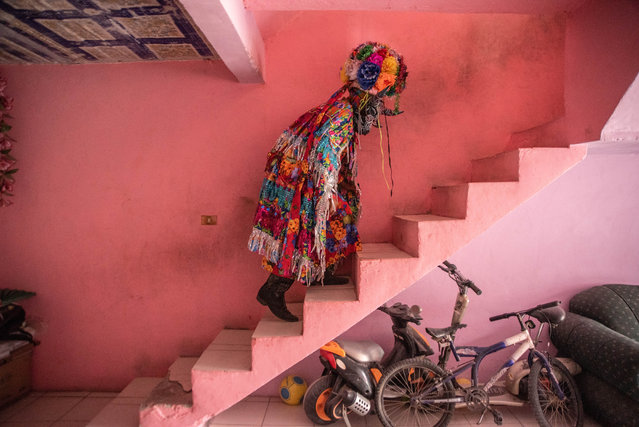
Inhabitants of the community of Coyolillo celebrate their Afro-descendant carnival in Veracruz, Mexico on February 25, 2020. This carnival has more than 100 years of history and is the heritage of the African workers who arrived in that area more than 300 years ago to work in the sugar cane fields. The event is known for the colourful robes, capes and animal masks – of bulls, deer, goats and cows – worn by participants. As such, the carnival is a unique expression of African-Mexican folk art. (Photo by Hector Adolfo Quintanar Perez/ZUMA Wire/Rex Features/Shutterstock)

Inhabitants of the community of Coyolillo celebrate their Afro-descendant carnival in Veracruz, Mexico on February 25, 2020. This carnival has more than 100 years of history and is the heritage of the African workers who arrived in that area more than 300 years ago to work in the sugar cane fields. (Photo by Hector Adolfo Quintanar Perez/ZUMA Wire/Rex Features/Shutterstock)
Details
05 Mar 2020 00:03:00
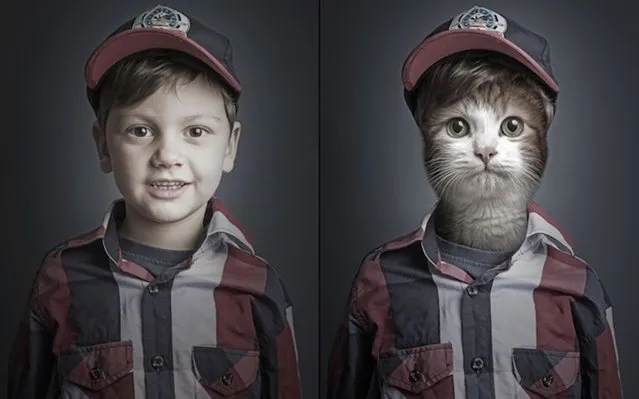
Undercats By Sebastian Magnani

They might look like something straight out of a horror film, but these extraordinary images have been created to show the special bond between cats and their owners. Photographer Sebastian Magnani, 28, from Brig, Switzerland, took pictures of dogs and their owners using the same position and camera settings before working his magic with editing software. The result is this startling set of images, which show the pooches with human clothes – one wearing a hoodie, another with a red coat, one with a shirt and cardigan, and another with a blue jacket. (Photos by Sebastian Magnani)
Details
20 May 2015 10:33:00
A breeder poses with fruits and specially made high-fibre bread, for 36-year-old giant panda Jia Jia, at the Hong Kong Ocean Park, China June 30, 2015. (Photo by Tyrone Siu/Reuters)

A breeder poses with fruits and specially made high-fibre bread, for 36-year-old giant panda Jia Jia, at the Hong Kong Ocean Park, China June 30, 2015. Jia Jia, the oldest giant panda living in captivity, is set to challenge the world record for the animals' longevity, with her age said to put her on par with a human centenarian. (Photo by Tyrone Siu/Reuters)
Details
13 Jul 2015 11:48:00
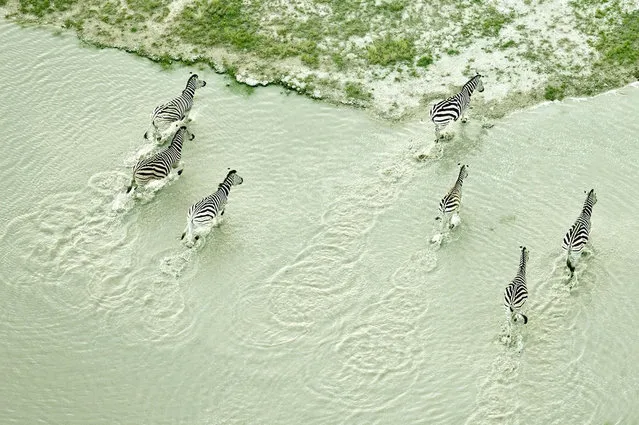
Botswana By Zack Seckler

Aerial shots always amaze us by their magnificence. Human-sized footprints look like ant trails, trees resemble little pieces of broccoli, and landscapes are transformed into breathtaking images, which look like something that can be seen under a microscope. This set of pictures features surreal aerial shots of Botswana taken by Zack Seckler. In the past, to make these kinds of shots, someone had to go up in a helicopter to take a picture. However, today, such images can be easily made using quadcopters, such as DJI Phantom or any other. Thanks to the new technology, we are able to view our world in new ways, allowing us to better appreciate its complexity and beauty. (Photo by Zack Seckler)
Details
14 Dec 2014 11:32:00
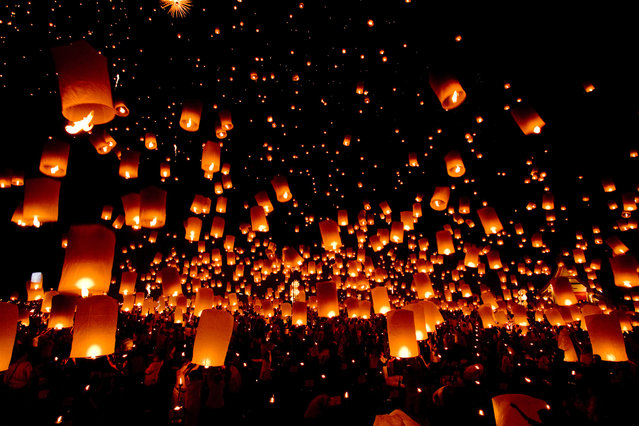
Loi Krathong Festival In Thailand

We are all drawn to fire, entranced by its beauty and ferociousness. Its brilliance draws us in like moths to a candle flame. Thus, many of the celebrations that humans have involve lighting fires. They can be big or small; there could be many little lights or one giant inferno; they may float on water, burn on land, or rise high into the skies. Loi Krathong is a festival that is held each year in Thailand and a number of other places. During this festival thousands of little fires are lighted, presenting a marvelous sight for all the onlookers. It is believed that this tradition is an adaptation of Brahmanical festival, which was adopted by Thai Buddhists to honor Buddha.
Details
30 Jan 2015 10:38:00
Real-Time Face Tracking And Projection Mapping By Nobumichi Asai

Nobumichi Asai has used projection mapping to put CGI onto cars, docks, building and more. What is his latest canvas? A real, live human face! Asai used Omote, a combination of real-time face tracking and projection mapping to transform a model's face into mesmerizing patterns. It's called “electronic makeup”, but as you will see in the (creepy-ish) video, it goes much, much beyond anything makeup can possibly do.
Details
20 Aug 2014 10:49:00
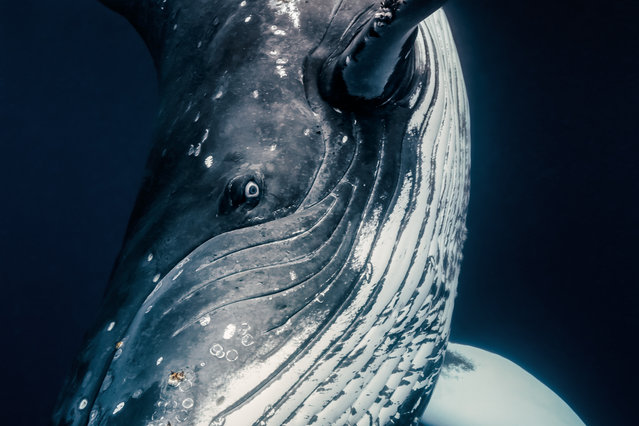
“To look into a whale’s eye is life-changing and humbling. Well, it’s the same with dolphins but they are mostly very fast in the water. A whale’s eye is unexpectedly looking, just like a human eye, kinda checking you out”. (Photo by Rita Kluge/The Guardian)

With the humpback calving season drawing to a close, here’s a look at some of Rita Kluge’s distinctive marine photos from the south Pacific. The Sydney-based photographer fell in love with whales after witnessing southern rights from the New South Wales coastline as they travelled to and from their feeding grounds in the Antarctic. She has since been to Tonga, where humpbacks breed and calf in winter months, to photograph them in the water. (Photo by Rita Kluge/The Guardian)
Details
26 Oct 2016 11:09:00