Loading...
Done
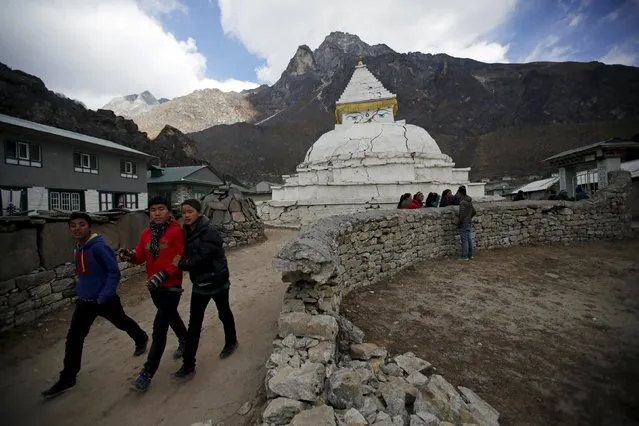
Children walk past the partially collapsed boundary wall of a school and a Buddhist shrine that were damaged during the earthquake earlier this year at Khumjung, a typical Sherpa village in Solukhumbu district also known as the Everest region, in this picture taken November 30, 2015. (Photo by Navesh Chitrakar/Reuters)

Children walk past the partially collapsed boundary wall of a school and a Buddhist shrine that were damaged during the earthquake earlier this year at Khumjung, a typical Sherpa village in Solukhumbu district also known as the Everest region, in this picture taken November 30, 2015. (Photo by Navesh Chitrakar/Reuters)
Details
23 Dec 2015 08:05:00
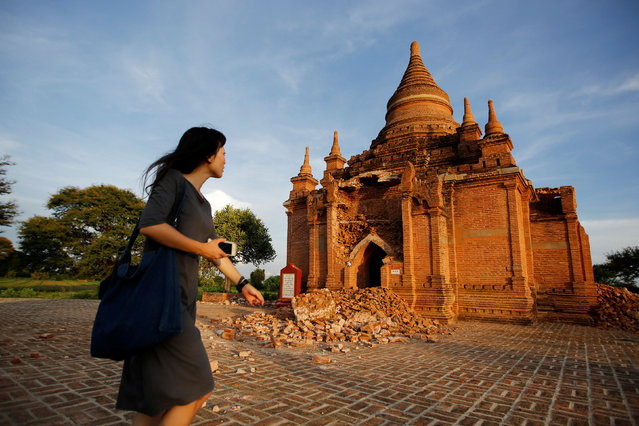
A woman walks past a damaged pagoda after an earthquake in Bagan, Myanmar August 25, 2016. Rescue workers surveyed the damage Thursday after a powerful earthquake shook Myanmar, killing at least four people and damaging 185 ancient Buddhist pagodas in the former capital of Bagan, a major tourist site. (Photo by Soe Zeya Tun/Reuters)

A woman walks past a damaged pagoda after an earthquake in Bagan, Myanmar August 25, 2016. Rescue workers surveyed the damage Thursday after a powerful earthquake shook Myanmar, killing at least four people and damaging 185 ancient Buddhist pagodas in the former capital of Bagan, a major tourist site. (Photo by Soe Zeya Tun/Reuters)
Details
26 Aug 2016 10:59:00
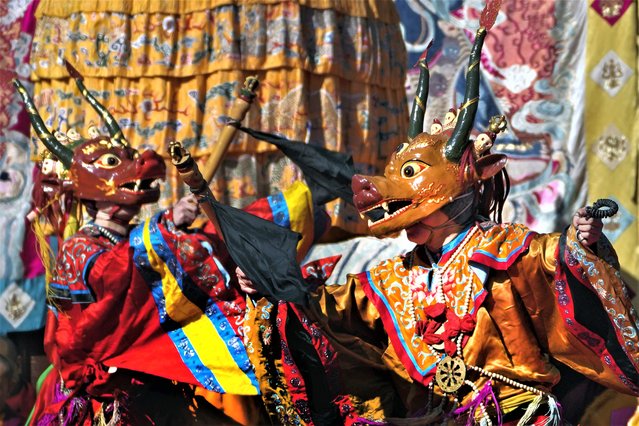
Tibetan monks in ghoulish costumes perform during a ceremony to chase away the “demon king” to bring peace and happiness for the Tibetan New Year at the Yonghegong Lama Temple in Beijing, Sunday, February 19, 2023. The annual event has returned after China lifted all bans on public gatherings from the outbreak of COVID-19. (Photo by Andy Wong/AP Photo)

Tibetan monks in ghoulish costumes perform during a ceremony to chase away the “demon king” to bring peace and happiness for the Tibetan New Year at the Yonghegong Lama Temple in Beijing, Sunday, February 19, 2023. The annual event has returned after China lifted all bans on public gatherings from the outbreak of COVID-19. (Photo by Andy Wong/AP Photo)
Details
02 Mar 2023 05:35:00


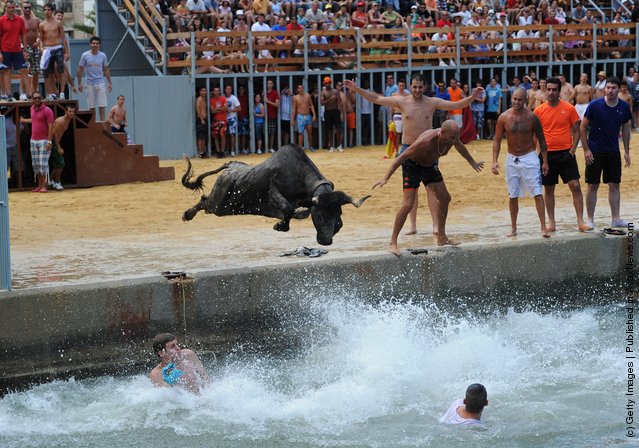
Revellers chase a bull into the sea during the “Bous a la Mar” festival on July 14, 2011 in Denia, Spain. The Spanish “Bous a la Mar” or “Bulls to the Sea” festival is held in honour of the Santisima Sangre and commemorate a monk named Pedro Esteve, who, as the legend has it, saved the coastal town of Denia from a plague in 1633. The bulls chased into the sea are later brought back to land by small boats. (Photo by Jasper Juinen/Getty Images)
Details
16 Jul 2011 12:47:00
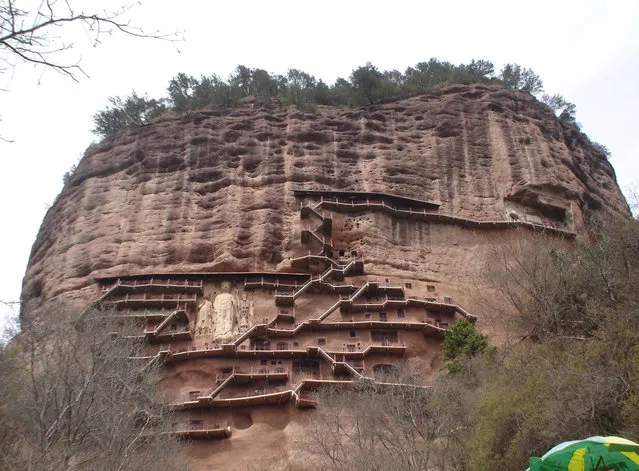
Maijishan Grottoes

The Maijishan Grottoes are a series of 194 caves cut in the side of the hill of Majishan in Tianshui, Gansu Province, northwest China. This example of rock cut architecture contains over 7,200 Buddhist sculptures and over 1,000 square meters of murals. Construction began in the Later Qin era (384-417 CE).
Details
31 May 2015 11:48:00
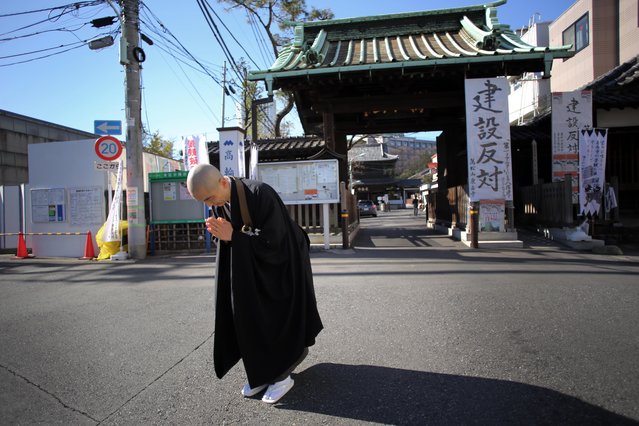
In this January 8, 2015 photo, a monk Kenmyo Muta bows at the condominium construction site and the gate of Sengakuji temple in Tokyo. (Photo by Eugene Hoshiko/AP Photo)

In this January 8, 2015 photo, a monk Kenmyo Muta bows at the condominium construction site and the gate of Sengakuji temple in Tokyo. The “47 ronin” samurai who inspired the long-loved saga of loyalty and honor eulogized in films, books and plays are fighting a new kind of battle in urban Japan. An apartment complex is going up next to the curved tile-roofed Sengakuji temple where the three-century-old graves of the ronin, or masterless samurai, lie. The banner reads: “We only hope to protect landscape of Sengakuji temple”. (Photo by Eugene Hoshiko/AP Photo)
Details
16 Jan 2015 13:01:00
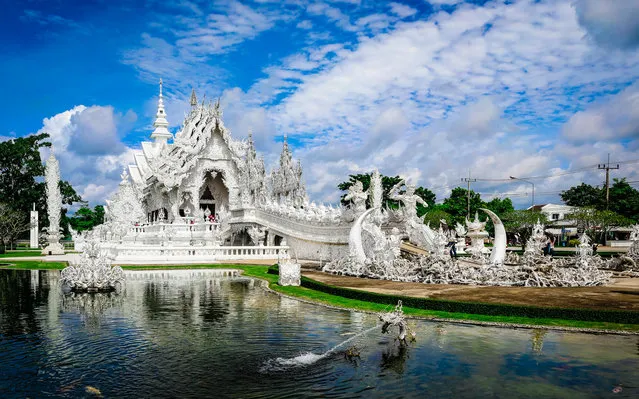
Wat Rong Khun Temple In Chiang Rai Thailand

Wat Rong Khun (Thai: วัดร่องขุ่น), more well-known among foreigners as the White Temple, is a contemporary unconventional Buddhist temple in Chiang Rai Province, Thailand. It was designed by Chalermchai Kositpipat in 1997.
Details
17 Aug 2014 08:29:00


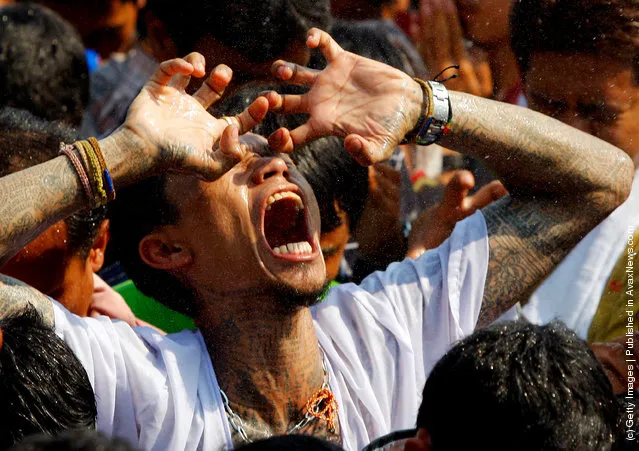
A Thai devotee in a state of trance screams while holy water is sprayed as thousands race towards the edifice of the founder monk during the annual Tattoo fesitval at Wat Bang Phra on March 7, 2009 in Nakhom Pathom, Thailand. Some men take on the characteristics of sacred animals that have been carved onto their skin. Thousands of believers from all over Thailand come to take part in one of the country's most bizarre festivals about 50 miles outside Bangkok to pay respect to the temple's monks who are master tattooist. In Thai culture the tattoo or Thai word sak yant is worn as a symbol of spiritual and physical protection, many believe that the tattoo have mystical powers. Many tattoo fanatics choose to have monkeys and tigers as well as the Khmer/Cambodia ancient script on their bodies. (Photo Paula Bronstein/Getty Images)
Details
27 Jun 2011 10:43:00