Loading...
Done
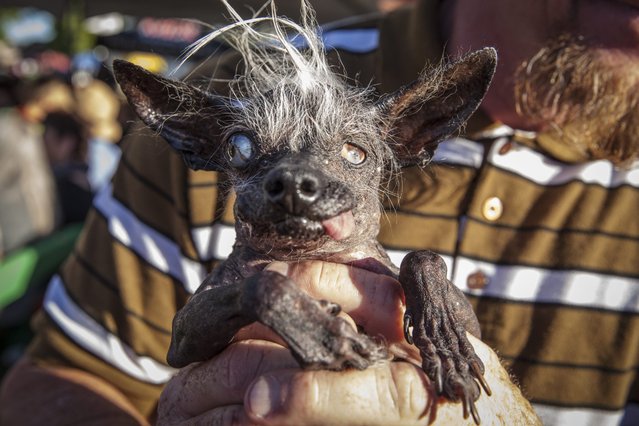
Ugly dog contestants Sweepee Rambo and owner Jason Wurtz celebrate in winning the 2016 World's Ugliest Dog Contest at the Sonoma-Marin Fair in Petaluma, California, USA, 24 June 2016. (Photo by Peter Dasilva/EPA)

Ugly dog contestants Sweepee Rambo and owner Jason Wurtz celebrate in winning the 2016 World's Ugliest Dog Contest at the Sonoma-Marin Fair in Petaluma, California, USA, 24 June 2016. (Photo by Peter Dasilva/EPA)
Details
26 Jun 2016 13:40:00
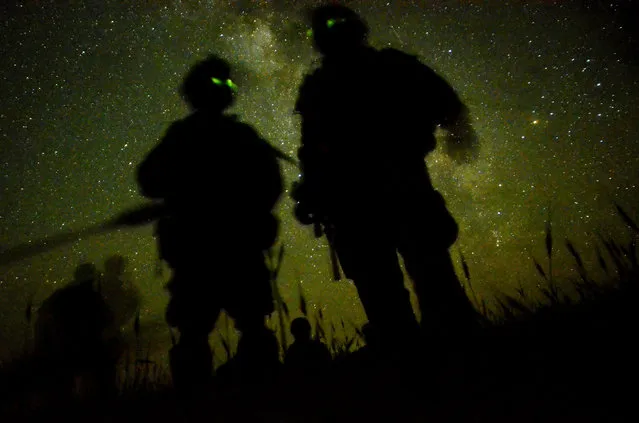
U.S. Army soldiers with the 1st Battalion, 501st Infantry Regiment deployed to Combat Outpost Sabari, Afghanistan scan their area as they begin a multi-day air assault mission near the Pakistani border of eastern Afghanistan's Khost province May 2, 2012. (Photo by Staff Sgt. Joshua L. DeMotts/U.S. Air Force)

U.S. Army soldiers with the 1st Battalion, 501st Infantry Regiment deployed to Combat Outpost Sabari, Afghanistan scan their area as they begin a multi-day air assault mission near the Pakistani border of eastern Afghanistan's Khost province May 2, 2012. (Photo by Staff Sgt. Joshua L. DeMotts/U.S. Air Force)
Details
08 Apr 2014 11:16:00
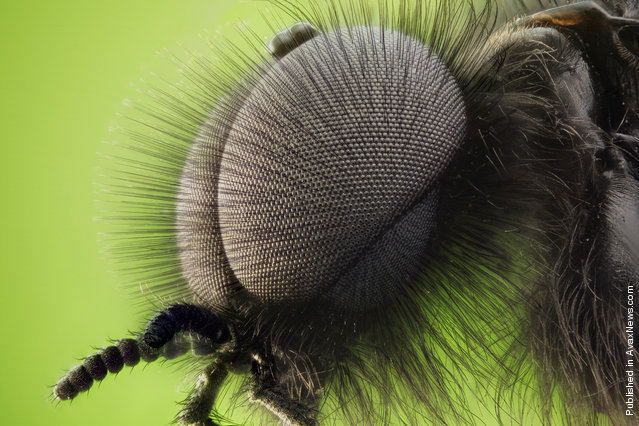
The double compound eyes of a male St. Mark's fly (Bibio marci), submitted by Dr. David Maitland from Feltwell, UK

The double compound eyes of a male St. Mark's fly (Bibio marci), submitted by Dr. David Maitland from Feltwell, UK. (Dr. David Maitland)
Details
07 Apr 2012 13:22:00
Underwater photographer of the year – winner. Dancing Octopus by Gabriel Barathieu (France). Location: Island of Mayotte, off the coast of south-east Africa. “Balletic and malevolent”, one judge said of this octopus, hunting in a lagoon. Barathieu waited until spring tides when there was just 30cm of water on the flats and plenty of light in the shallows. (Photo by Gabriel Barathieu/UPY2017)

Underwater photographer of the year – winner. Dancing Octopus by Gabriel Barathieu (France). Location: Island of Mayotte, off the coast of south-east Africa. “Balletic and malevolent”, one judge said of this octopus, hunting in a lagoon. Barathieu waited until spring tides when there was just 30cm of water on the flats and plenty of light in the shallows. (Photo by Gabriel Barathieu/UPY2017)
Details
16 Feb 2017 00:06:00
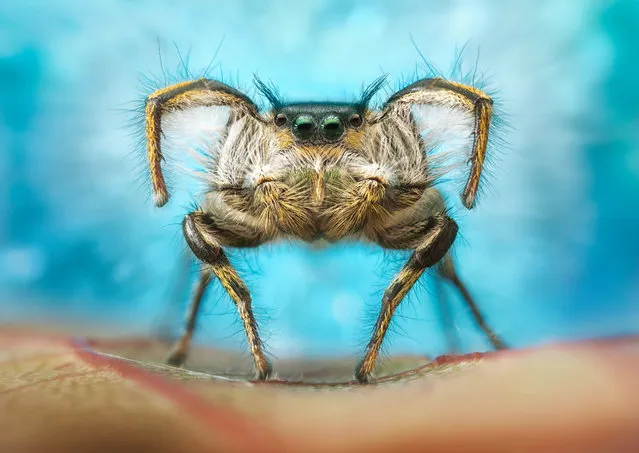
Arachnids category 3rd place: dancing spider by Raed Ammari. Male jumping spiders (in this case a Phidippus insignarius) perform a courtship dance in which they almost form a heart shape with their legs. This one was shot in Colorado. (Photo by Raed Ammari/Luminar Bug Photographer of the Year 2020)

Arachnids category 3rd place: dancing spider by Raed Ammari. Male jumping spiders (in this case a Phidippus insignarius) perform a courtship dance in which they almost form a heart shape with their legs. This one was shot in Colorado. (Photo by Raed Ammari/Luminar Bug Photographer of the Year 2020)
Details
24 Oct 2020 00:03:00
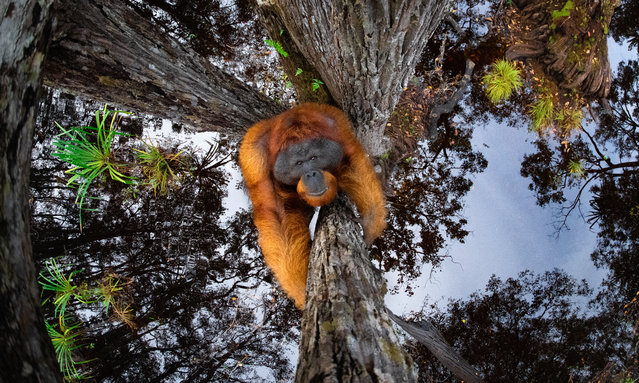
Bornean orangutan (Pongo pygmaeus). Tanjung Puting National Park, Borneo – winner of the gold and grand prizes in the 2020 world nature photography awards. (Photo by Thomas Vijayan/World Nature Photography Awards)

Bornean orangutan (Pongo pygmaeus). Tanjung Puting National Park, Borneo – winner of the gold and grand prizes in the 2020 world nature photography awards. (Photo by Thomas Vijayan/World Nature Photography Awards)
Details
18 Mar 2021 09:28:00
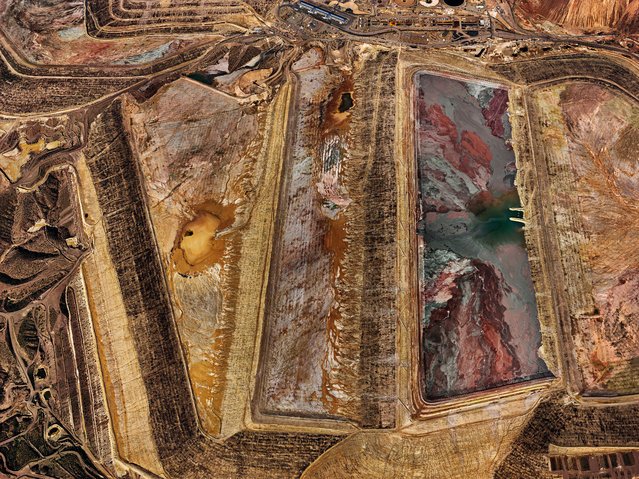
Morenci Mine #2, Clifton, Arizona, USA, 2012. (Photo by Edward Burtynsky/Metivier Gallery, Toronto/Flowers Gallery, London)

The Photo London Master of Photography award is given annually to a leading contemporary photographer. A special exhibition shows new and rarely seen images from Burtynsky’s portfolio. Here: Morenci Mine #2, Clifton, Arizona, USA, 2012. (Photo by Edward Burtynsky/Metivier Gallery, Toronto/Flowers Gallery, London)
Details
07 Feb 2018 06:43:00
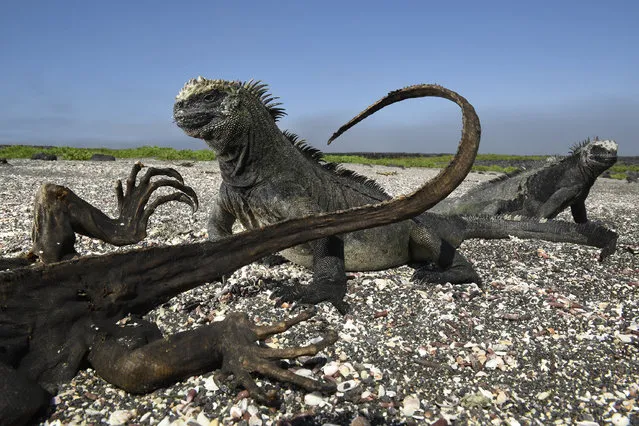
Galapagos – Rocking the Cradle: Four major ocean currents converge along the Galapagos archipelago, creating the conditions for an extraordinary diversity of animal life, April 25, 2016. The islands are home to at least 7,000 flora and fauna species, of which 97 percent of the reptiles, 80 percent of the land birds, 50 percent of the insects and 30 percent of the plants are endemic. The local ecosystem is highly sensitive to the changes in temperature, rainfall and ocean currents that characterize the climatic events known as El Niño and La Niña. These changes cause marked fluctuations in weather and food availability. Many scientists expect the frequency of El Niño and La Niña to increase as a result of climate change, making the Galapagos a possible early-warning location for its effects. (Photo by Thomas P. Peschak for National Geographic/World Press Photo)

Galapagos – Rocking the Cradle: Four major ocean currents converge along the Galapagos archipelago, creating the conditions for an extraordinary diversity of animal life, April 25, 2016. The islands are home to at least 7,000 flora and fauna species, of which 97 percent of the reptiles, 80 percent of the land birds, 50 percent of the insects and 30 percent of the plants are endemic. (Photo by Thomas P. Peschak for National Geographic/World Press Photo)
Details
16 Apr 2018 00:01:00