Loading...
Done
US Navy personnel walk on the flight deck aboard the USS Nimitz (CVN-68) aircraft carrier during its port visit to Busan on March 28, 2023. (Photo by Anthony Wallace/AFP Photo)

US Navy personnel walk on the flight deck aboard the USS Nimitz (CVN-68) aircraft carrier during its port visit to Busan on March 28, 2023. (Photo by Anthony Wallace/AFP Photo)
Details
10 Jun 2023 03:10:00
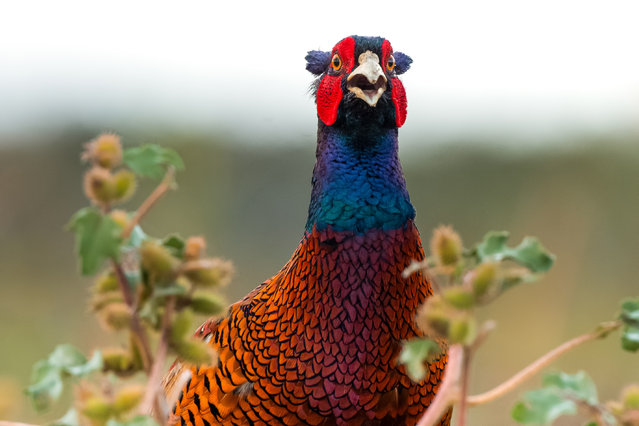
A pheasant is seen among grasses in Bursa, Turkiye on October 07, 2024. Pheasants mostly live in forested areas, thickets and wetlands. Unlike females, male pheasants have a much more remarkable structure with their long tails and feathers in bright and variable colors. Also, they feed on fruits, grains, seeds and invertebrates. (Photo by Alper Tuydes/Anadolu via Getty Images)

A pheasant is seen among grasses in Bursa, Turkiye on October 07, 2024. Pheasants mostly live in forested areas, thickets and wetlands. Unlike females, male pheasants have a much more remarkable structure with their long tails and feathers in bright and variable colors. Also, they feed on fruits, grains, seeds and invertebrates. (Photo by Alper Tuydes/Anadolu via Getty Images)
Details
27 Oct 2024 04:43:00
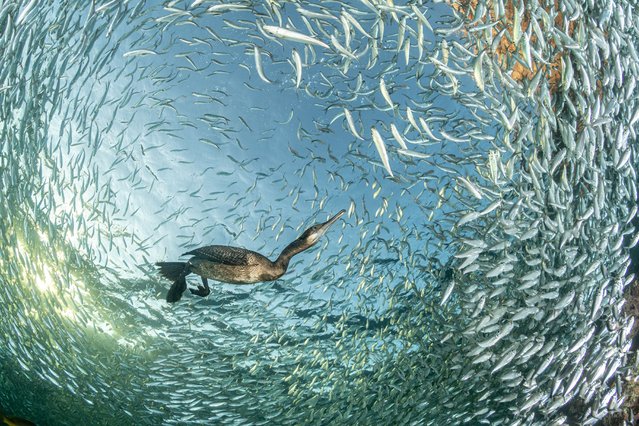
Entitled Feasting at Sunset, this photo of a Brandt’s cormorant among pilchards was the winner of the Birds in the Environment category in the 2025 Bird Photographer of the Year competition. (Photo by Franco Banfi/The Guardian)

Entitled Feasting at Sunset, this photo of a Brandt’s cormorant among pilchards was the winner of the Birds in the Environment category in the 2025 Bird Photographer of the Year competition. (Photo by Franco Banfi/The Guardian)
Details
07 Dec 2025 06:27:00
“Asaro from the Eastern Highlands”. The mudmen could not cover their faces with mud because the people of Papua New Guinea thought that the mud from the Asaro river was poisonous. So instead of covering their faces with this alleged poison, they made masks from pebbles that they heated and water from the waterfall, with unusual designs such as long or very short ears either going down to the chin or sticking up at the top, long joined eyebrows attached to the top of the ears, horns and sideways mouths. (Jimmy Nelson)

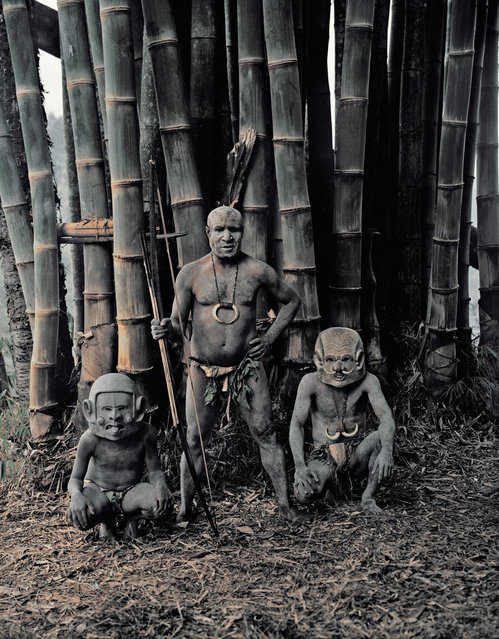
“Asaro from the Eastern Highlands”. The mudmen could not cover their faces with mud because the people of Papua New Guinea thought that the mud from the Asaro river was poisonous. So instead of covering their faces with this alleged poison, they made masks from pebbles that they heated and water from the waterfall, with unusual designs such as long or very short ears either going down to the chin or sticking up at the top, long joined eyebrows attached to the top of the ears, horns and sideways mouths. (Photo and caption by Jimmy Nelson)
Details
20 Oct 2013 08:54:00
A cast member from The Lion King goes to take up her position for the performance during The Olivier Awards 2019 with Mastercard at the Royal Albert Hall on April 07, 2019 in London, England. (Photo by David Levene/The Guardian)

A cast member from The Lion King goes to take up her position for the performance during The Olivier Awards 2019 with Mastercard at the Royal Albert Hall on April 07, 2019 in London, England. (Photo by David Levene/The Guardian)
Details
10 Apr 2019 00:05:00
A woman reacts after identifying a relative among the bodies of tsunami victims in Carita, Indonesia, Sunday, December 23, 2018. The tsunami occurred after the eruption of a volcano around Indonesia's Sunda Strait during a busy holiday weekend, sending water crashing ashore and sweeping away hotels, hundreds of houses and people attending a beach concert. (Photo by Fauzy Chaniago/AP Photo)

A woman reacts after identifying a relative among the bodies of tsunami victims in Carita, Indonesia, Sunday, December 23, 2018. The tsunami occurred after the eruption of a volcano around Indonesia's Sunda Strait during a busy holiday weekend, sending water crashing ashore and sweeping away hotels, hundreds of houses and people attending a beach concert. (Photo by Fauzy Chaniago/AP Photo)
Details
24 Dec 2018 06:36:00
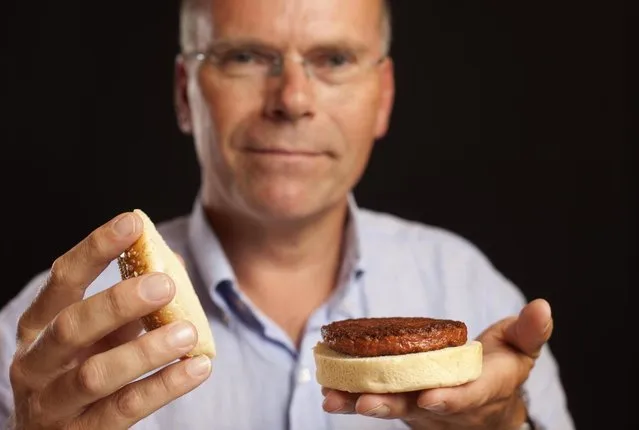
In this handout image provided by Ogilvy, a burger made from cultured beef, which has been developed by Professor Mark Post of Maastricht University in the Netherlands (pictured) is shown to the media during a press conference on August 5, 2013 in London, England. Cultured Beef could help solve the coming food crisis and combat climate change with commercial production of Cultured Beef beginning within ten to twenty years. (Photo by David Parry via Getty Images)

In this handout image provided by Ogilvy, a burger made from cultured beef, which has been developed by Professor Mark Post of Maastricht University in the Netherlands (pictured) is shown to the media during a press conference on August 5, 2013 in London, England. The in-vitro burger, cultured from cattle stem cells, the first example of what its creator says could provide an answer to global food shortages and help combat climate change, was fried in a pan and tasted by two volunteers. The burger is the result of years of research by Dutch scientist Mark Post, a vascular biologist at the University of Maastricht, who is working to show how meat grown in petri dishes might one day be a true alternative to meat from livestock.The meat in the burger has been made by knitting together around 20,000 strands of protein that has been cultured from cattle stem cells in Post's lab. (Photo by David Parry)

Details
06 Aug 2013 08:48:00
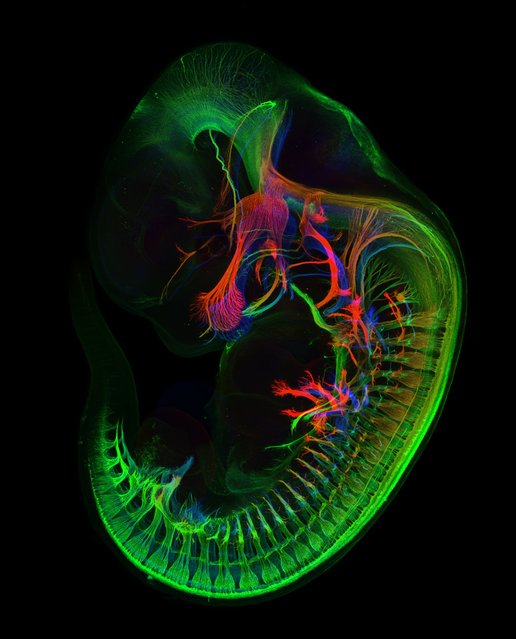
Mr. Zhong Hua, of Johns Hopkins University School of Medicine, took this image of the peripheral nerves (those outside of the brain) in an 11.5-day-old mouse embryo, magnified five times. (Photo by Zhong Hua)

Mr. Zhong Hua, of Johns Hopkins University School of Medicine, took this image of the peripheral nerves (those outside of the brain) in an 11.5-day-old mouse embryo, magnified five times. (Photo by Zhong Hua)
Details
31 Oct 2013 09:39:00