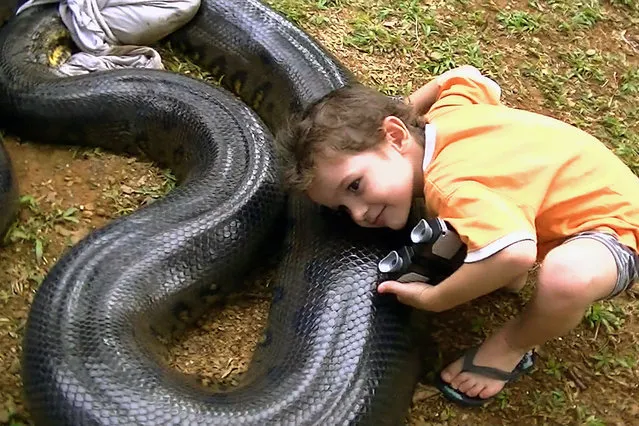
A 17ft anaconda which ate a pet dog seen blindfolded with a t-shirt is examined by Mano Bascoules in Montsinery, French Guiana. (Photo by Sebastien Bascoules/Barcroft Media/ABACAPress)
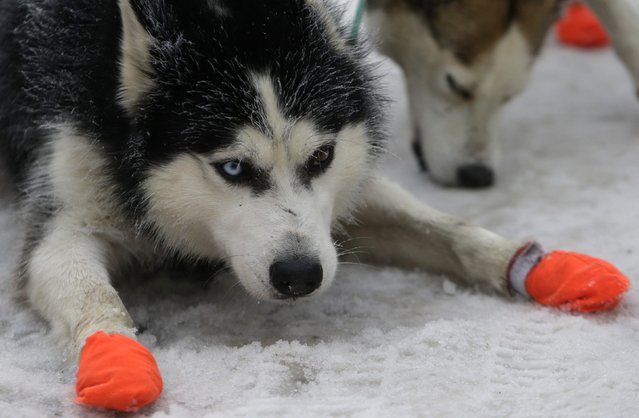
Dogs rest during the Sedivackuv Long dog sled race in Destne v Orlickych horach January 23, 2015. Each year, racers from all over Europe arrive at the village of Destne in the Orlicke mountains in Czech Republic to take part in the race. (Photo by David W. Cerny/Reuters)
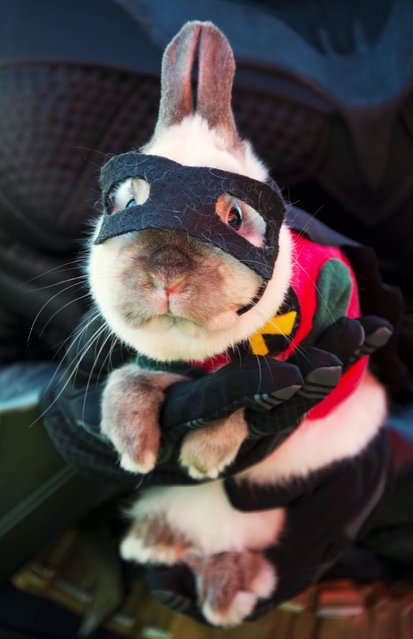
“Joey”, a dwarf Siamese rabbit, is dressed as Batman's sidekick Robin at a Halloween dog costume parade and contest in Long Beach, California, October 28, 2012. (Photo by Robyn Beck/AFP Pfoto)
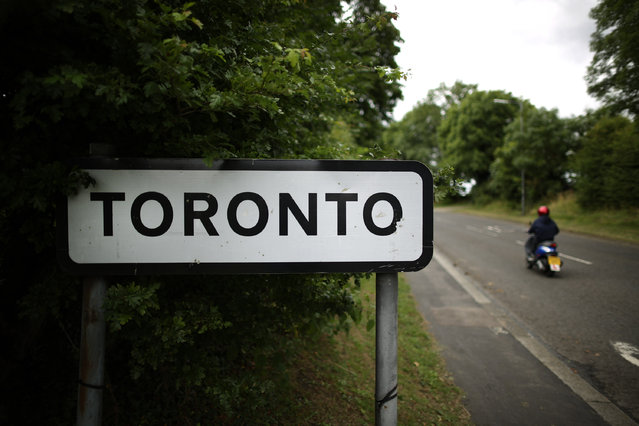
A handful of villages in the U.K. share the same name as cities or countries from around the world, and they’re spending life in the shadows of their more famous namesakes. Photo: A road sign points the way on August 6, 2013 in Toronto, England. Originally called Newton Cap in the county of Durham, built for workers at the nearby colliery, owner Henry Stobart re-named the village Toronto after visiting Canada. (Photo by Peter Macdiarmid/Getty Images)
Nepalese Hindu devotees take part in a bathing ritual on the last day of the month-long Swasthani Festival in the Hanumante River at Bhaktapur on the outskirts of Kathmandu on February 22, 2016. Devotees mark the Swasthani Festival with fasting, and with women in particular undertaking rituals in the hope of a prosperous life for her family and conjugal happiness. (Photo by Prakash Mathema/AFP Photo)
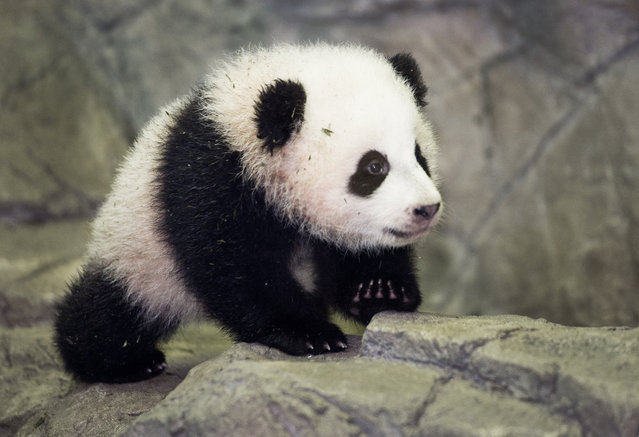
Bao Bao, the Giant Panda cub is seen by the media for the first time January 6, 2014 inside his glass enclosure at the Smithsonian's National Zoo in Washington, DC, a few days before going on display to the general public. Bao Bao was born at the Smithsonian's National Zoo August 2, 2013. (Photo by Paul J. Richards/AFP Photo)
Igor Shpilenok works in the reserve at Kamchatka, Russia. Igor is a fellow of the International League of Conservation Photographers and a winner of the 2006 BBC Wildlife Photographer Competition. Igor’s work has been published in numerous international and Russian magazines, including Smithsonian, National Wildlife, Geo, and BBC Wildlife.
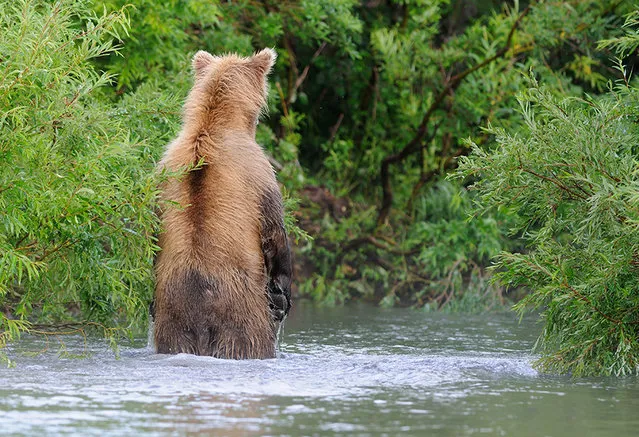
“How does a bear behave when encounter a human? In most cases he runs away. But before running he almost always would rise to stand on his rear feet. And this behavior does not indicate the attack, as many people think...” – Igor Shpilenok. (Photo by Igor Shpilenok via Wildlife Photo Russia)