Loading...
Done
Fake Food Hatanaka

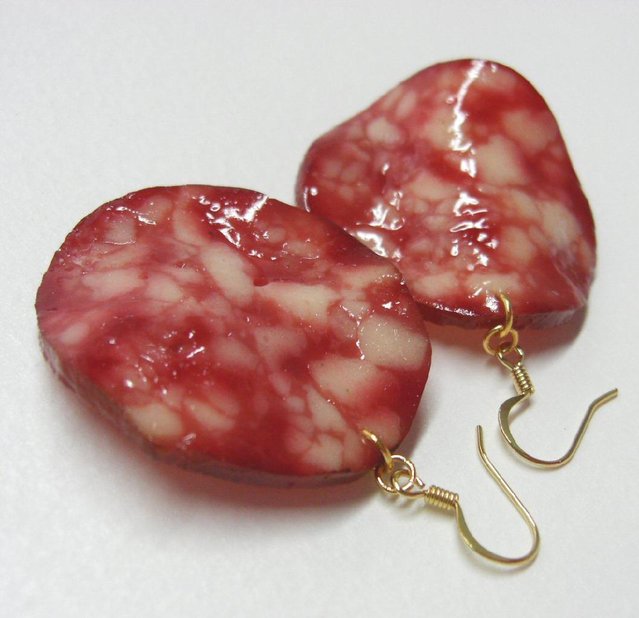
Japanese manufacturer Fake Food Hatanaka had the idea to combine the two to create a line of fashion accessories, strange and twisted! From the Fries/Ketchup hairclip to the Pizza bread necklace through the Cheeseburger pendant, the bacon & eggs headbands or even spaghetti bolognaise earrings and necklace sausages, here is some ultra-realistic and WTF Japanese gadgets to turn Fake Food / Fast Food into fashion accessory!
Details
15 Aug 2013 11:01:00
Japanese macaques, also known as snow monkeys, play as they soak in a hot spring in Jigokudani valley in Nagano Prefecture, northwest of Tokyo Saturday, March 6, 2021. (Photo by Kiichiro Sato/AP Photo)

Japanese macaques, also known as snow monkeys, play as they soak in a hot spring in Jigokudani valley in Nagano Prefecture, northwest of Tokyo Saturday, March 6, 2021. (Photo by Kiichiro Sato/AP Photo)
Details
14 Mar 2021 09:11:00
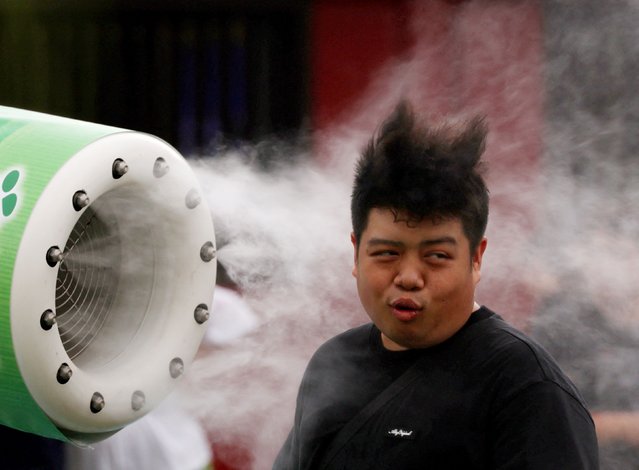
A tourist cools off in front of a misting fan near a venue of the Hozuki-Ichi (Japanese lantern plant fair), at Sensoji temple, in Tokyo, Japan, on July 10, 2025. (Photo by Kim Kyung-Hoon/Reuters)

A tourist cools off in front of a misting fan near a venue of the Hozuki-Ichi (Japanese lantern plant fair), at Sensoji temple, in Tokyo, Japan, on July 10, 2025. (Photo by Kim Kyung-Hoon/Reuters)
Details
05 Aug 2025 04:01:00
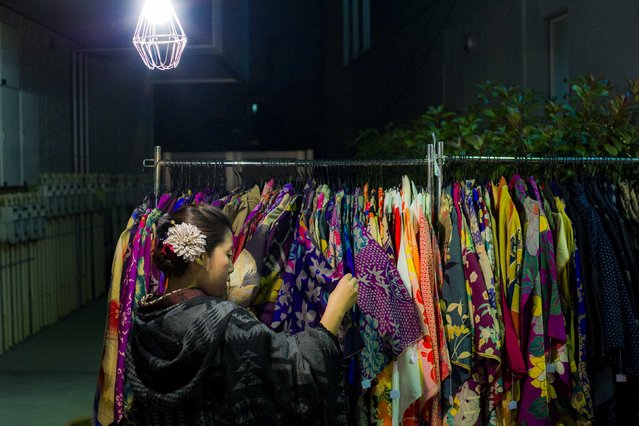
A woman browses through kimonos for sale at Boroichi flea market in Tokyo December 15, 2014. In the 16th century, Boroichi was a place for farmers to buy and sell rags, known as boro, for mending clothes and weaving sandals. Now in its 436th year, the original spirit lingers, with about 700 stands hawking fabric, used clothes and piles of rags. Others sell kitchen tools, pottery, seaweed and spices. (Photo by Thomas Peter/Reuters)

A woman browses through kimonos for sale at Boroichi flea market in Tokyo December 15, 2014. In the 16th century, Boroichi was a place for farmers to buy and sell rags, known as boro, for mending clothes and weaving sandals. Now in its 436th year, the original spirit lingers, with about 700 stands hawking fabric, used clothes and piles of rags. Others sell kitchen tools, pottery, seaweed and spices. About 200,000 people flock to the market, which is only open for four mid-winter days a year – two in December and two in January. (Photo by Thomas Peter/Reuters)
Details
19 Dec 2014 12:50:00
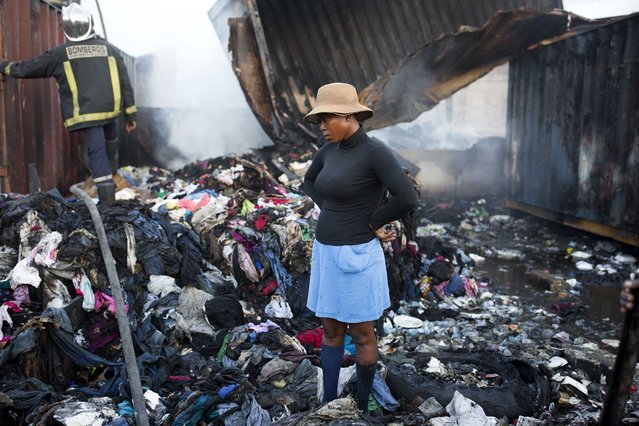
A woman stands in the middle of her fire damaged clothes after a massive fire at a market in Port-au-Prince, Haiti, Monday March 20, 2017. (Photo by Dieu Nalio Chery/AP Photo)

A woman stands in the middle of her fire damaged clothes after a massive fire at a market in Port-au-Prince, Haiti, Monday March 20, 2017. The fire raged at the biggest central market in the center of the Capital. (Photo by Dieu Nalio Chery/AP Photo)
Details
21 Mar 2017 08:04:00
People dressed in national clothes sing songs during the regional harvest festival in the town of Dyatlovo, Belarus, November 13, 2015. (Photo by Vasily Fedosenko/Reuters)

People dressed in national clothes sing songs during the regional harvest festival in the town of Dyatlovo, Belarus, November 13, 2015. (Photo by Vasily Fedosenko/Reuters)
Details
16 Nov 2015 08:05:00
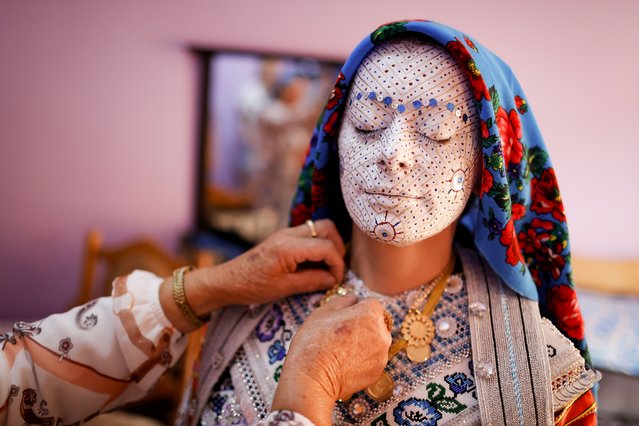
Kosovar Bosnian women help the bride Sellma Demirovic (C) to be dressed with traditional clothes on her wedding day for a traditional ceremony in the village of Donje Ljubinje, Kosovo, 14 August 2021. (Photo by Valdrin Xhemaj/EPA/EFE)

Kosovar Bosnian women help the bride Sellma Demirovic (C) to be dressed with traditional clothes on her wedding day for a traditional ceremony in the village of Donje Ljubinje, Kosovo, 14 August 2021. (Photo by Valdrin Xhemaj/EPA/EFE)
Details
21 Aug 2021 09:22:00
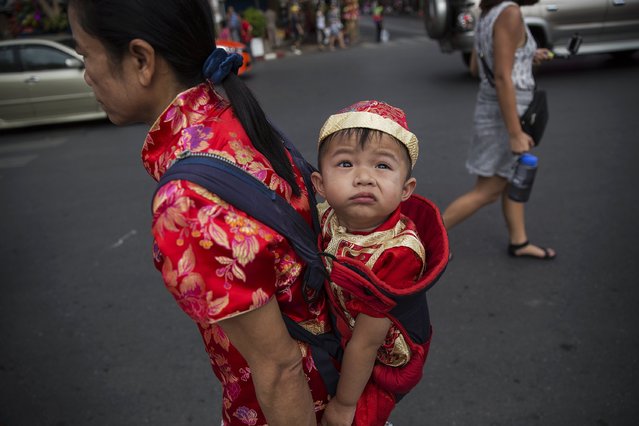
A woman carries her child, both wearing traditional red clothes celebrating the Chinese Lunar New Year in Bangkok February 19, 2015. (Photo by Damir Sagolj/Reuters)

A woman carries her child, both wearing traditional red clothes celebrating the Chinese Lunar New Year in Bangkok February 19, 2015. (Photo by Damir Sagolj/Reuters)
Details
20 Feb 2015 12:07:00