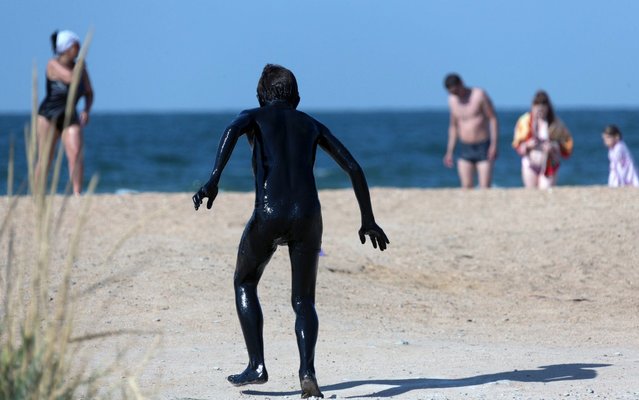
A child covered in mud on Lake Chokrak near the village of Kurortnoye, Leninsky District of Crimea in Russia on July 4, 2019. (Photo by Sergei Malgavko/TASS)
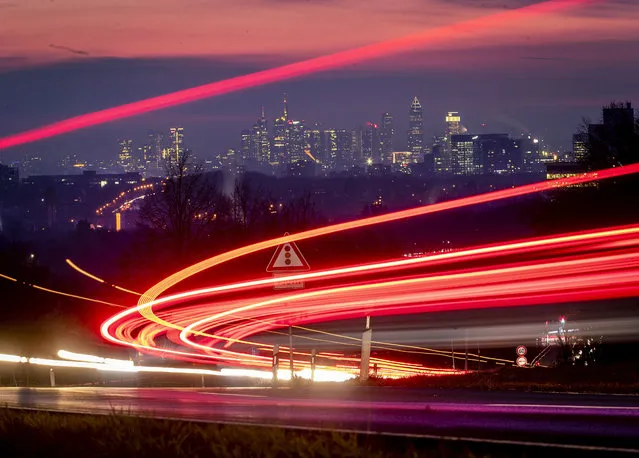
Commuters by with the buildings of the banking district in background in Frankfurt, Germany, Thursday, February 6, 2020. (Photo by Michael Probst/AP Photo)
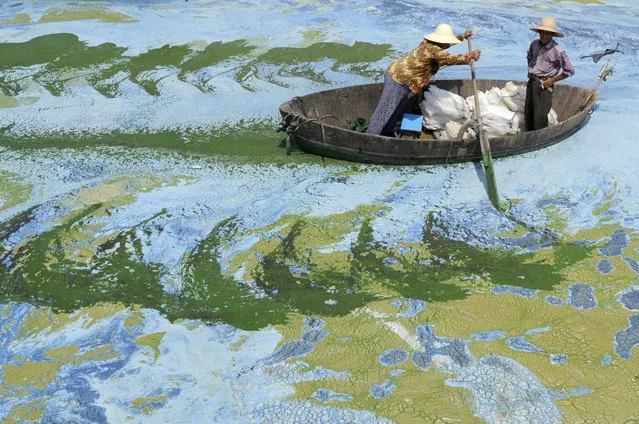
Growing cities, overuse of fertilizers and factory wastewater have degraded China's water supplies to the extent that half the nation's rivers and lakes are severely polluted. China aims to spend $850 billion to improve filthy water supplies over the next decade, but even such huge outlays may do little to reverse damage caused by decades of pollution and overuse in Beijing's push for rapid economic growth. Photo: Fishermen row a boat in the algae-filled Chaohu Lake in Hefei, Anhui province, June 19, 2009. (Photo by Jianan Yu/Reuters)
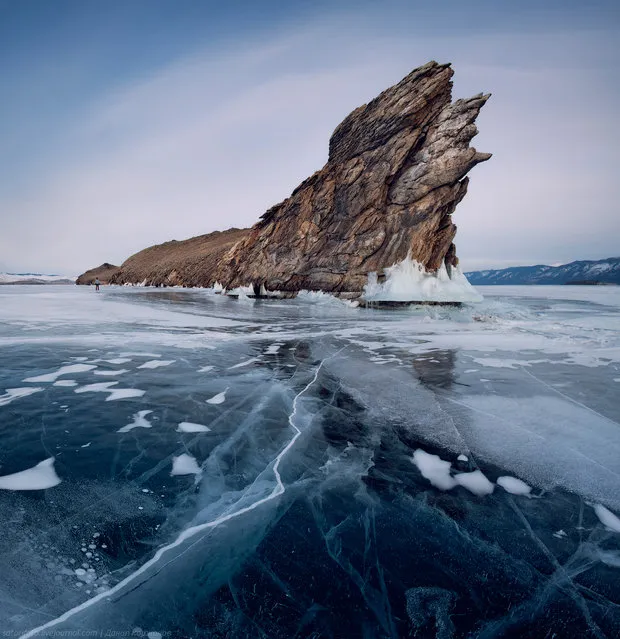
Lake Baikal is the world's oldest lake, at 25 million years (possibly older), and deepest, averaging 744.4 metres (2,442 ft).
Located in the south of the Russian region of Siberia, between Irkutsk Oblast to the northwest and the Buryat Republic to the southeast, it is the most voluminous freshwater lake in the world, containing roughly 20% of the world's unfrozen surface fresh water.
A participant from Indonesia waits to perform a dance during the last day of World Culture Festival on the banks of the river Yamuna in New Delhi, India, March 13, 2016. The festival opened on the banks of the Yamuna River in the Indian capital Friday despite concerns the sprawling construction of roads, ramps and pontoon bridges would irreparably damage the river's floodplains. (Photo by Adnan Abidi/Reuters)