Loading...
Done
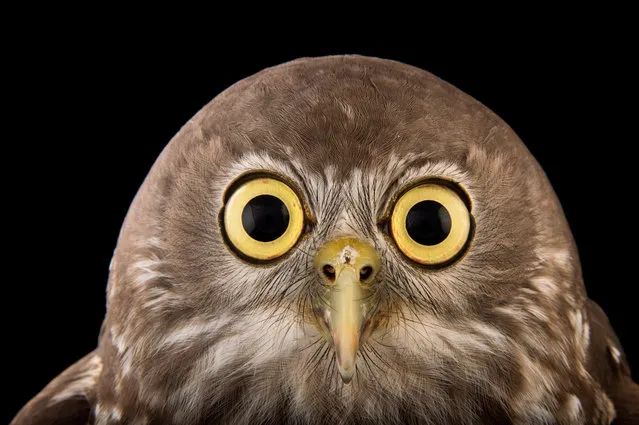
The National Geographic Photo Ark is a travelling exhibition of photographer Joel Sartore’s quest to create a photo archive of biodiversity around the world. So far, Sartore has captured studio portraits of more than 6,000 species – a number that he hopes to double. On 1 July, the ark will open at Melbourne zoo – the first time it has been exhibited in the southern hemisphere. More than 50 portraits will be on display, including many of Australian endangered animals being protected by programs at the zoo itself. These captions have been edited from text supplied by Melbourne zoo. Here: Barking owl. So-named because its call sounds like a barking dog, these birds are native to Australia, Indonesia and Papua New Guinea. In Victoria they are listed as an endangered species, and in 2003 there were estimated to be fewer than 50 breeding pairs. The main threat to the species in Victoria is loss of habitat, especially large trees with hollows in which they can nest and on which many of their prey depend. Apart from a bark, they may utter a chilling scream when they feel threatened. (Photo by Joel Sartore/National Geographic Photo Ark/The Guardian)

The National Geographic Photo Ark is a travelling exhibition of photographer Joel Sartore’s quest to create a photo archive of biodiversity around the world. So far, Sartore has captured studio portraits of more than 6,000 species – a number that he hopes to double. On 1 July, the ark will open at Melbourne zoo – the first time it has been exhibited in the southern hemisphere. More than 50 portraits will be on display, including many of Australian endangered animals being protected by programs at the zoo itself. These captions have been edited from text supplied by Melbourne zoo. Here: Barking owl. (Photo by Joel Sartore/National Geographic Photo Ark/The Guardian)
Details
01 Jul 2017 07:45:00
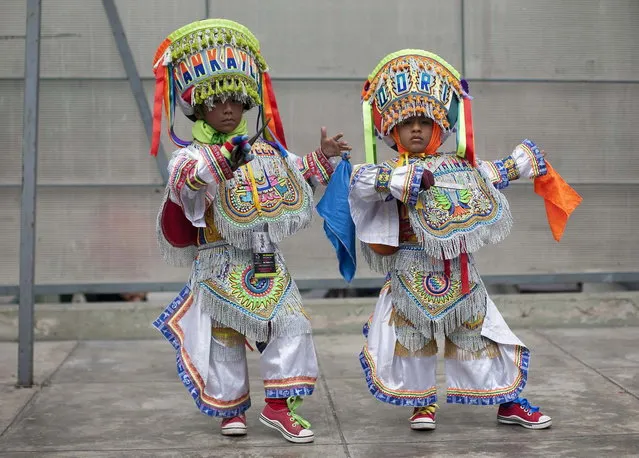
Young “scissors” dancers pose after performing in a national scissors dance competition at Lima's Exposition Park, May 18, 2014. The Danza de las tijeras, or scissors dance, is a traditional dance from the Peruvian southern region of the Andes, in which two or more performers take turns dancing while accompanied with music from a harp and a violin. Dancers would display various skills and moves, which include cutting the air with the use of a scissors. (Photo by Enrique Castro-Mendivil/Reuters)

Young “scissors” dancers pose after performing in a national scissors dance competition at Lima's Exposition Park, May 18, 2014. The Danza de las tijeras, or scissors dance, is a traditional dance from the Peruvian southern region of the Andes, in which two or more performers take turns dancing while accompanied with music from a harp and a violin. Dancers would display various skills and moves, which include cutting the air with the use of a scissors. (Photo by Enrique Castro-Mendivil/Reuters)
Details
20 May 2014 10:54:00
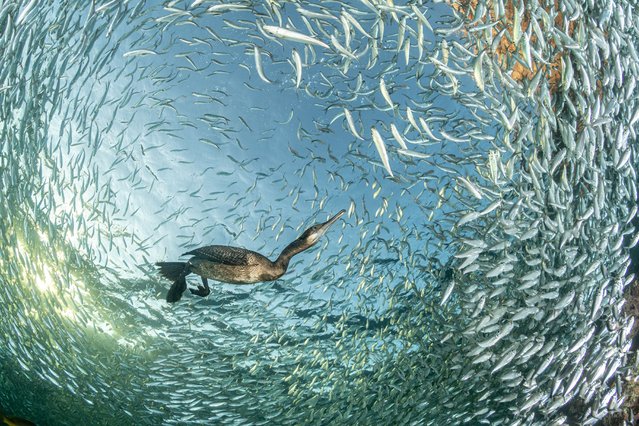
Entitled Feasting at Sunset, this photo of a Brandt’s cormorant among pilchards was the winner of the Birds in the Environment category in the 2025 Bird Photographer of the Year competition. (Photo by Franco Banfi/The Guardian)

Entitled Feasting at Sunset, this photo of a Brandt’s cormorant among pilchards was the winner of the Birds in the Environment category in the 2025 Bird Photographer of the Year competition. (Photo by Franco Banfi/The Guardian)
Details
07 Dec 2025 06:27:00
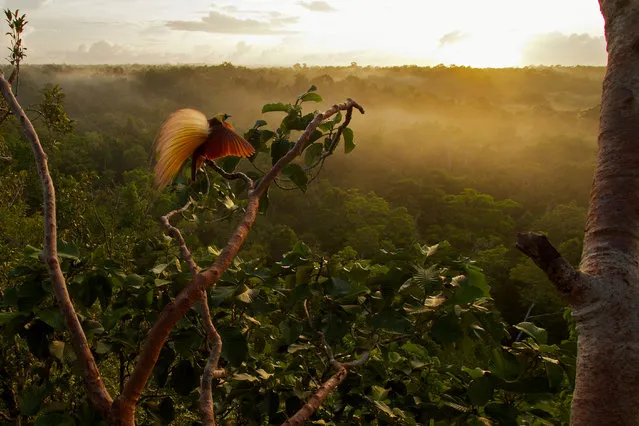
A greater bird of paradise (Paradisaea apoda) displaying in Badigaki Forest, Wokam Island (Aru Islands, Indonesia). Found here in Aru and on adjacent New Guinea, the greater bird of paradise represents about 40 different species of birds of paradise that depend on intact rainforest across the New Guinea region spanning eastern Indonesia and Papua New Guinea. With more than 80% of forest cover still intact, this region represents the largest remaining block of rainforest in the entire Asia-Pacific. (Photo by Tim Laman/naturepl.com/LDY Agency)

A greater bird of paradise (Paradisaea apoda) displaying in Badigaki Forest, Wokam Island (Aru Islands, Indonesia). Found here in Aru and on adjacent New Guinea, the greater bird of paradise represents about 40 different species of birds of paradise that depend on intact rainforest across the New Guinea region spanning eastern Indonesia and Papua New Guinea. With more than 80% of forest cover still intact, this region represents the largest remaining block of rainforest in the entire Asia-Pacific. (Photo by Tim Laman/naturepl.com/LDY Agency)
Details
14 Nov 2021 05:57:00
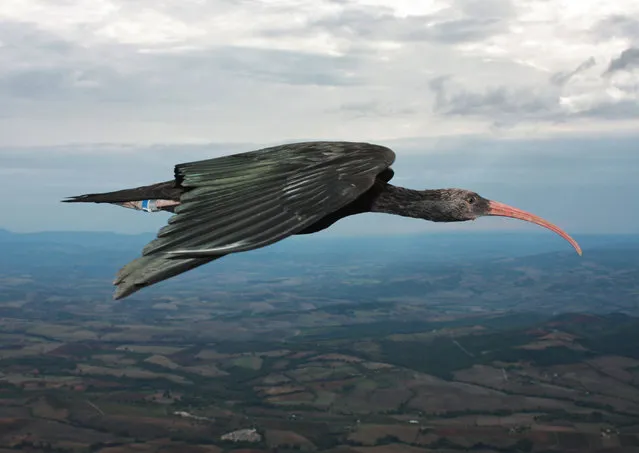
In this undated photo made available by journal Nature on January 15, 2014, a northern bald ibis (Geronticus eremita) flies in Tuscany, Italy. A new study released Wednesday, January 15, 2014 says the birds choreograph the flapping of their wings, getting a boost from an updraft of air in the wake of the flapping wings by flying behind the first bird and off to the side. When a flock of birds take advantage of these aerodynamics, they form a V. (Photo by Markus Unsöld/AP Photo)

In this undated photo made available by journal Nature on January 15, 2014, a northern bald ibis (Geronticus eremita) flies in Tuscany, Italy. A new study released Wednesday, January 15, 2014 says the birds choreograph the flapping of their wings, getting a boost from an updraft of air in the wake of the flapping wings by flying behind the first bird and off to the side. When a flock of birds take advantage of these aerodynamics, they form a V. (Photo by Markus Unsöld/AP Photo)
Details
18 Jan 2014 13:54:00
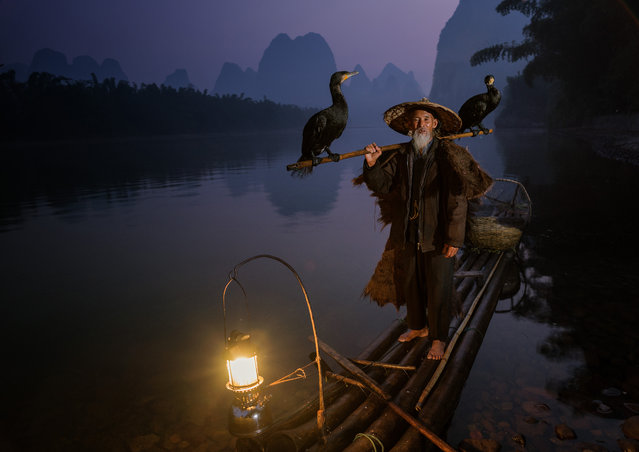
“On the Li River near Xingping in China, Cormorant fishermen work the waterways before dawn amidst the spectacular limestone towers of the Karst landscape.  The birds are trained to fetch fish from the inky depths but not swallow them. The fisherman accepts the fish from the birds who dive back for more. Here, still before dawn, the fisherman and his birds head for home”. (Photo and caption by Neville Jones/2014 Sony World Photography Awards)

“On the Li River near Xingping in China, Cormorant fishermen work the waterways before dawn amidst the spectacular limestone towers of the Karst landscape. The birds are trained to fetch fish from the inky depths but not swallow them. The fisherman accepts the fish from the birds who dive back for more. Here, still before dawn, the fisherman and his birds head for home”. (Photo and caption by Neville Jones/2014 Sony World Photography Awards)
Details
21 Mar 2014 08:44:00
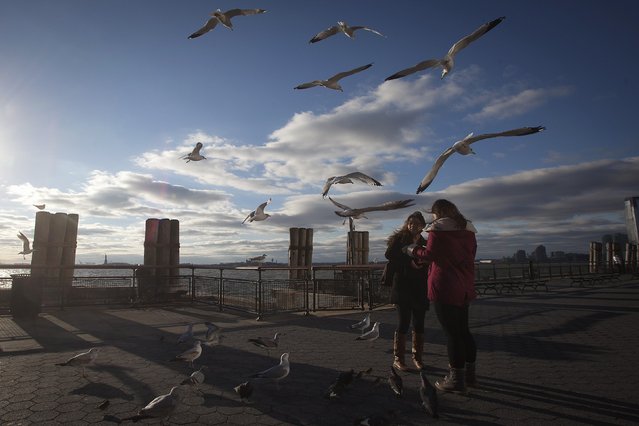
People feed the birds in Battery Park in the Manhattan borough of New York, December 18, 2014. (Photo by Carlo Allegri/Reuters)

People feed the birds in Battery Park in the Manhattan borough of New York, December 18, 2014. Hart has been feeding the birds three times a week for the last three years. (Photo by Carlo Allegri/Reuters)
Details
20 Dec 2014 11:50:00
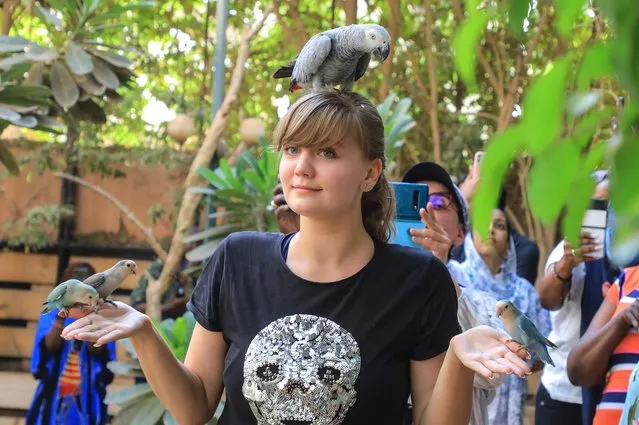
An undated handout photo obtained on May 14, 2022, from Khartoum's Marshall Nature Reserve for exotic birds, shows a visitor posing for pictures with some of the protected birds in the capital Khartoum. Tucked away east of Sudan's capital Khartoum, a sanctuary of lush green vegetation has been a haven for dozens of exotic birds from far and wide. (Photo by Khartoum Marshall Nature Reserve/AFP Photo)

An undated handout photo obtained on May 14, 2022, from Khartoum's Marshall Nature Reserve for exotic birds, shows a visitor posing for pictures with some of the protected birds in the capital Khartoum. Tucked away east of Sudan's capital Khartoum, a sanctuary of lush green vegetation has been a haven for dozens of exotic birds from far and wide. (Photo by Khartoum Marshall Nature Reserve/AFP Photo)
Details
29 May 2022 04:20:00