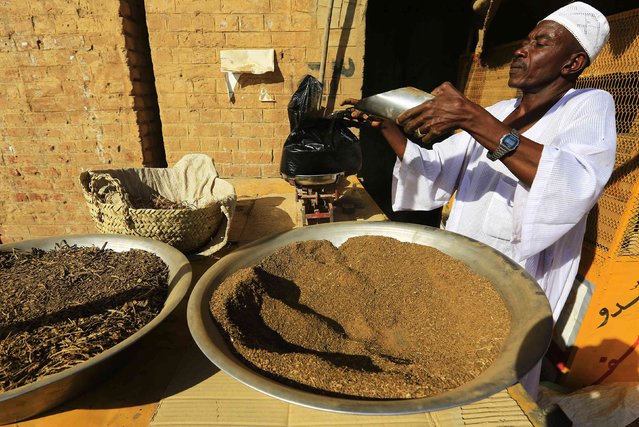
A trader weighs tobacco at a market in el-Fasher, in North Darfur February 5, 2015. Tobacco is one of the North Darfur war zone's main cash crops. (Photo by Mohamed Nureldin Abdallah/Reuters)
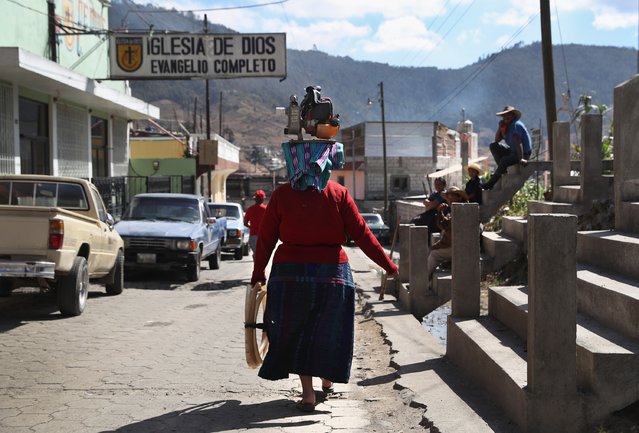
A woman carries a water pump to work on February 11, 2017 in Almolonga, Guatemala. The Mayan town in the western highlands district of Quetzaltenango has surged in prosperity in recent years with high-productivity vegetable farming, exporting much of its excess crops to neighborning El Salvador. (Photo by John Moore/Getty Images)
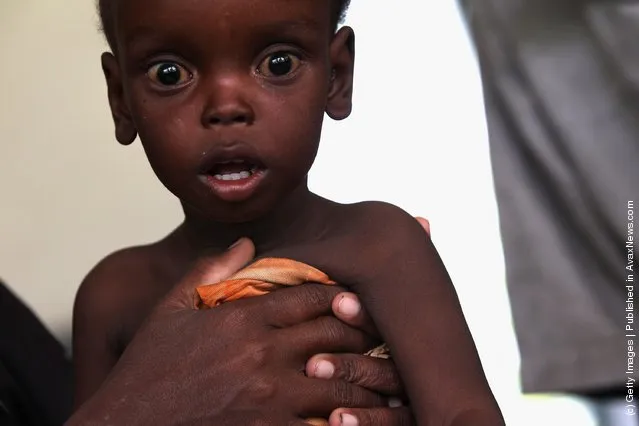
Weakened by sickness and malnutrition, Arbty Mohammad, 2, lies in the Banadir Hospital on August 12, 2011 in Mogadishu, Somalia. Some 100,000 Somalis have flooded into Mogadishu from drought and famine stricken areas of the country. The UN warned Friday that a cholera epidemic could spread through Mogadishu, as Somalis fill unsanitary makeshift camps throughout the capital. (Photo by John Moore/Getty Images)
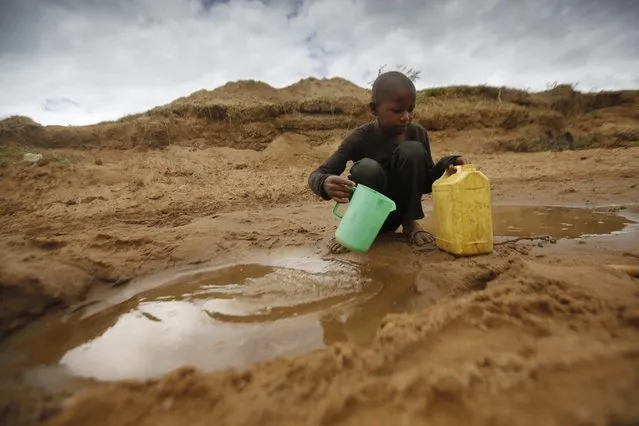
A young boy scoops water from a hand-dug well in the dry riverbed near Matinyani, in the semi-arid Kitui County in southeastern Kenya, 22 March 2015, the World Water Day. Residents of Kitui County and other arid and semi-arid areas of the country have been hard-hit by extremely poor rainfall this year while the government said in previous month that some 1.6 million people countrywide are facing acute starvation due to the drought and will need relief food over the next six months. Residents of Matinyani say they haven't seen a drop of rain in nearly four months. Thousands of Kenyans in rural areas walk tens of kilometers just to fetch water to drink and to be used in their homes. According to an estimate by UNESCO (United Nations Educational, Scientific and Cultural Organization), 17 million people lack access to safe water in Kenya, where the drought is a perennial problem. (Photo by Dai Kurokawa/EPA)
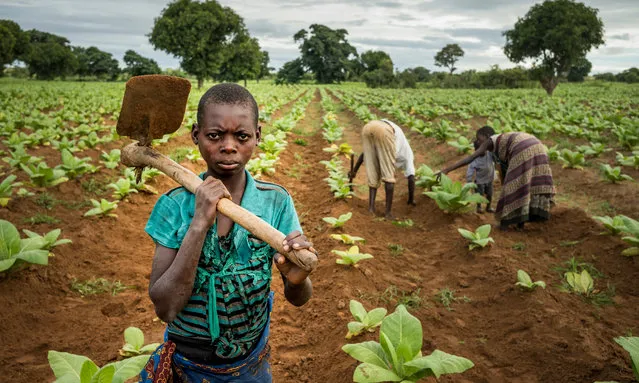
Life as tenant farmers in Kasungu, northern Malawi, can be a struggle for families trapped in poverty, who feel forced to rely on their children’s help, impacting schooling. Here: A tobacco field at a farm in Kasungu region, Malawi. Tobacco is the country’s most important export crop, with tobacco leaf from Malawi filling cigarettes found all over the world. Here: Tiyamike Phiri hopes to become a nurse because she wants to travel the country and help others. (Photo by David Levene/The Guardian)
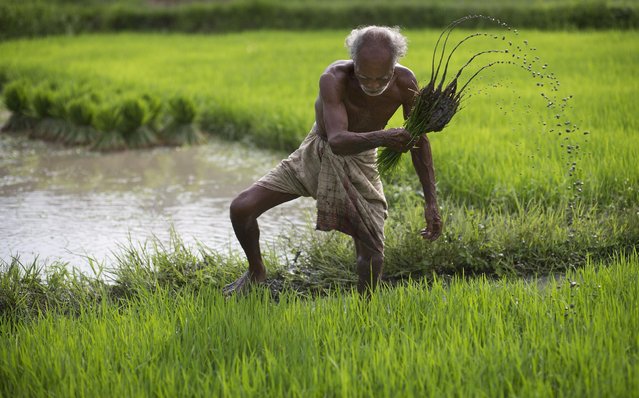
A farmer works in a paddy field at Reba Maheswar village, 56 kilometers (35 miles) east of Gauhati, India, Friday, July 3, 2015. Rice is one of the most important food crops of India and about 4,000 different varieties are grown in different parts of the country. (Photo by Anupam Nath/AP Photo)
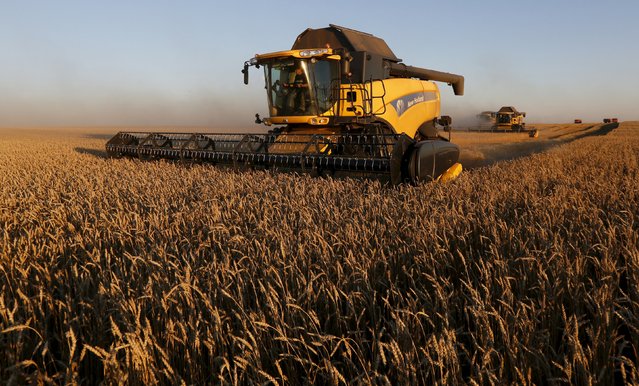
Combine harvesters work on a wheat field of the Solgonskoye farming company near the village of Talniki, southwest from Siberian city of Krasnoyarsk, Russia, August 27, 2015. Russia, one of the world's top wheat exporters, will harvest its third-largest grain crop in post-Soviet history this year, leading Russian consultancy SovEcon said on August 27 after upgrading its forecast. (Photo by Ilya Naymushin/Reuters)
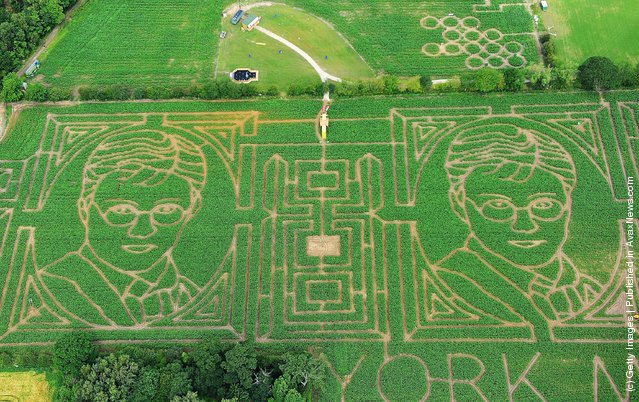
An arial view of Top Pearsy's Maize Maze in the shape of Harry Potter, on July 11, 2011 in York, England. Farmer Tom Pearcy has cut two portraits of Harry Potter in his crop of maize plants. With some subtle differences the two images create the world's largest spot the difference competition. At over 50m in diameter, and cut out of over 1 million living maize plants, the York Maze is the largest “Maize Maze” in Europe and one of the largest in the world. (Photo by Bethany Clarke/Getty Images)