High angle view of a young woman reading in a bathtub, turning page, enjoying time with herself. Candles and red wine. Valentines day concept, International womans day. (Photo by Vuk Saric/Getty Images)
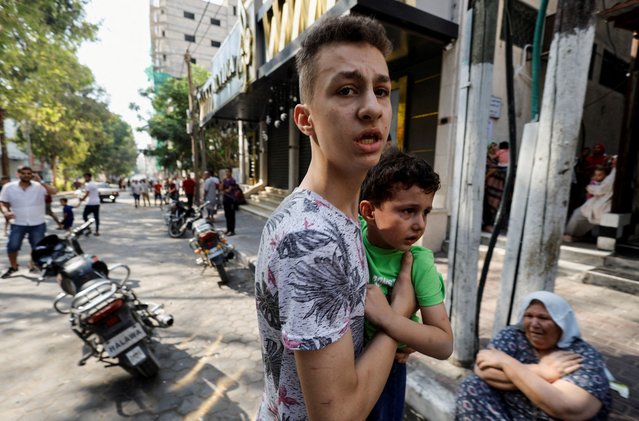
Palestinians react as they gather at the site of an explosion, following Israeli strikes in Gaza City on August 5, 2022. (Photo by Mohammed Salem/Reuters)
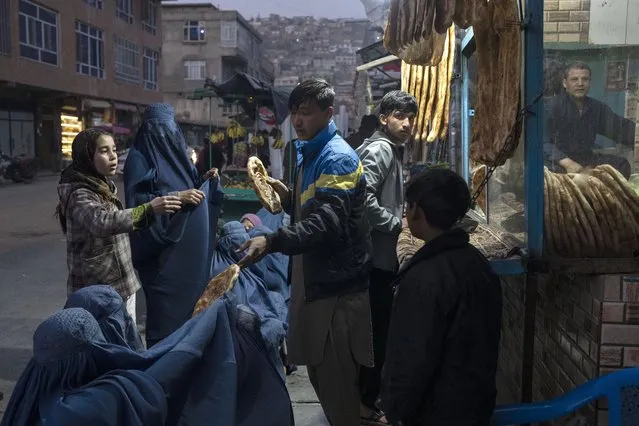
A man distributes bread to Burka-wearing Afghan women outside a bakery in Kabul, Afghanistan, Thursday, December 2, 2021. According to U.N. figures from early November, almost 24 million people in Afghanistan, around 60% percent of the population, suffer from acute hunger, including 8.7 million living in near famine. Increasing numbers of malnourished children have filled hospital wards. (Photo by Petros Giannakouris/AP Photo)
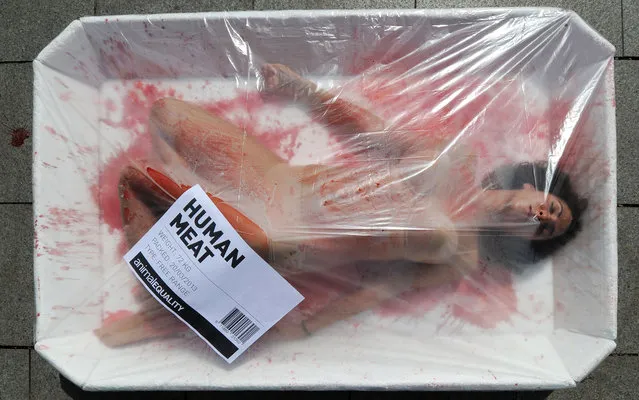
Animal rights activists from the group “Animal Equality” are covered with plastic sheets to represent meat packaging as they stage a protest during “Day Without Meat” event in Barcelona, Spain, on March 20, 2013. (Photo by Lluis Gene/AFP Photo)
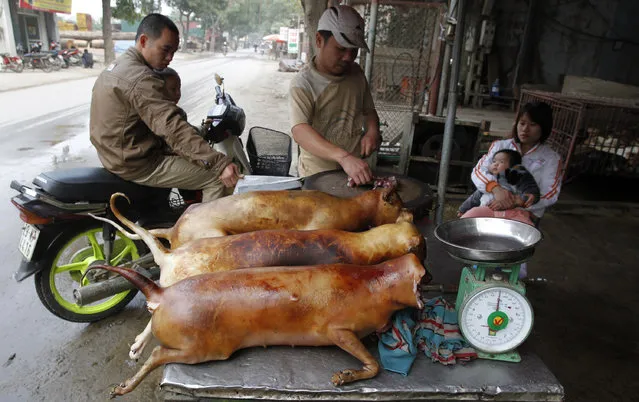
A vendor (C) cuts slaughtered dogs for sale at his roadside stall in Duong Noi village, outside Hanoi December 16, 2011. While animal rights activists have condemned eating dog meat as cruel treatment of the animals, it is still an accepted popular delicacy for some Vietnamese, as well in some other Asian countries. Duong Noi is well-known as a dog-meat village, where hundreds of dogs are killed each day for sale as popular traditional food. Dog-eating as a custom is rooted in Vietnam and was developed as a result of poverty. One kilogram of dog meat costs about 130,000 dongs ($6.2). (Photo by Reuters/Kham)
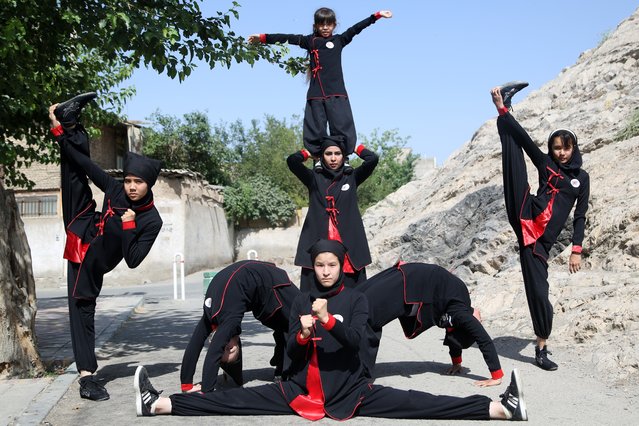
Members of Afghan ninja team “Kabura Vahdet” practices Asian martial arts in Tehran, Iran on June 17, 2022. (Photo by Fatemeh Bahrami/Anadolu Agency via Getty Images)
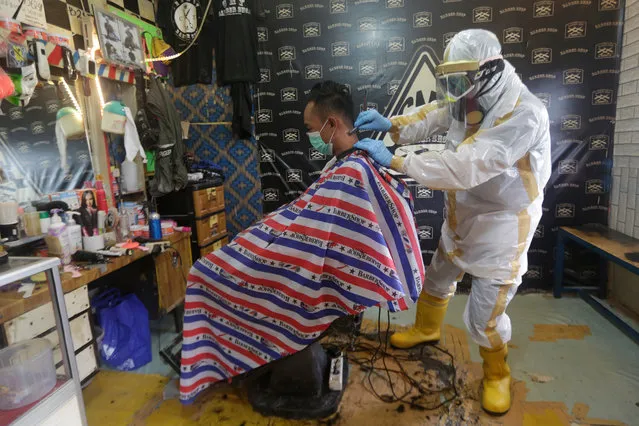
Barber Herman Mulyana (R) gives a haircut to a customer while wearing protective attire made from plastic garbage bags at a barbershop in Bogor, Indonesia, 06 April 2020. The Trade Ministry of Indonesia issued a regulation temporarily recinding all requirements for the import of protective gear and medical equipment, to counter shortages of many items used to treat COVID-19 patients and prevent the further spread of the disease. (Photo by Adi Weda/EPA/EFE)