Loading...
Done
Migrant children play with leaves during Christmas Eve at a shelter, as they travel with their parents as part of a caravan with humanitarian visas to transit throughout the country, in Monterrey, Mexico on December 24, 2021. (Photo by Daniel Becerril/Reuters)

Migrant children play with leaves during Christmas Eve at a shelter, as they travel with their parents as part of a caravan with humanitarian visas to transit throughout the country, in Monterrey, Mexico on December 24, 2021. (Photo by Daniel Becerril/Reuters)
Details
13 Jan 2022 07:47:00
Actors dressed as a “Yeti” attend a promotional event for Travel Channel's “Expedition Unknown: Hunt for the Yeti” in Manhattan, New York City, U.S., October 4, 2016. (Photo by Brendan McDermid/Reuters)

Actors dressed as a “Yeti” attend a promotional event for Travel Channel's “Expedition Unknown: Hunt for the Yeti” in Manhattan, New York City, U.S., October 4, 2016. (Photo by Brendan McDermid/Reuters)
Details
05 Oct 2016 10:07:00
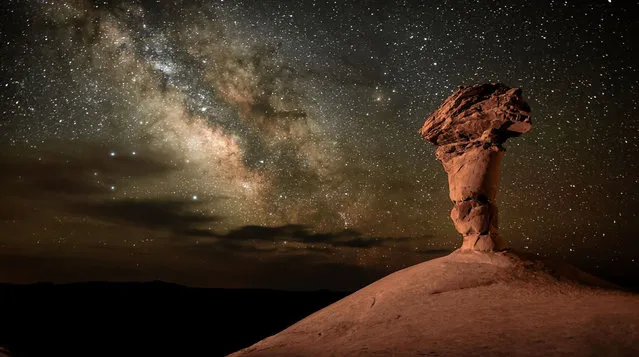
These stunning photos act as postcards for one photographer, who has traveled all over the globe, braving freezing temperatures to create the ultimate time lapse video. Photographer Dustin Farrell, 36, spent four years perfecting his technique and traveling all over the world in his quest to capture the most beautiful time lapses of nature. (Photo by Dustin Farrell/Caters News)

These stunning photos act as postcards for one photographer, who has traveled all over the globe, braving freezing temperatures to create the ultimate time lapse video. Photographer Dustin Farrell, 36, spent four years perfecting his technique and traveling all over the world in his quest to capture the most beautiful time lapses of nature. (Photo by Dustin Farrell/Caters News)
Details
30 Dec 2014 11:51:00
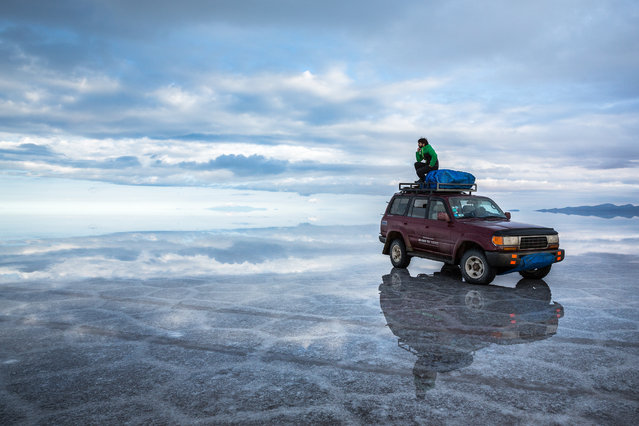
At 10,582 square kilometres, the Bolivian salt flats – otherwise known as Salar de Uyuni – are the largest on the planet and contain between 50 and 70% of the world’s lithium reserves. After exploring Chile and Argentina, photographer Joel Santos decided to travel to Bolivia in January 2017 to check the salt flats off his bucket list. With an electrical storm rolling in, Joel and his two travelling companions were the only souls left on the vast flats and captured the eerie flats without a person in sight. (Photo by Joel Santos/Barcroft Images)

At 10,582 square kilometres, the Bolivian salt flats – otherwise known as Salar de Uyuni – are the largest on the planet and contain between 50 and 70% of the world’s lithium reserves. After exploring Chile and Argentina, photographer Joel Santos decided to travel to Bolivia in January 2017 to check the salt flats off his bucket list. With an electrical storm rolling in, Joel and his two travelling companions were the only souls left on the vast flats and captured the eerie flats without a person in sight. (Photo by Joel Santos/Barcroft Images)
Details
12 Aug 2019 00:03:00
A Chinese tourist wears a mask as she arrives at Suvarnabhumi Airport during a welcome ceremony of Chinese Lunar New Year travellers in Bangkok, Thailand on January 22, 2020. (Photo by Soe Zeya Tun/Reuters)

A Chinese tourist wears a mask as she arrives at Suvarnabhumi Airport during a welcome ceremony of Chinese Lunar New Year travellers in Bangkok, Thailand on January 22, 2020. (Photo by Soe Zeya Tun/Reuters)
Details
24 Jan 2020 00:05:00
People travel by tube on the London Underground to take part in the Pride in London parade, London, Saturday, July 1, 2023. (Photo by Jordan Pettitt/PA Wire via AP Photo)

People travel by tube on the London Underground to take part in the Pride in London parade, London, Saturday, July 1, 2023. (Photo by Jordan Pettitt/PA Wire via AP Photo)
Details
09 Oct 2024 04:14:00
On August 31, 2012, a long filament of solar material that had been hovering in the sun's atmosphere, the corona, erupted out into space at 4:36 p.m. EDT. The coronal mass ejection, or CME, traveled at over 900 miles per second. The CME did not travel directly toward Earth, but did connect with Earth's magnetic environment, or magnetosphere, causing aurora to appear on the night of Monday, September 3. (Photo by NASA/GSFC/SDO)

On August 31, 2012, a long filament of solar material that had been hovering in the sun's atmosphere, the corona, erupted out into space at 4:36 p.m. EDT. The coronal mass ejection, or CME, traveled at over 900 miles per second. The CME did not travel directly toward Earth, but did connect with Earth's magnetic environment, or magnetosphere, causing aurora to appear on the night of Monday, September 3. (Photo by NASA/GSFC/SDO via The Atlantic)
Details
14 Sep 2012 09:01:00
A hungry cow smiles for the camera in Salzburg, Austria. One of a series of funny animal mugshots taken by Chanel Cartell and Stevo Dirnberger during their travels around the globe. (Photo by Chanel Cartell/Stevo Dirnberger/Rex Features/Shutterstock)

A hungry cow smiles for the camera in Salzburg, Austria. One of a series of funny animal mugshots taken by Chanel Cartell and Stevo Dirnberger during their travels around the globe. (Photo by Chanel Cartell/Stevo Dirnberger/Rex Features/Shutterstock)
Details
13 Jun 2016 11:03:00