Loading...
Done
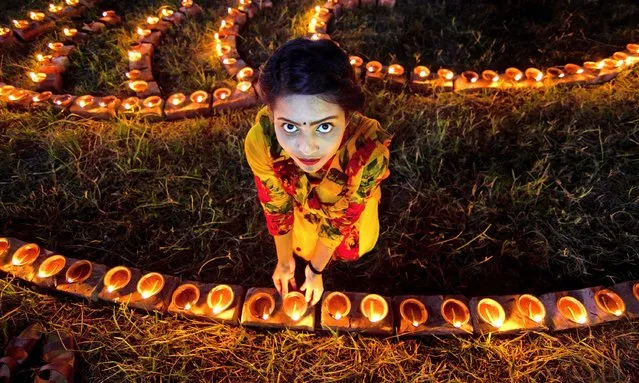
Hindu devotees light “Diyas” (earthen lamps) on a Rangoli, a framework of decorated pattern, as part of Diwali festivities in a temple premises in Dhaka, Bangladesh on November 12, 2023. The festival takes place every year in accordance with the Hindu lunar calendar. The word “Diwali” is derived from the Sanskrit word “Deepavali”, meaning series of lighted lamps; hence, it is also known as the festival of lights. Diwali is typically celebrated by socializing and exchanging gifts with family and friends. Many light oil lamps or candles to symbolize a victory of light over darkness, and fireworks are set off as part of the celebrations. (Photo by Joy Saha/Rex Features/Shutterstock)

Hindu devotees light “Diyas” (earthen lamps) on a Rangoli, a framework of decorated pattern, as part of Diwali festivities in a temple premises in Dhaka, Bangladesh on November 12, 2023. The festival takes place every year in accordance with the Hindu lunar calendar. The word “Diwali” is derived from the Sanskrit word “Deepavali”, meaning series of lighted lamps; hence, it is also known as the festival of lights. Diwali is typically celebrated by socializing and exchanging gifts with family and friends. Many light oil lamps or candles to symbolize a victory of light over darkness, and fireworks are set off as part of the celebrations. (Photo by Joy Saha/Rex Features/Shutterstock)
Details
18 Dec 2023 00:11:00
Local villagers ride a local coal powered steam train on March 27, 2015 at a station in the town of Shixi , Sichuan Province, in Southern China. While China boasts the world's most extensive high-speed rail infrastructure. (Photo by Kevin Frayer/Getty Images)

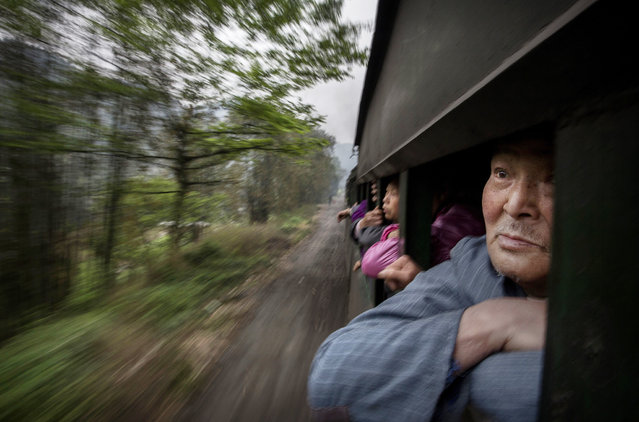
Local villagers ride a local coal powered steam train on March 27, 2015 at a station in the town of Shixi , Sichuan Province, in Southern China. While China boasts the world's most extensive high-speed rail infrastructure with over 16,000 kilometers of track, the Shixi-Bagou railway is still a primary connection for local villagers between towns and is kept alive by tourist cars carrying passengers for ten times the price. The rail line came into service in the late 1950s and the train was initially used to transport coal from a now-shuttered mine before passenger carriages were added. (Photo by Kevin Frayer/Getty Images)
Details
12 May 2015 12:00:00
The President of the sushi restaurant chain Sushi Zanmai, Kiyoshi Kimura, cuts a blue fin tuna outside his main restaurant at the outer Tsukiji market in Tokyo January 5, 2015. The 180 kg blue fin tuna traded at a price of 4.5 million yen (37,500 USD) and was the most expensive fish at this year's New Year auction at the Tsukiji market, local media reported. (Photo by Thomas Peter/Reuters)

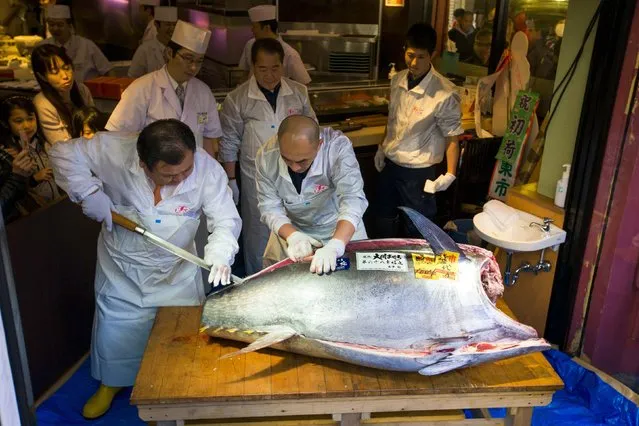
The President of the sushi restaurant chain Sushi Zanmai, Kiyoshi Kimura, cuts a blue fin tuna outside his main restaurant at the outer Tsukiji market in Tokyo January 5, 2015. The 180 kg blue fin tuna traded at a price of 4.5 million yen (37,500 USD) and was the most expensive fish at this year's New Year auction at the Tsukiji market, local media reported. (Photo by Thomas Peter/Reuters)
Details
06 Jan 2015 11:39:00
Self-employed pedicab driver Danilo Guerra, 25, uses his mobile phone as he waits for clients in downtown Havana April 12, 2016. (Photo by Alexandre Meneghini/Reuters)

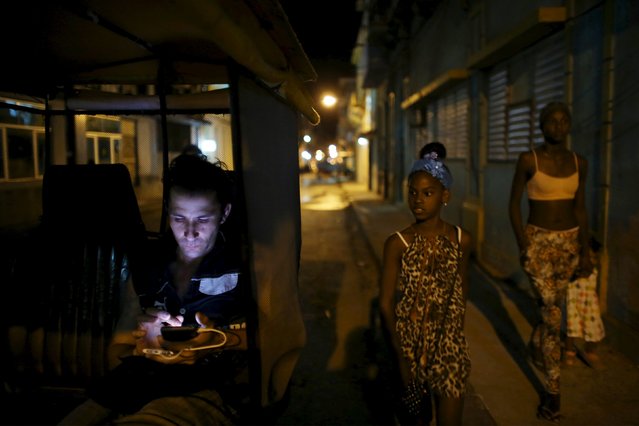
Self-employed pedicab driver Danilo Guerra, 25, uses his mobile phone as he waits for clients in downtown Havana April 12, 2016. (Photo by Alexandre Meneghini/Reuters)
Details
18 Apr 2016 09:52:00
Kiyomura Co's President Kiyoshi Kimura (C), who runs a chain of sushi restaurants Sushi Zanmai, poses with a 212 kg (467 lbs) bluefin tuna at his sushi restaurant outside Tsukiji fish market in Tokyo, Japan, January 5, 2017. Kimura won the bid for the tuna caught off Oma, Aomori prefecture, northern Japan, with a 74 million yen (633,000 USD) at the fish market's first tuna auction this year. (Photo by Issei Kato/Reuters)

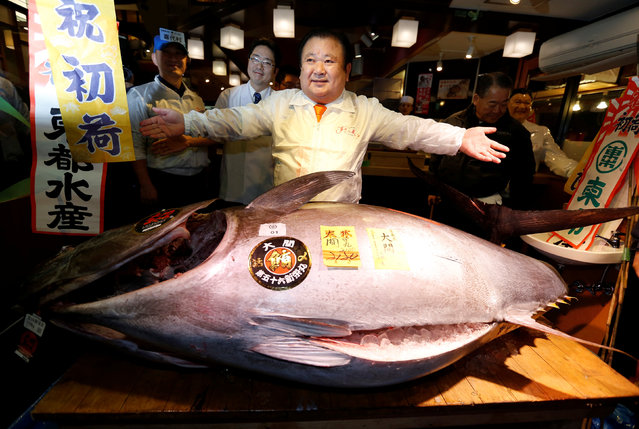
Kiyomura Co's President Kiyoshi Kimura (C), who runs a chain of sushi restaurants Sushi Zanmai, poses with a 212 kg (467 lbs) bluefin tuna at his sushi restaurant outside Tsukiji fish market in Tokyo, Japan, January 5, 2017. Kimura won the bid for the tuna caught off Oma, Aomori prefecture, northern Japan, with a 74 million yen (633,000 USD) at the fish market's first tuna auction this year. (Photo by Issei Kato/Reuters)
Details
06 Jan 2017 13:49:00
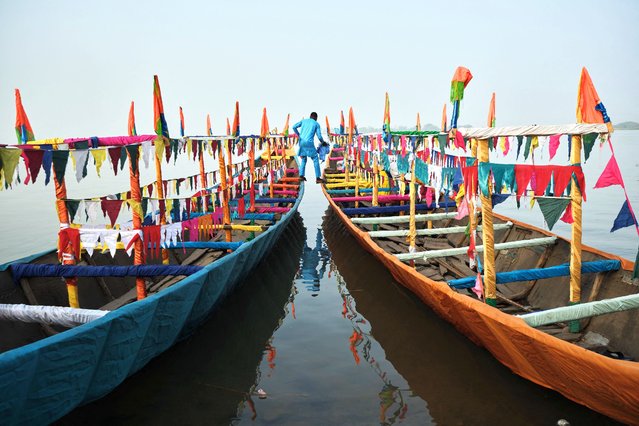
A man crosses from a pirogue to another pirogue during the annual boat regatta in Yauri, Kebbi State, on February 15, 2025. The regatta festival started about 200 years ago as a display of naval strength of the Gungu people, where the Gungu warriors annually attacked dangerous hippopotamus that were destroying farmlands. Warriors would board various sizes of canoes with different types of weapons to attack the animal on the River Niger. This required expertise in canoe paddling and naval warfare. It also served as training exercise for upcoming Gungu warriors. (Photo by Toyin Adedokun/AFP Photo)

A man crosses from a pirogue to another pirogue during the annual boat regatta in Yauri, Kebbi State, on February 15, 2025. The regatta festival started about 200 years ago as a display of naval strength of the Gungu people, where the Gungu warriors annually attacked dangerous hippopotamus that were destroying farmlands. Warriors would board various sizes of canoes with different types of weapons to attack the animal on the River Niger. This required expertise in canoe paddling and naval warfare. It also served as training exercise for upcoming Gungu warriors. (Photo by Toyin Adedokun/AFP Photo)
Details
25 Feb 2025 01:59:00
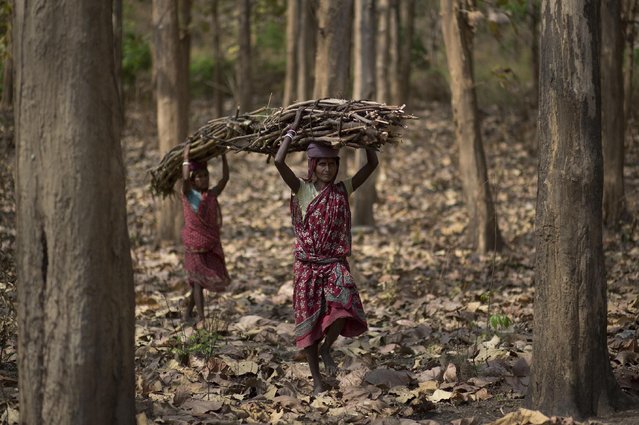
In this Tuesday, March 31, 2015 photo, Indian women walk carrying firewood they collected from a forest at Gobhali village on the outskirts of Gauhati, India. Every evening, hundreds of millions of Indian women hover over crude stoves making dinner for their families. They feed the flames with polluting fuels like kerosene or cow dung, and breathe the acrid smoke wafting from the fires. (Photo by Anupam Nath/AP Photo)

In this Tuesday, March 31, 2015 photo, Indian women walk carrying firewood they collected from a forest at Gobhali village on the outskirts of Gauhati, India. Every evening, hundreds of millions of Indian women hover over crude stoves making dinner for their families. They feed the flames with polluting fuels like kerosene or cow dung, and breathe the acrid smoke wafting from the fires. (Photo by Anupam Nath/AP Photo)
Details
16 Apr 2015 12:29:00
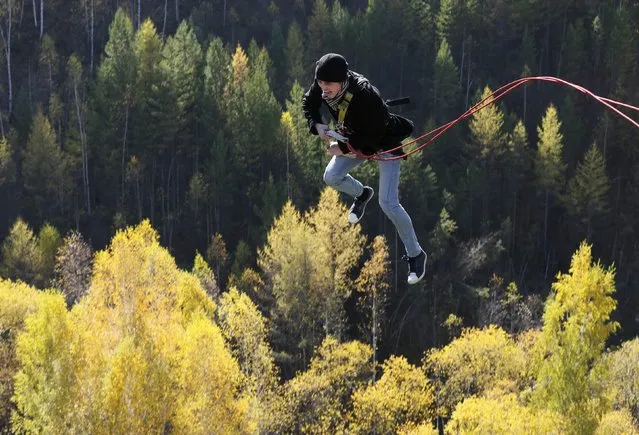
A member of the “Exit Point” amateur rope-jumping group jumps from a 44-metre high (144-feet high) waterpipe bridge in the Siberian Taiga area outside Krasnoyarsk, September 28, 2014. (Photo by Ilya Naymushin/Reuters)

A member of the “Exit Point” amateur rope-jumping group jumps from a 44-metre high (144-feet high) waterpipe bridge in the Siberian Taiga area outside Krasnoyarsk, September 28, 2014. Fans of rope-jumping, a kind of extreme sport involving a jump from a high point using an advanced system of amortization including mountaineering and rope safety equipment, attended the Golden Autumn group's jumping season. (Photo by Ilya Naymushin/Reuters)
Details
04 Oct 2014 11:12:00