Loading...
Done
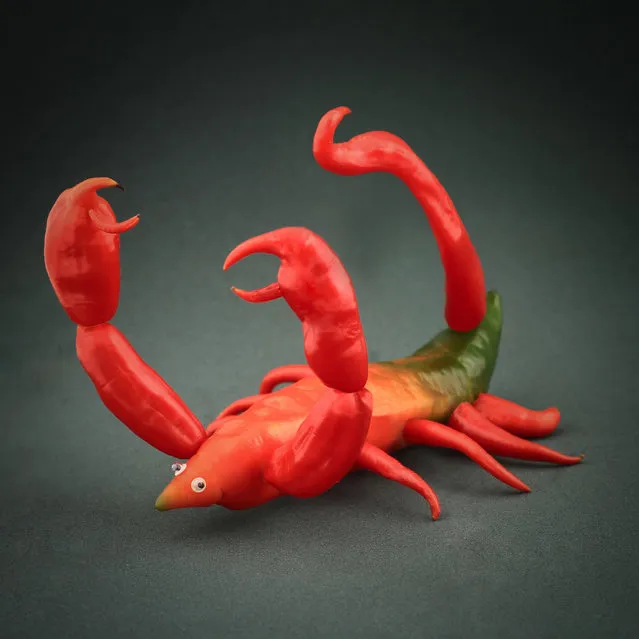
“Red Pepperpion. (Photo by Vanessa Dualib)

“Red Pepperpion. Red Pepperpions are secretive, nocturnal arachilli which can be spotted in kitchens of arid climates all around the world.

Red Pepperpions are equipped with a delicious (and depending on the quantity...deadly!) stinger at the end of its tail. If you happen to get bitten (or if you bite him!) it will produce a burning sensation on your taste nerves.

However, there is no need to worry, since the fact is that his potent stinger is usually only used when hunting or whenever the Pepperpion feels like he might become part of someones meal...

At daylight or when encountering a larger foe, such as a Saucier Chef, they retreat into burrows inside the fridge or hide beneath the oven”. (Photo and comment by Vanessa Dualib)


Details
08 Feb 2013 09:24:00
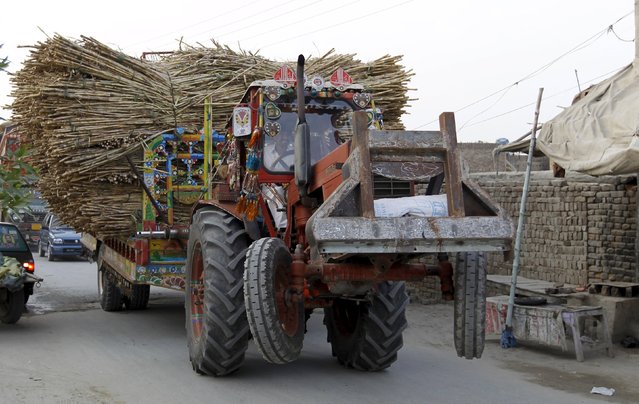
The front wheels of a tractor, pulling a trailer overloaded with sugarcane, are seen lifted off the ground as it passes through the streets of Karor Lan Esan, Pakistan December 6, 2015. (Photo by Caren Firouz/Reuters)

The front wheels of a tractor, pulling a trailer overloaded with sugarcane, are seen lifted off the ground as it passes through the streets of Karor Lan Esan, Pakistan December 6, 2015. (Photo by Caren Firouz/Reuters)
Details
17 Jan 2016 08:01:00
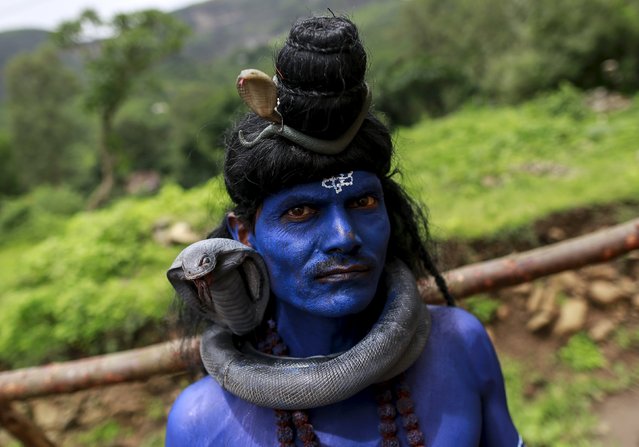
A devotee dressed as Hindu Lord Shiva waits to participate in a parade during “Kumbh Mela” or the Pitcher Festival in Trimbakeshwar, India, August 18, 2015. The Kumbh Mela takes place four times every 12 years at four different river bank locations in India. (Photo by Danish Siddiqui/Reuters)

A devotee dressed as Hindu Lord Shiva waits to participate in a parade during “Kumbh Mela” or the Pitcher Festival in Trimbakeshwar, India, August 18, 2015. The Kumbh Mela takes place four times every 12 years at four different river bank locations in India. (Photo by Danish Siddiqui/Reuters)
Details
19 Aug 2015 12:23:00
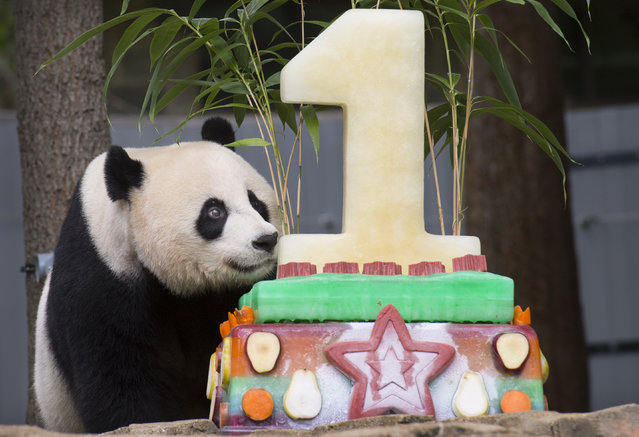
Giant panda Mei Xiang discovers a birthday cake meant for her cub Bei Bei (NP) who turns one at the Smithsonian National Zoo in Washington, DC on August 20, 2016. (Photo by Linda Davidson/The Washington Post)

Giant panda Mei Xiang discovers a birthday cake meant for her cub Bei Bei (NP) who turns one at the Smithsonian National Zoo in Washington, DC on August 20, 2016. (Photo by Linda Davidson/The Washington Post)
Details
21 Aug 2016 10:44:00
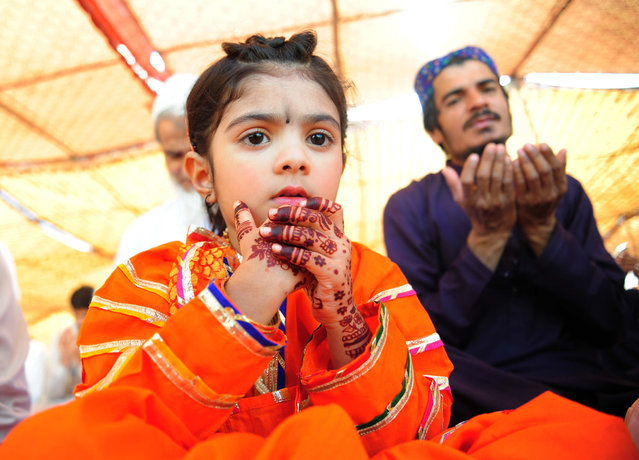
Pakistani Muslims attend an Eid Al-Fitr prayer service, in Hyderabad, Pakistan, 31 March 2025. Muslims around the world have begun celebrating Eid al-Fitr, the three-day festival which marks the end of the fasting month of Ramadan. During Eid al-Fitr, most people travel to visit each other in town or outside of it and children receive new clothes and money to spend for the occasion. (Photo by Nadeem Khawer/EPA/EFE)

Pakistani Muslims attend an Eid Al-Fitr prayer service, in Hyderabad, Pakistan, 31 March 2025. Muslims around the world have begun celebrating Eid al-Fitr, the three-day festival which marks the end of the fasting month of Ramadan. During Eid al-Fitr, most people travel to visit each other in town or outside of it and children receive new clothes and money to spend for the occasion. (Photo by Nadeem Khawer/EPA/EFE)
Details
28 May 2025 02:46:00
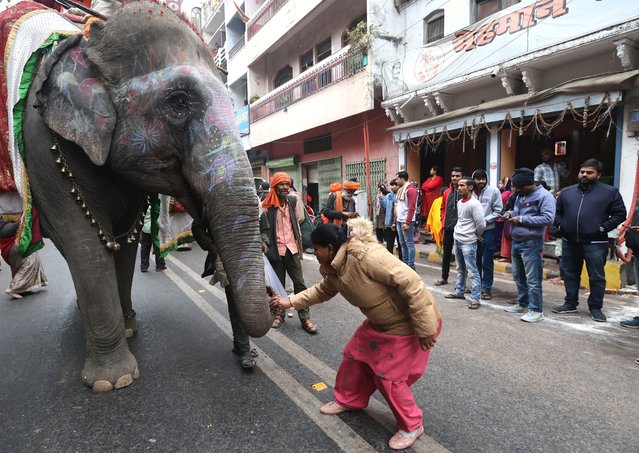
Members of Panchayati Akhara Bada Udasin take part in a religious procession as they head towards the Kumbh Mela festival ahead of the royal bath near the Sangam, the confluence of three of the holiest rivers in Hindu mythology – Ganga, Yamuna, and the mythical Saraswati – in Prayagraj, Uttar Pradesh, India, 12 January 2025. Every 12 years, Hindu pilgrims gather for ritual baths at the river's banks during the Maha Kumbh Mela festival. (Photo by Rajat Gupta/EPA)

Members of Panchayati Akhara Bada Udasin take part in a religious procession as they head towards the Kumbh Mela festival ahead of the royal bath near the Sangam, the confluence of three of the holiest rivers in Hindu mythology – Ganga, Yamuna, and the mythical Saraswati – in Prayagraj, Uttar Pradesh, India, 12 January 2025. Every 12 years, Hindu pilgrims gather for ritual baths at the river's banks during the Maha Kumbh Mela festival. (Photo by Rajat Gupta/EPA)
Details
18 Jan 2025 04:05:00
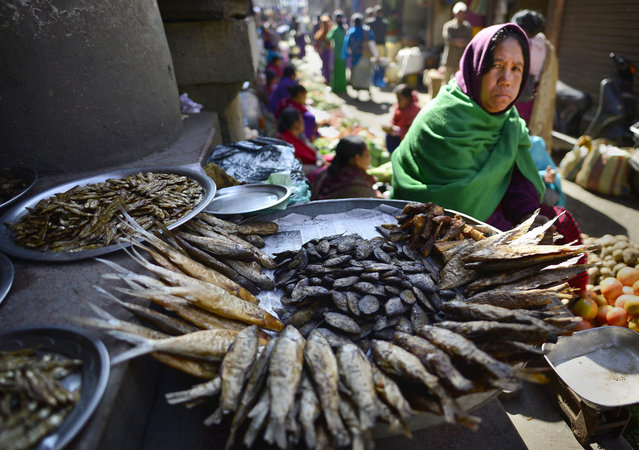
A Manipuri woman sells smoked and dry fish in Ima market - the world's largest all women market - in Imphal city, Manipur state, 06 January 2016. The 150-year-old Ima Keithel or 'Mothers's market' complex, which is run exclusively by women and was damaged in the 04 January 2016 earthquake, is returning back to normal. Nine deaths have been reported from in and around Imphal due to falling debris. (Photo by EPA/Stringer)

A Manipuri woman sells smoked and dry fish in Ima market - the world's largest all women market – in Imphal city, Manipur state, 06 January 2016. The 150-year-old Ima Keithel or “Mothers's market” complex, which is run exclusively by women and was damaged in the 04 January 2016 earthquake, is returning back to normal. Nine deaths have been reported from in and around Imphal due to falling debris. Imphal has a population of some 270,000 and people were jolted from their sleep and ran out of their homes in panic when the earth shook 04 January, reports say. (Photo by EPA/Stringer)
Details
08 Jan 2016 08:04:00
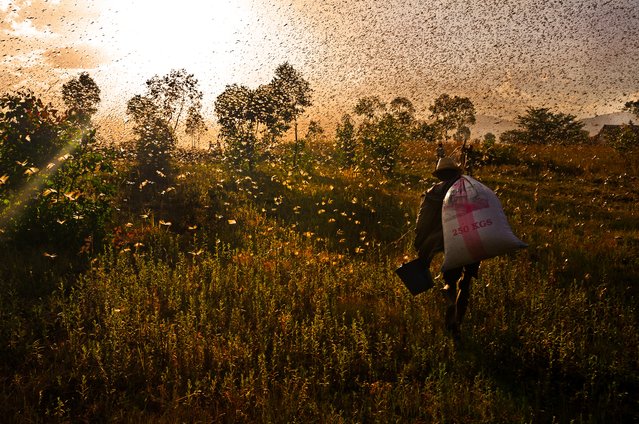
“Locusts & Men”. Oppression, interaction, collaboration. In the life cycle of nature nothing is lost, but the coexistence of different species is sometimes difficult. In Madagascar periodically returns the archaic antagonism between man and the migratory locust, in a circle of life where the two species are looking for space and food for their survival. Photo location: Madagascar, 2013. (Photo and caption by Michele Martinelli/National Geographic Photo Contest)

“Locusts & Men”. Oppression, interaction, collaboration. In the life cycle of nature nothing is lost, but the coexistence of different species is sometimes difficult. In Madagascar periodically returns the archaic antagonism between man and the migratory locust, in a circle of life where the two species are looking for space and food for their survival. At the end of the day a man walks home carrying on his shoulders the heavy bag which contains the locusts captured during the day. The insects provide nutritious meals for the man and his family. Photo location: Madagascar, 2013. (Photo and caption by Michele Martinelli/National Geographic Photo Contest)

ATTENTION! All pictures are presented in high resolution. To see Hi-Res images – just TWICE click on any picture. In other words, click small picture – opens the BIG picture. Click BIG picture – opens VERY BIG picture.
Details
03 Dec 2013 10:59:00