Loading...
Done
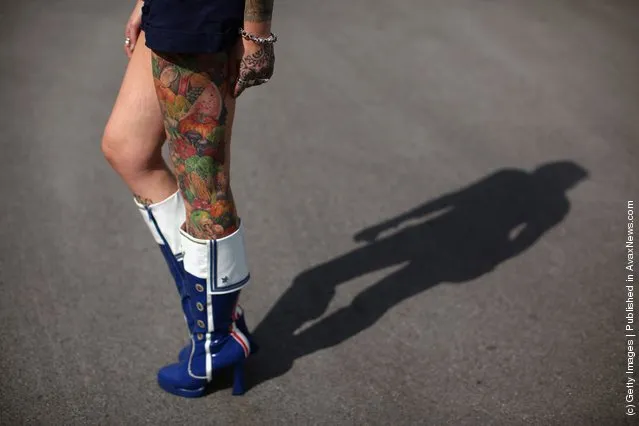
Tattoo Jam Festival

Tattoo devotee Edyta shows off her body art during The Tattoo Jam Festival on August 5, 2011 in Doncaster, England. The Tattoo Jam Festival is Britain's biggest gathering of tattoo professionals and skin art devotees. The event hosts over 300 artists working in the exhibition hall of Doncaster Racecourse revealing their latest designs and techniques. (Photo by Christopher Furlong/Getty Images)
Details
06 Aug 2011 13:06:00
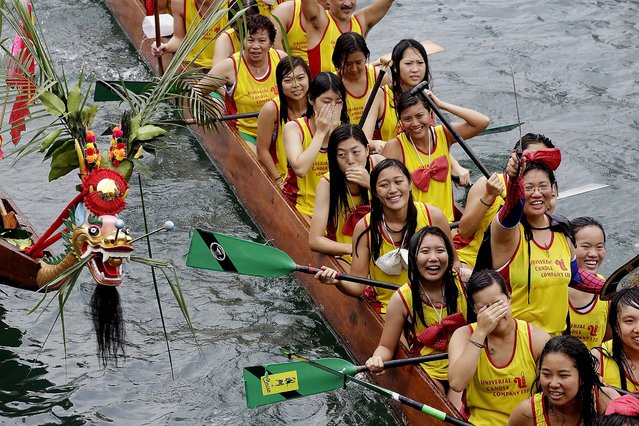
Competitors line up their boats for some formalities during the Aberdeen Dragon Boat Races. (Photo by Jessica Hromas/Getty Images)

Competitors line up their boats for some formalities during the Aberdeen Dragon Boat Races. (Photo by Jessica Hromas)
Details
13 Jun 2013 09:59:00
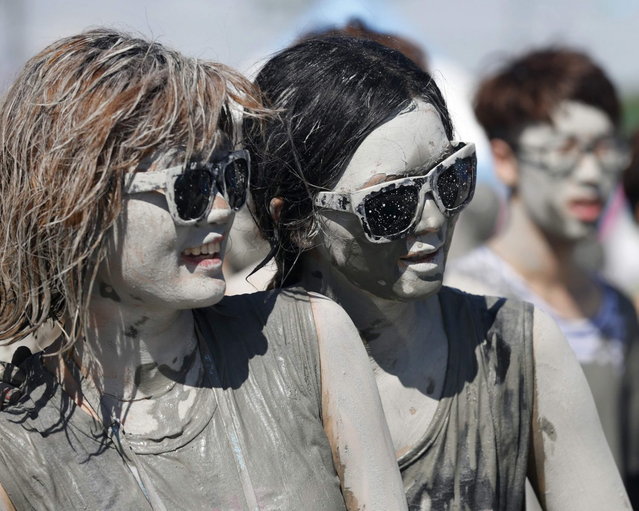
Tourists look at other festival-goers playing in the mud during the Boryeong Mud Festival at Daecheon beach in Boryeong, about 190 km (118 miles) southwest of Seoul, July 19, 2013. About 2 to 3 million domestic and international tourists visit the beach during the annual mud festival, according to the festival organisers. (Photo by Lee Jae-Won/Reuters)

Tourists look at other festival-goers playing in the mud during the Boryeong Mud Festival at Daecheon beach in Boryeong, about 190 km (118 miles) southwest of Seoul, July 19, 2013. About 2 to 3 million domestic and international tourists visit the beach during the annual mud festival, according to the festival organisers. (Photo by Lee Jae-Won/Reuters)
Details
21 Jul 2013 10:57:00
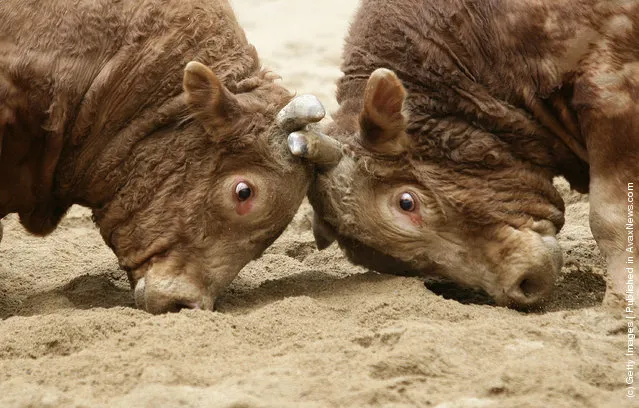
Cheongdo Bullfighting Festival

Bulls fight during the annual Bullfighting Festival on March 17, 2010 in Cheongdo, South Korea. More than 130 bulls from South Korea and abroad charge and lock horns in the annual festival which was run March 21, 2010. The bulls are grouped into three weight categories and fight head on until one of the bulls turns its head and runs away. (Photo by Chung Sung-Jun/Getty Images)
Details
21 Dec 2011 13:10:00
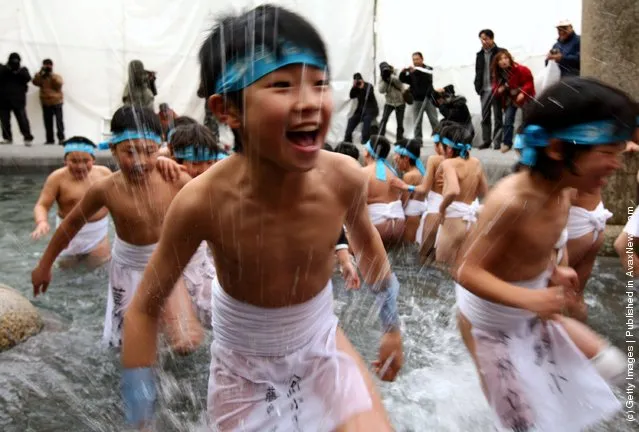
Japanese children wear loincloths as they splash about in freezing cold water during Saidaiji Naked Festival, at Saidaiji Temple

“A Hadaka Matsuri (“Naked Festival”) is a type of Japanese festival, or matsuri, in which participants wear a minimum amount of clothing; usually just a Japanese loincloth (called fundoshi), sometimes with a short happi coat, and rarely completely naked. Whatever the clothing, it is considered to be above vulgar, or everyday, undergarments, and on the level of holy Japanese shrine attire. Naked festivals are held in dozens of places throughout Japan every year, usually in the summer or winter. The most famous festival is held in Okayama, where the festival originated. Every year, over 9,000 men participate in this festival”. – Wikipedia

Photo: Japanese men wear loincloths as they splash about in freezing cold water during Saidaiji Naked Festival, at Saidaiji Temple on February 18, 2012 in Okayama, Japan. (Photo by Buddhika Weerasinghe/Getty Images)
Details
19 Feb 2012 12:18:00
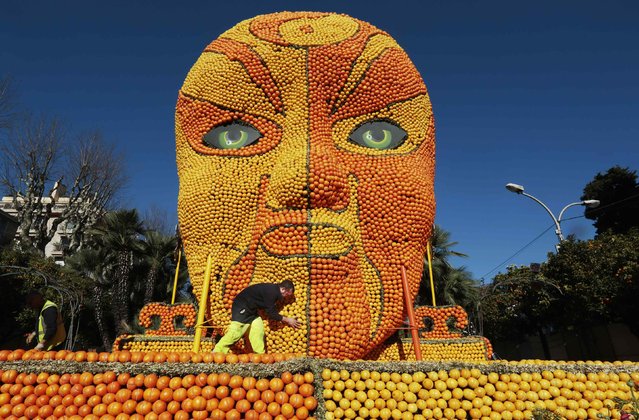
A worker puts the final touches to a replica of a Beijing opera mask made with lemons and oranges during the 82th Lemon festival in Menton February 12, 2015. Over 20,000 hours work for teams to set up the festival and some 145 metric tons of lemons and oranges are used to make displays during the 82th festival, which is themed “Tribulations of a lemon in China”, and runs from February 14 through March 4. (Photo by Eric Gaillard/Reuters)

A worker puts the final touches to a replica of a Beijing opera mask made with lemons and oranges during the 82th Lemon festival in Menton February 12, 2015. Over 20,000 hours work for teams to set up the festival and some 145 metric tons of lemons and oranges are used to make displays during the 82th festival, which is themed “Tribulations of a lemon in China”, and runs from February 14 through March 4. (Photo by Eric Gaillard/Reuters)
Details
13 Feb 2015 13:11:00
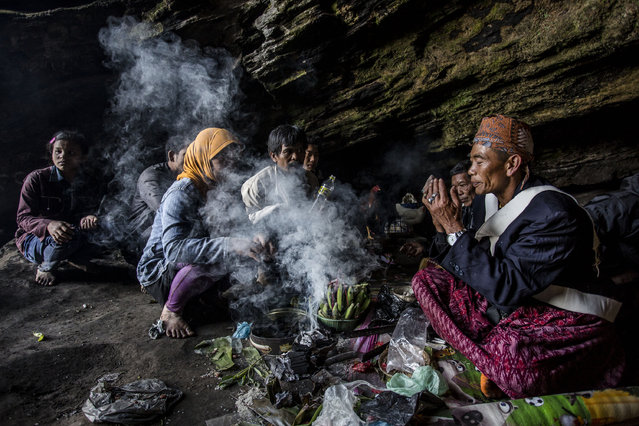
A Tenggerese shaman praying for worshippers at Widodaren cave during the Tenggerese Hindu Yadnya Kasada festival on July 31, 2015 in Probolinggo, East Java, Indonesia. The festival is the main festival of the Tenggerese people and lasts about a month. On the fourteenth day, the Tenggerese make the journey to Mount Bromo to make offerings of rice, fruits, vegetables, flowers and livestock to the mountain gods by throwing them into the volcano's caldera. (Photo by Ulet Ifansasti/Getty Images)

A Tenggerese shaman praying for worshippers at Widodaren cave during the Tenggerese Hindu Yadnya Kasada festival on July 31, 2015 in Probolinggo, East Java, Indonesia. The festival is the main festival of the Tenggerese people and lasts about a month. On the fourteenth day, the Tenggerese make the journey to Mount Bromo to make offerings of rice, fruits, vegetables, flowers and livestock to the mountain gods by throwing them into the volcano's caldera. The origin of the festival lies in the 15th century when a princess named Roro Anteng started the principality of Tengger with her husband Joko Seger, and the childless couple asked the mountain Gods for help in bearing children. The legend says the Gods granted them 24 children but on the provision that the 25th must be tossed into the volcano in sacrifice. The 25th child, Kesuma, was finally sacrificed in this way after initial refusal, and the tradition of throwing sacrifices into the caldera to appease the mountain Gods continues today. (Photo by Ulet Ifansasti/Getty Images)
Details
01 Aug 2015 12:07:00
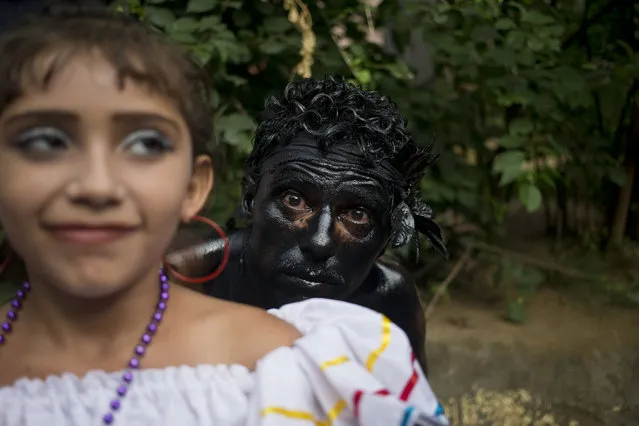
A man covered in motor oil, poses for a picture next to a girl dress a traditional clothes during a festivities in honor of Santo Domingo de Guzman in Managua, Nicaragua, Saturday, August 1, 2015. (Photo by Esteban Felix/AP Photo)

A man covered in motor oil, poses for a picture next to a girl dress a traditional clothes during a festivities in honor of Santo Domingo de Guzman in Managua, Nicaragua, Saturday, August 1, 2015. Some of the faithful coat their bodies in a black motor oil, red paint and wear traditional clothes as a promise for a prayer or miracle they believe was performed or answered by Managua's patron saint, Santo Domingo de Guzman. (Photo by Esteban Felix/AP Photo)
Details
02 Aug 2015 12:41:00