Loading...
Done
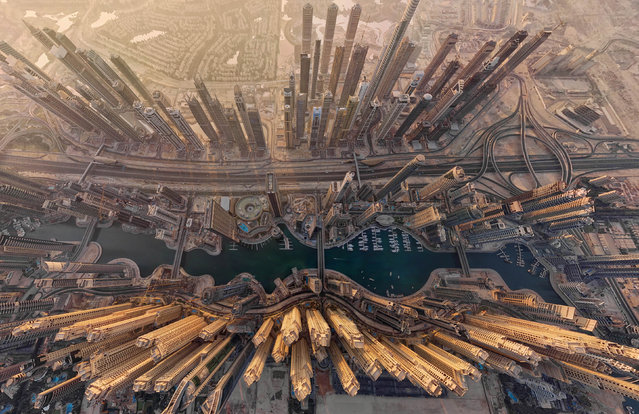
Dubai. (Photo by Airpano/Caters News)

These are the stunning panoramic shots of some of the worlds most beautiful locations. Company AirPano travel the world photographing its wonders from above. Their shots include famous cities – such as New York, Paris and Barcelona – as well as natural marvels, like volcanoes and waterfalls. The team, which consists of 12 members – nine photographers and three tech specialists – began looking into this style of photography in 2006. Project coordinator Sergey Semenov revealed after initially working with spherical panoramas on land, the group decided to take to the skies. They made a list of the 100 Best Places on the Planet, which they hoped to photograph over the coming years. Here: Dubai. (Photo by Airpano/Caters News)
Details
20 Mar 2015 11:23:00
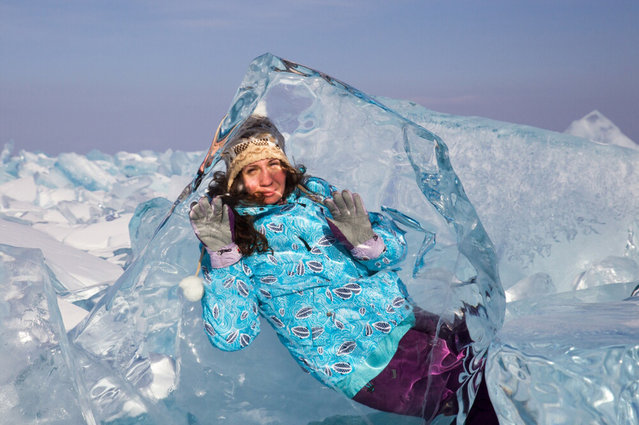
The Turquoise Ice Lake Baikal

Located in Siberia, Laka Baikal is the largest freshwater lake on the planet that contains approximately 20 percent of the Earth’s freshwater. Apart from being the oldest lake in the world at over 25 million years old, Lake Baikal is also home to over two thousand varieties of flora and fauna, of which almost 1,600 are endemic to the lake. The water of Lake Baikal is renowned for being some of the clearest in the world. When the lake freezes during the winter, an amazing phenomena takes place: large shards of transparent ice form on the surface of the lake, giving the amazing appearance of turquoise ice.
Details
02 May 2014 09:21:00
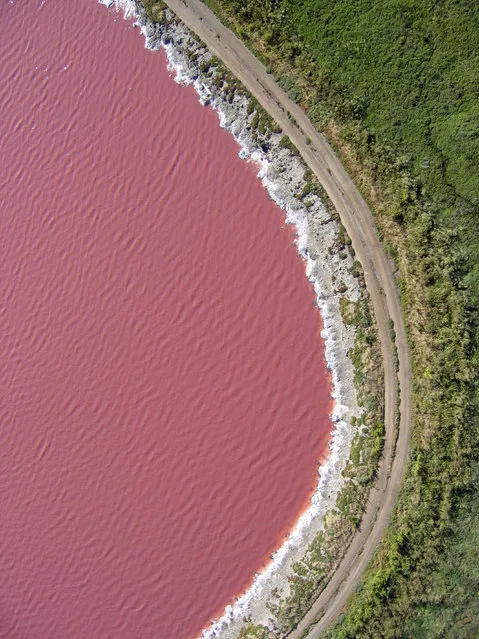
Aerial view of the salt ponds in San Francisco, California. (Photo by Cris Benton/Caters News)

These spectacular landscapes may look like something from another planet – but they are in fact colorful salt ponds which stretch for miles. Despite being better known for tech companies and expensive property – San Francisco, California is also home to this vibrant quilt of color spanning the South Bay Area. From eerie green pools to gothic shades of red the surreal landscapes are caused by the organisms or micro-algae living within them. Photo: Aerial view of the salt ponds in San Francisco, California. (Photo by Cris Benton/Caters News)
Details
02 Jul 2014 10:18:00
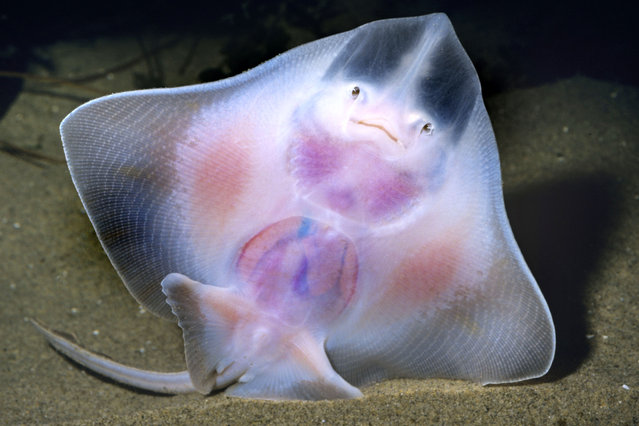
Thornback Skate. (Photo by Ken Lucas/Caters News)

“They're some of the most intriguing and complex creatures on the planet but they really do have nothing to hide – because theyre totally see-through. Transparent animals – creatures with clear glass-like skin – can be found all over the world but their very existence is still shrouded in mystery. The fascinating organisms verge on the invisible and their translucent skin often helps them elude predators”. – Caters News. Photo: Thornback Skate. (Photo by Ken Lucas/Caters News)
Details
04 Sep 2014 08:37:00
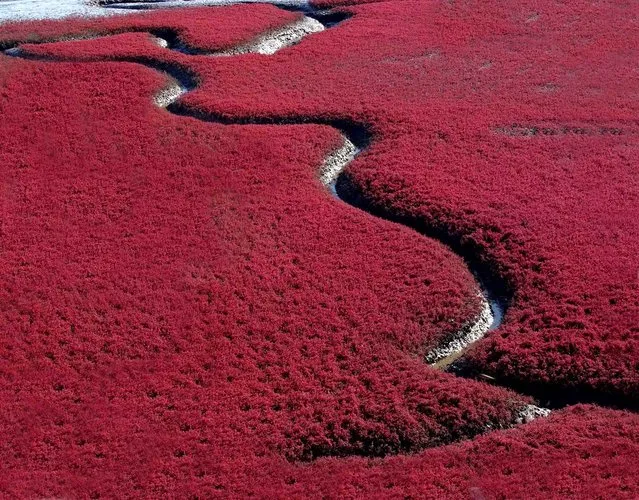
盘锦红海滩 (Panjin Red Beach). (Photo by 猪倌)

“The Red Beach is located in the Liaohe River Delta, about 30 kilometer southwest of Panjin City in China. The beach gets its name from its appearance, which is caused by a type of sea weed that flourishes in the saline-alkali soil...”. – Amusing Planet. Photo: Panjin Red Beach (盘锦红海滩). (Photo by 猪倌)


Details
10 Feb 2013 13:53:00
Thorsten Mowes has a more intimate knowledge of the worlds most famous monuments than perhaps anyone else on the planet – because hes spent his entire career cleaning them. As a cultural cleaning expert with nearly 25 years experience, he has been commissioned to make wonders all over the world shine like new - from the London Eye to Christ the Redeemer. The places he has been to, stood on top of, or even hung halfway down include Mount Rushmore and the Space Needle in America, the London Eye, the Statue of Christ in Brazil and the Forbidden City in China. Here: A man cleans a part of Mount Rushmore. (Photo by Caters News Agency)

Thorsten Mowes has a more intimate knowledge of the worlds most famous monuments than perhaps anyone else on the planet – because hes spent his entire career cleaning them. As a cultural cleaning expert with nearly 25 years experience, he has been commissioned to make wonders all over the world shine like new – from the London Eye to Christ the Redeemer. The places he has been to, stood on top of, or even hung halfway down include Mount Rushmore and the Space Needle in America, the London Eye, the Statue of Christ in Brazil and the Forbidden City in China. Here: A man cleans a part of Mount Rushmore. (Photo by Caters News Agency)
Details
29 Jul 2016 12:24:00
A disabled child is buried up to his neck in sand during the partial solar eclipse in belief its rays can heal, in Karachi, Pakistan, 25 October 202. A partial solar eclipse occurs when a portion of the Earth is engulfed by the shadow (penumbra) cast by the Moon as it passes between our planet and the Sun in imperfect alignment. During this eclipse - the first of the decade – the Moon appears to cover the Sun, leaving the Sun's halo as a visible rim forming an annulus, popularly known as the 'ring of fire. (Photo by Shahzaib Akber/EPA/EFE/Rex Features/Shutterstock)

A disabled child is buried up to his neck in sand during the partial solar eclipse in belief its rays can heal, in Karachi, Pakistan, 25 October 202. A partial solar eclipse occurs when a portion of the Earth is engulfed by the shadow (penumbra) cast by the Moon as it passes between our planet and the Sun in imperfect alignment. During this eclipse - the first of the decade – the Moon appears to cover the Sun, leaving the Sun's halo as a visible rim forming an annulus, popularly known as the 'ring of fire. (Photo by Shahzaib Akber/EPA/EFE/Rex Features/Shutterstock)
Details
09 Nov 2022 05:24:00
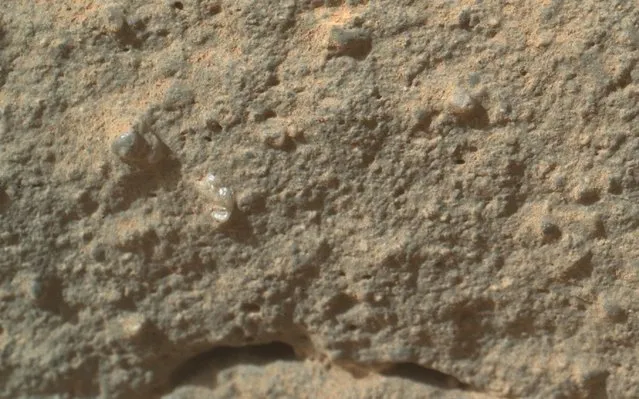
Scientists say that a “Martian flower”, seen here in an image from the Curiosity rover's Mars Hand Lens Imager, is a 2-millimeter-wide grain or pebble that's embedded in the surrounding rock. Another, darker-colored mineral grain can be seen above and to the left. (Photo by NASA)

“The scientists behind NASA's $2.5 billion Curiosity rover mission on Mars on Tuesday explained the nature of a tiny, gleaming "flower" embedded in Red Planet rock, and revealed where they'll be using the SUV-sized robot's drill for the first time”. – Alan Boyle via NBCNews.com

Photo: Scientists say that a “Martian flower”, seen here in an image from the Curiosity rover's Mars Hand Lens Imager, is a 2-millimeter-wide grain or pebble that's embedded in the surrounding rock. Another, darker-colored mineral grain can be seen above and to the left. (Photo by NASA)
Details
16 Jan 2013 11:12:00