Loading...
Done
A humanoid robot named Kansei, meaning “sensibility” in Japanese, makes a facial expression depicting “happiness”, next to the word “Love” during a demonstration at a laboratory of Meiji University's Robot and Science Institute in Kawasaki, south of Tokyo in this June 4, 2007 file photo. (Photo by Yuriko Nakao/Reuters)

A humanoid robot named Kansei, meaning “sensibility” in Japanese, makes a facial expression depicting “happiness”, next to the word “Love” during a demonstration at a laboratory of Meiji University's Robot and Science Institute in Kawasaki, south of Tokyo in this June 4, 2007 file photo. Three-fourths of robot installations over the next decade are expected to be concentrated in four areas: transportation equipment, including the automotive sector; computer and electronic products; electrical equipment and machinery. Labor costs have climbed in countries such as China that have been popular for outsourcing production, while technological advances for robots allow them to be more flexible and perform more tasks. (Photo by Yuriko Nakao/Reuters)
Details
17 Apr 2015 09:39:00
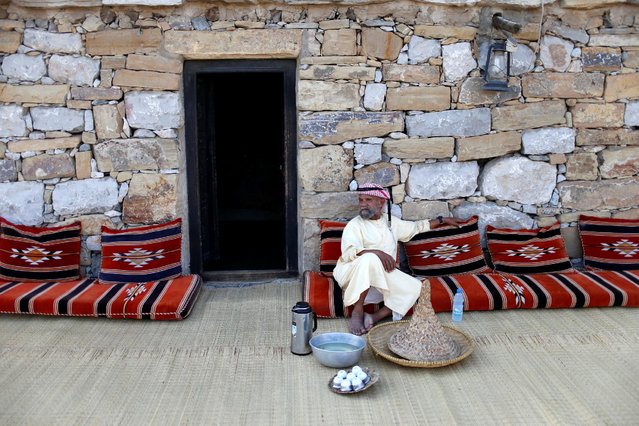
An Emirati man sits outside an old house at the Heritage Village in Dubai, UAE March 13, 2016. (Photo by Ahmed Jadallah/Reuters)

An Emirati man sits outside an old house at the Heritage Village in Dubai, UAE March 13, 2016. The Heritage Village was created in 1997 in Al Shindagha Historical Neighborhood in Dubai, close to the Diving Village, to embrace the heritage events and to display a live image of the old traditional life in UAE. It represents the components of wild, marine, and mountain life, where the visitor can identify closely the old traditional customs of the country and the special characteristics of old houses, handicrafts, patterns, and forms of living. It is owned and managed by Dubai Culture & Arts Authority. (Photo by Ahmed Jadallah/Reuters)
Details
29 Apr 2016 11:26:00
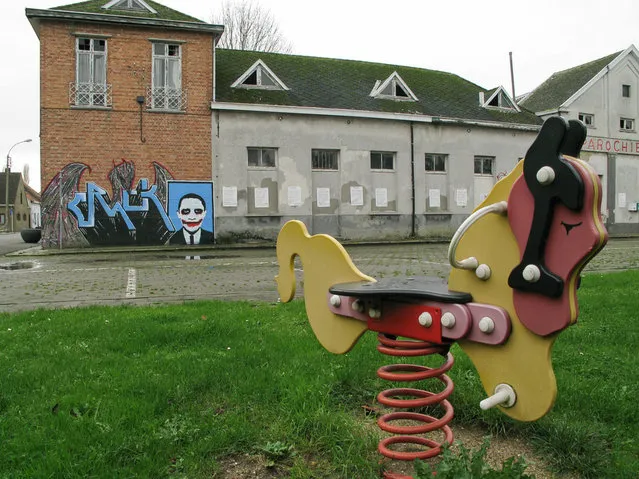
Abandon Village: Doel, Belgium

Doel is a 700 year old village on the river Scheldt in Belgium. Near to the local nuclear power plant, with its two giant cooling towers, it became the target for demolition not once but twice in order to make way for the ever expanding harbor. The successful protest groups of the seventies could not compete in the 90's and as residents began to leave, the government refused to rent out the properties again and instead let them fall into disrepair. On the 23rd of March 2007, the government decided that the village would be demolished by 2009 and in June 2008, residents received a letter informing them that they were to vacate their homes by the 1st of September 2009.
Details
20 Mar 2013 11:33:00


“Kumbh Mela is a mass Hindu pilgrimage in which Hindus gather at the Ganges river. The normal Kumbh Mela is celebrated every 3 years, the Ardh (half) Kumbh Mela is celebrated every six years at Haridwar and Prayag, the Purna (complete) Kumbh takes place every twelve years, at four places (Prayag (Allahabad), Haridwar, Ujjain, and Nashik). The Maha (great) Kumbh Mela which comes after 12 “Purna Kumbh Melas”, or 144 years, is held at Allahabad.

The last Ardh Kumbh Mela was held over a period of 45 days beginning in January 2007, more than 70 million Hindu pilgrims took part in the Ardh Kumbh Mela at Prayag, and on January 15, the most auspicious day of the festival of Makar Sankranti, more than 5 million participated. The previous Maha Kumbh Mela, held in 2001, was attended by around 60 million people, making it at the time the largest gathering anywhere in the world in recorded history”. – Wikipedia

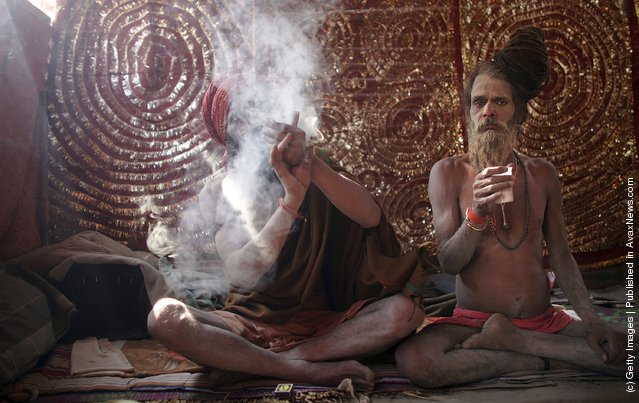
Photo: Sadhus (holy men) smoke at their camp near the ritual site at Sangam, the confluence of the Ganges, Yamuna and mythical Saraswati rivers during the Ardh Kumbh Mela festival (Half Pitcher festival) January 18, 2007 in Allahabad, India. Millions of Hindu pilgrims have flocked to the largest religious gathering in the world which lasts for 45 days in northern India. The festival commemorates the mythical conflict between gods and demons over a pitcher filled with the “nectar of immortality”. Devotees believe that taking a holy dip in the Ganges at this time washes away their sins and paves the path to salvation. (Photo by Mario Tama/Getty Images)
Details
30 Jun 2011 10:27:00


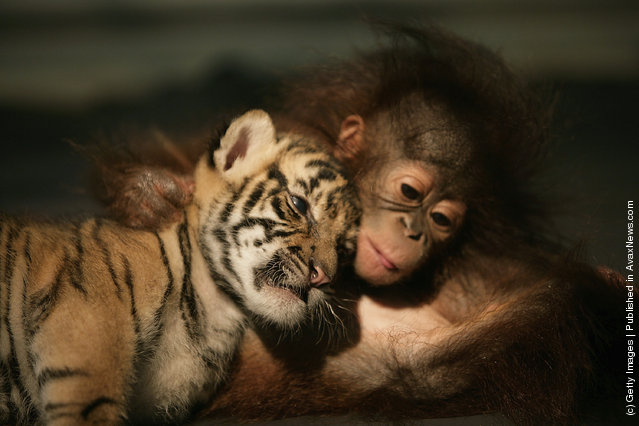
Dema and Manis, the 26-day-old endangered Sumatran Tiger cubs play together at the “Taman Safari Indonesia” Animal Hospital, on February 26, 2007 in Cisarua, Bogor Regency, West Java, Indonesia. The two Sumatran tiger-cubs recently born at the hospital have been rejected by their mother Cicis, while baby Orangutans, Irma and Nia have also been rejected by their mothers. All babies are being looked after by staff at the Animal Hospital. (Photo by: Dimas Ardian/Getty Images)
Details
24 Apr 2011 12:51:00
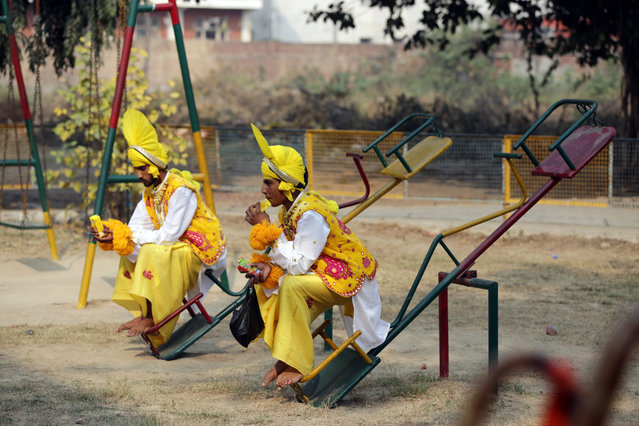
Indian young men wearing traditional folk dance “Bhangra” attire of Punjab, sit on see-saws and sip on soft drinks at a park before their performance during the Khalsa College International Folk Festival 2017 in Amritsar, India, 29 November 2017. The festival is aimed to promote cultural ties between India and participating countries. (Photo by Raminder Pal Singh/EPA/EFE)

Indian young men wearing traditional folk dance “Bhangra” attire of Punjab, sit on see-saws and sip on soft drinks at a park before their performance during the Khalsa College International Folk Festival 2017 in Amritsar, India, 29 November 2017. The festival is aimed to promote cultural ties between India and participating countries. (Photo by Raminder Pal Singh/EPA/EFE)
Details
11 Dec 2017 08:30:00
Men wear masks as they sit in the metro in Prague, Czech Republic, 17 March 2020. According to media reports, the Czech government decided to impose a two-week quarantine in the country on the evening of 15 March, and ban all international travel from 16 March 2020. Currently 383 cases of the coronavirus SARS-CoV-2, which causes the Covid-19 disease, have been officially confirmed in Czech Republic. (Photo by Martin Divisek/EPA/EFE)

Men wear masks as they sit in the metro in Prague, Czech Republic, 17 March 2020. According to media reports, the Czech government decided to impose a two-week quarantine in the country on the evening of 15 March, and ban all international travel from 16 March 2020. Currently 383 cases of the coronavirus SARS-CoV-2, which causes the Covid-19 disease, have been officially confirmed in Czech Republic. (Photo by Martin Divisek/EPA/EFE)
Details
19 Mar 2020 00:07:00


“The Red River Hog (Potamochoerus porcus), also known as the Bush Pig (but not to be confused with P. larvatus, common name “Bushpig”), is a wild member of the pig family living in Africa, with most of its distribution in the Guinean and Congolian forests. It is rarely seen away from rainforests, and generally prefers areas near rivers or swamps.

Red River Hogs eat grass, berries, roots, insects, molluscs, small vertebrates and carrion. They are capable of causing damage to plantations. Red River Hogs typically live in herds of 6-20 members led by a dominant boar. Sows rear 3-6 piglets at a time.”

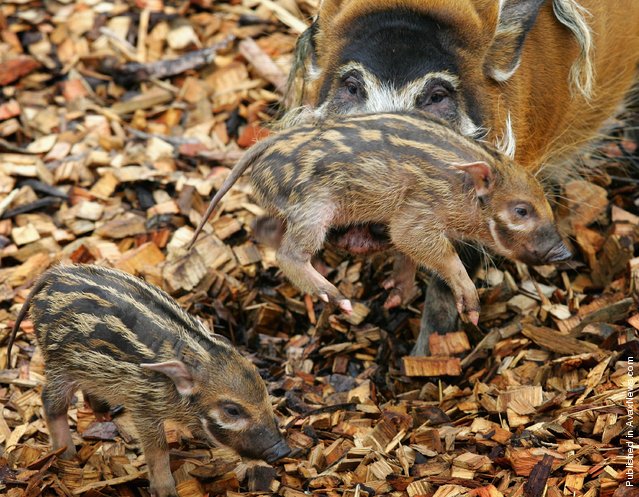
Photo: Two 17 day old red river hoglet twins forage for food next to their mother Bahiti at London Zoo on August 23, 2007 in London, England. Red River hoglets inhabit the forests and swamps of West and Central Africa. The recent additions to the London Zoo pig pen have been eagerly awaited by zoo keepers. (Photo by Chris Jackson/Getty Images)
Details
18 Mar 2011 15:15:00