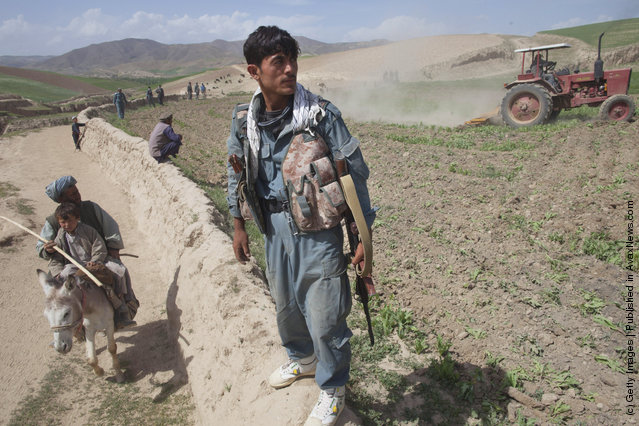
Afghan security stands guard as a tractor eradicates a field of young poppy plants May 25, 2011, in Argu District, Badakshan, Afghanistan. (Photo by Paula Bronstein/Getty Images)
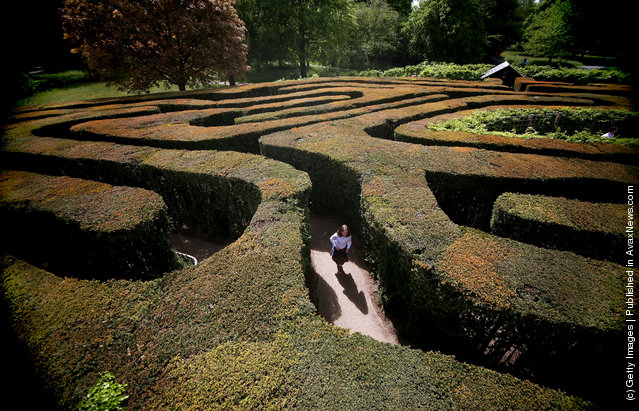
A young girl navigates her way around Hampton Court maze in the spring sunshine on May 2, 2009 in London, England. The Hampton Court maze is one of the most famous hedge mazes in the world and was planted between 1689 and 1695 by George London and Henry Wise. (Photo by Dan Kitwood/Getty Images)
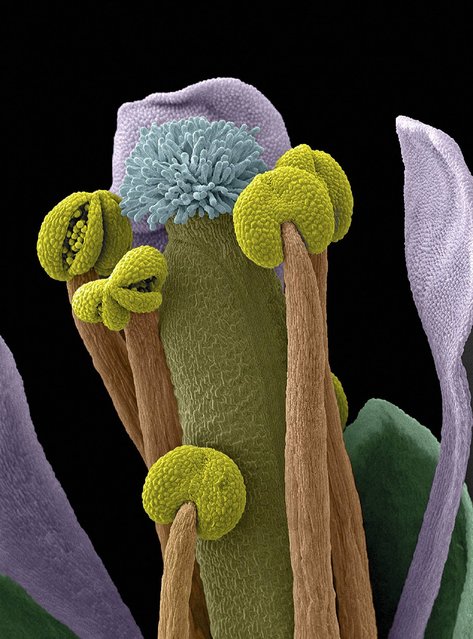
Beautiful, strange and occasionally alarming pictures from the shortlist for this year’s Wellcome image awards – which celebrate the very best in science photography and imaging – from an x-ray of a bat to a micrograph of a kidney stone. The exhibition opens on 12 March at three science centres and the Museum of Science and Industry in Manchester. Photo: Scanning electron micrograph (SEM) of an Arabidopsis thaliana flower, also commonly known as thale cress. Some of the anthers are open, revealing pollen grains ready for dispersal. Arabidopsis was the first plant to have its entire genome sequenced and is widely used as a model organism in molecular and plant biology. Horizontal width of image is 1200 microns. Magnification 100x. (Photo by Stefan Eberhard/Wellcome Images)
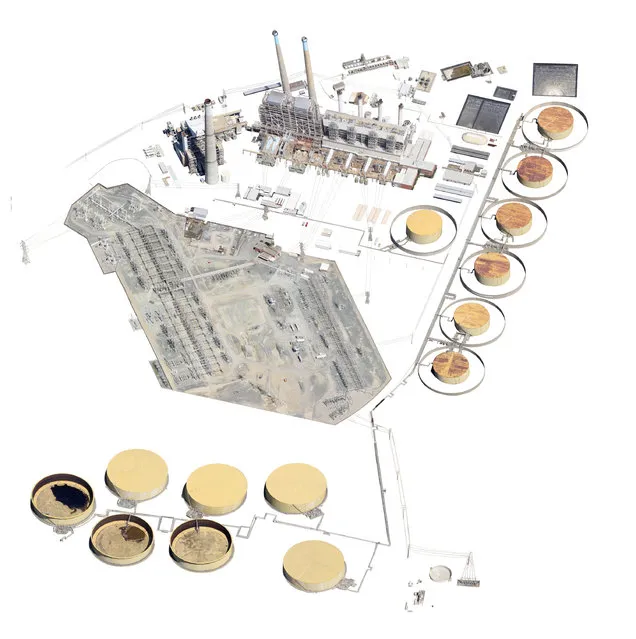
Jenny Odell repurposes online imagery mostly from Google Maps, but also from YouTube, Craigslist, and other sites. In her “Satellite Collections”, for example, she incorporated aerial views of swimming pools, basketball courts, parking lots, and other recognizable structures, seen from space. Her more recent series, “Satellite Landscapes”, includes painstakingly isolated Google Maps imagery of oil refineries, wastewater treatment plants, solar farms, etc. This work is meant as a reminder of our physically determined and vulnerable existence, since we depend on many of these things for survival and maintenance of our way of life. Photo: Natural gas plant in Pittsburg, CA (detail of Power Landscape), 2013. (Photo by Jenny Odell)
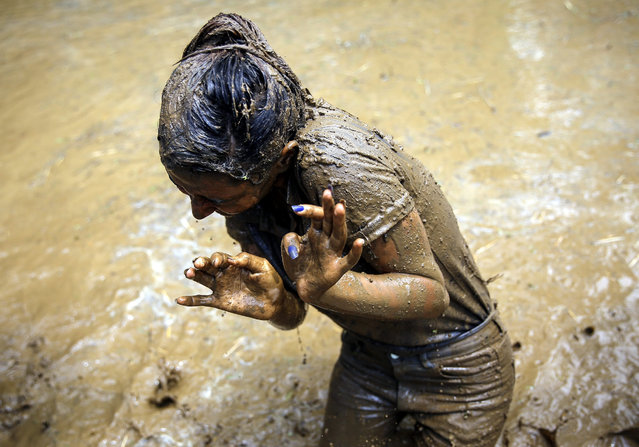
Nepalese students of Himalayan agriculture college play in mud water in a paddy field to celebrate the National Paddy Day in Badegaun village, Lalitpur, Nepal, 29 June 2016. More than 100 students and teachers of Himalayan agriculture college participated in the National paddy day by planting rice and playing in mud water as Nepal is celebrating National Paddy Day with various event. (Photo by Narendra Shrestha/EPA)
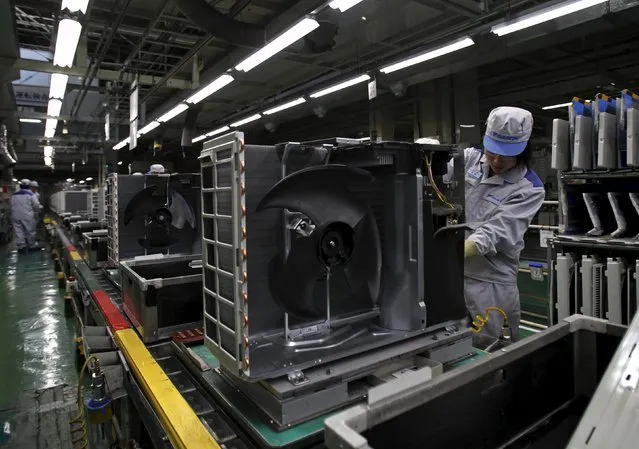
An employee of Daikin Industries Ltd works the production line of outdoor air conditioning units at the company's Kusatsu factory in Shiga prefecture, western Japan March 20, 2015. As Japan heads into the season of peak demand for room air-conditioners, Daikin managers have been tasked with figuring out how to boost output by some 20 percent at the 45-year-old Kusatsu plant that six years ago the company had almost given up on as unprofitable. (Photo by Yuya Shino/Reuters)
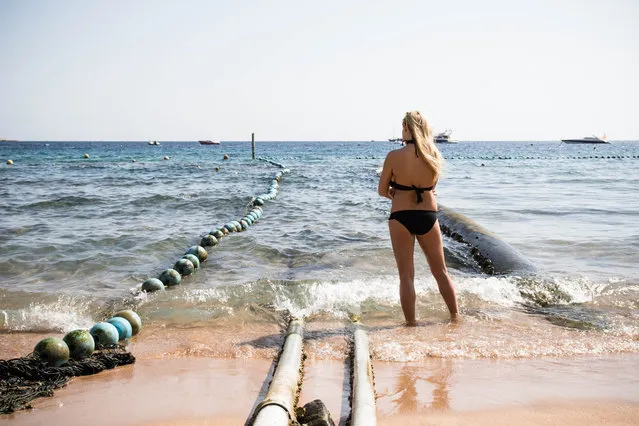
A tourist stands on the shore of a private beach in Naama Bay, Sharm el-Sheikh, south Sinai, Egypt, Sunday, November 8, 2015. Britain's foreign secretary says airport security in many cities will need to be overhauled if it is confirmed the Russian plane crash in the Sinai was caused by a bomb planted by the Islamic State group or someone inspired by the militants. (Photo by Vinciane Jacquet/AP Photo)
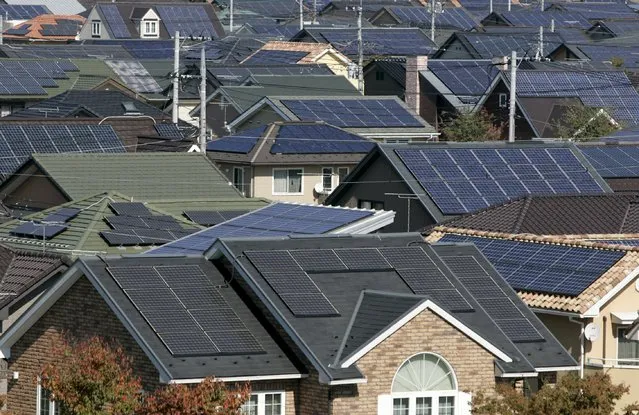
Rooftops of solar powered houses are pictured in Ota, 80 km northwest of Tokyo in this October 28, 2008 file photo. One by one, Japan is turning off the lights at the giant oil-fired power plants that propelled it to the ranks of the world's top industrialised nations. With nuclear power in the doldrums after the Fukushima disaster, it's solar energy that is becoming the alternative. Solar power is set to become profitable in Japan as early as this quarter, according to the Japan Renewable Energy Foundation (JREF), freeing it from the need for government subsidies and making it the last of the G7 economies where the technology has become economically viable. (Photo by Yuriko Nakao/Reuters)