Loading...
Done
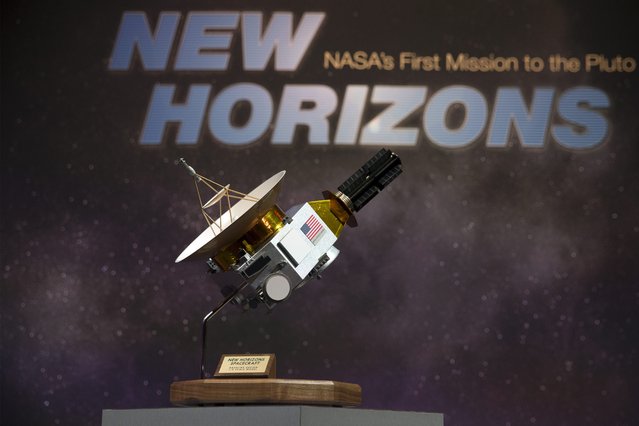
A model of the New Horizons spacecraft is seen at a live television program on NASA television celebrating the spacecraft's closest proximity to Pluto, at Johns Hopkins University Applied Physics Laboratory, site of the mission operations center, in Laurel, Maryland, USA, 14 July 2015. (Photo by Michael Reynolds/EPA)

A model of the New Horizons spacecraft is seen at a live television program on NASA television celebrating the spacecraft's closest proximity to Pluto, at Johns Hopkins University Applied Physics Laboratory, site of the mission operations center, in Laurel, Maryland, USA, 14 July 2015. At approximately 7:49 am ET (11:49 am GMT), 14 July, New Horizons was scheduled to be as close to Pluto as the spacecraft will get; about 7,800 miles (12,500 kilometers) above the surface, following a journey of more than nine years and three billion miles. This is the first mission to the Pluto System and the Kuiper Belt. (Photo by Michael Reynolds/EPA)
Details
15 Jul 2015 10:08:00
Brazilian model Izabel Goulart for the screening of the film “Sink Or Swim (Le Grand Bain)” at the 71st Cannes Film Festival, France on May 13, 2018. (Photo by Stephane Mahe/Reuters)

Brazilian model Izabel Goulart for the screening of the film “Sink Or Swim (Le Grand Bain)” at the 71st Cannes Film Festival, France on May 13, 2018. (Photo by Stephane Mahe/Reuters)
Details
16 May 2018 00:05:00
The Leshan Giant Buddha, a 71-metre tall stone statue, is carved out of a cliff face in the southern part of Sichuan province in China. (Photo by Suchet Suwanmongkol/500px)

The Leshan Giant Buddha, a 71-metre tall stone statue, is carved out of a cliff face in the southern part of Sichuan province in China. (Photo by Suchet Suwanmongkol/500px)
Details
06 Oct 2016 09:51:00
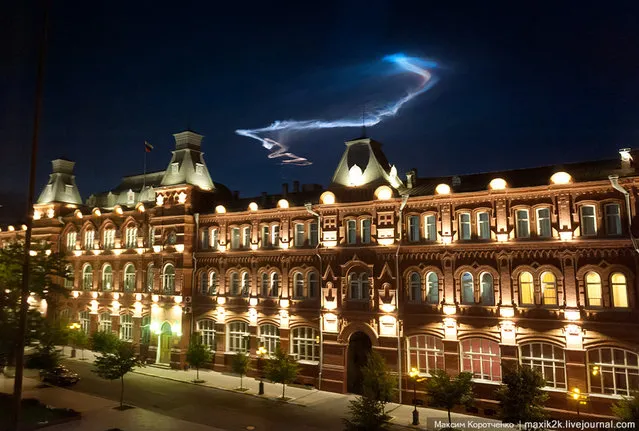
Anomaly Spotted In Russian Night Sky

These photos and video were taken in the Russian city of Astrakhan on the evening of June 7th, 2012. (Photo by Maxim Korotshenko)
Details
12 Jun 2012 10:06:00
The exhibition “All the colors of Warhol” on July 8, 2024 was opened in the SALON Gallery, the Museum of the City of Belgrade, organized by the Museum of the City of Belgrade and the Belgrade Festival Center of CEBEF, and will last until the end of the month. (Photo by L.L./ATAImages)

The exhibition “All the colors of Warhol” on July 8, 2024 was opened in the SALON Gallery, the Museum of the City of Belgrade, organized by the Museum of the City of Belgrade and the Belgrade Festival Center of CEBEF, and will last until the end of the month. (Photo by L.L./ATAImages)
Details
06 Sep 2024 04:19:00
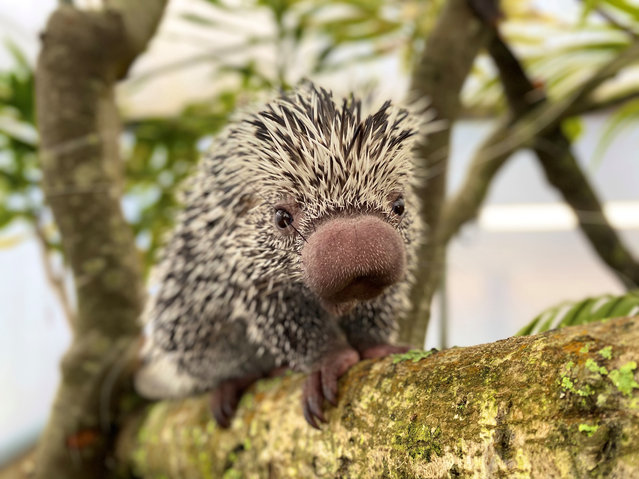
Runner-up, Heart and Minds: Nifty nose, by Samantha Allworthy at Longleat. Species: prehensile tailed porcupines. (Photo by Samantha Allworthy/BIAZA 2020 Photography Competition)

The British and Irish Association of Zoos and Aquariums (BIAZA) has announced the winning images in its annual photography competition. The 2020 winners show the important work of zoos and aquariums at an immensely challenging time. After months of closures, these conservation organisations are reeling from the financial impacts of the coronavirus pandemic. Here: Runner-up, Heart and Minds: Nifty nose, by Samantha Allworthy at Longleat. Species: prehensile tailed porcupines. (Photo by Samantha Allworthy/BIAZA 2020 Photography Competition)
Details
24 Jul 2020 00:03:00
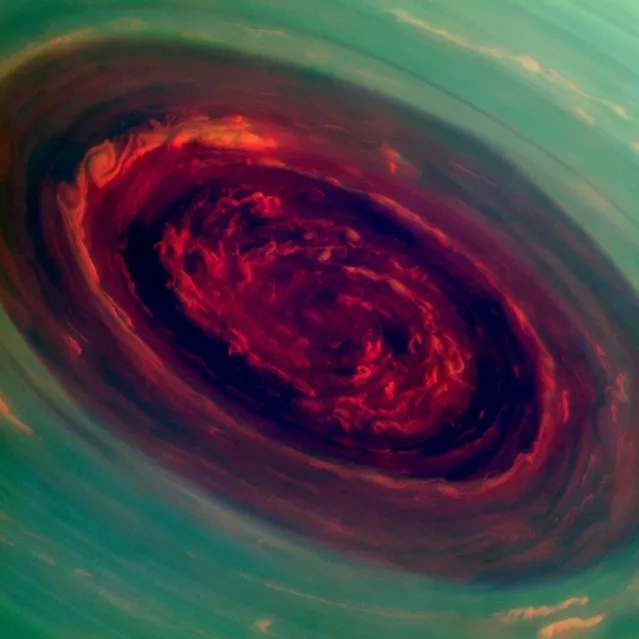
The spinning vortex of Saturn's north polar storm resembles a deep red rose of giant proportions surrounded by green foliage in this false-color image from NASA's Cassini spacecraft. (Photo by NASA/JPL-Caltech/SSI)

NASA's Cassini spacecraft has provided scientists the first close-up, visible-light views of a behemoth hurricane swirling around Saturn's north pole. In high-resolution pictures and video, scientists see the hurricane's eye is about 1,250 miles (2,000 kilometers) wide, 20 times larger than the average hurricane eye on Earth. Thin, bright clouds at the outer edge of the hurricane are traveling 330 mph(150 meters per second). The hurricane swirls inside a large, mysterious, six-sided weather pattern known as the hexagon. Photo: The spinning vortex of Saturn's north polar storm resembles a deep red rose of giant proportions surrounded by green foliage in this false-color image from NASA's Cassini spacecraft. (Photo by NASA/JPL-Caltech/SSI)
Details
31 May 2015 09:11:00
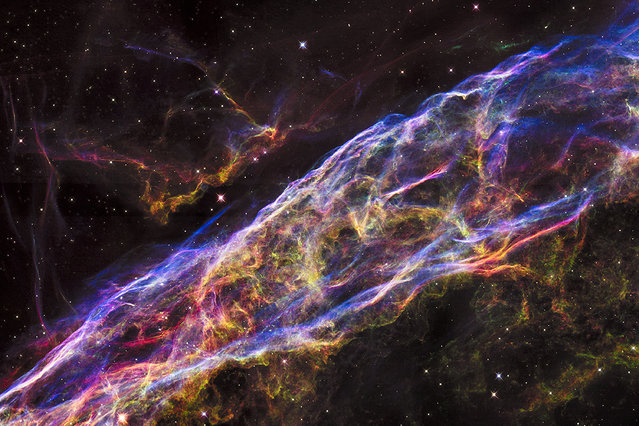
A small section of the expanding remains of the Veil Nebula, a massive star that exploded about 8,000 years ago. The entire nebula is 110 light-years across, covering six full moons on the sky as seen from Earth, and resides about 2,100 light-years away in the constellation Cygnus, the Swan. Image taken by NASA's Hubble Space Telescope. Released September 24, 2015. (Photo by Reuters/NASA/ESA/Hubble Heritage Team)

A small section of the expanding remains of the Veil Nebula, a massive star that exploded about 8,000 years ago. The entire nebula is 110 light-years across, covering six full moons on the sky as seen from Earth, and resides about 2,100 light-years away in the constellation Cygnus, the Swan. Image taken by NASA's Hubble Space Telescope. Released September 24, 2015. (Photo by Reuters/NASA/ESA/Hubble Heritage Team)
Details
10 Dec 2015 08:01:00