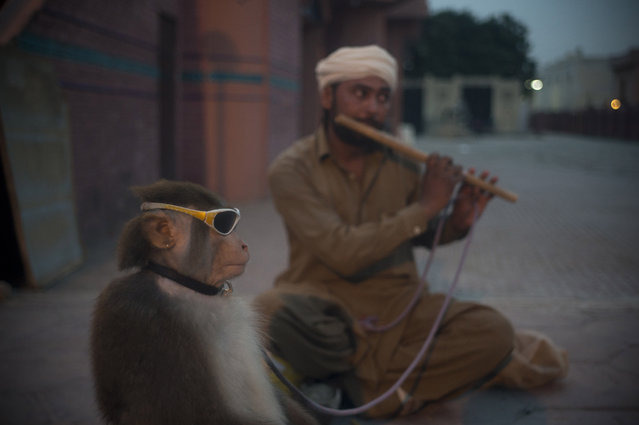
A Pakistani monkey handler Naseer Khan plays flute to attract passers by for a monkey show to earn his living in Islamabad, Pakistan, Monday, September 7, 2015. (Photo by B. K. Bangash/AP Photo)
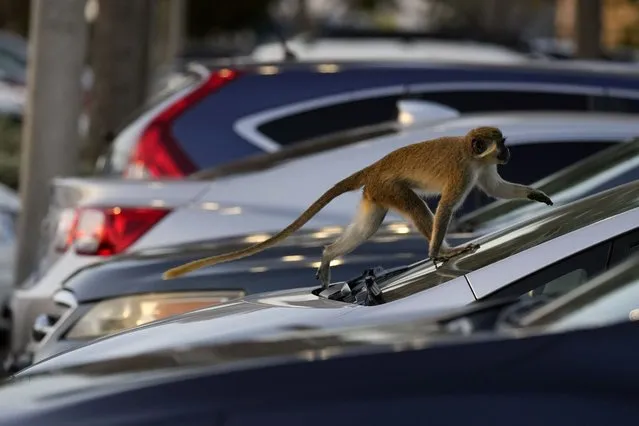
A vervet monkey walks over a parked car in the Park 'N Fly airport lot which lies adjacent to the mangrove preserve where the monkey colony lives, Tuesday, March 1, 2022, in Dania Beach, Fla. For 70 years, a group of non-native monkeys has made their home next to a South Florida airport, delighting visitors and becoming local celebrities. (Photo by Rebecca Blackwell/AP Photo)
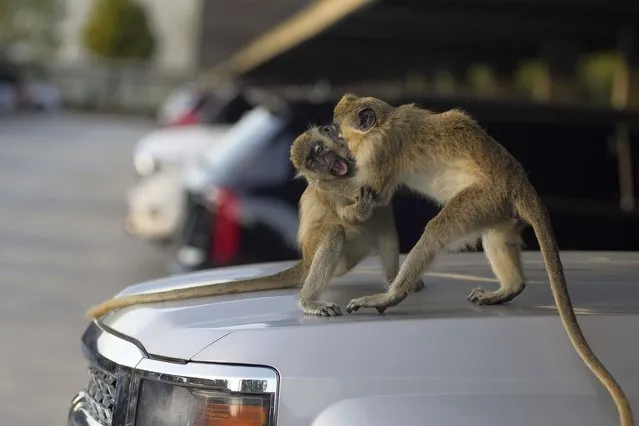
Vervet monkeys Higgins, left, and Andor fight playfully atop a car in the Park 'N Fly parking lot which lies adjacent to the swampy mangrove preserve where the monkey colony lives, Tuesday, March 1, 2022, in Dania Beach, Fla. For 70 years, a group of non-native monkeys has made their home next to a South Florida airport runway, delighting visitors and becoming local celebrities. (Photo by Rebecca Blackwell/AP Photo)
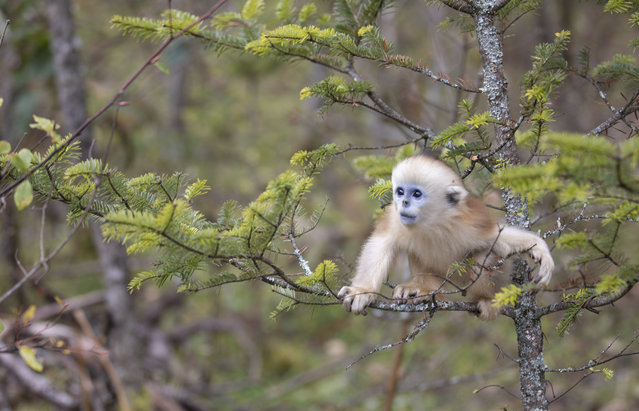
Photo taken on October 11, 2020 shows a golden monkey at Dalongtan Golden Monkey Research Center in Shennongjia National Park of central China's Hubei Province. With the efforts of local authority and improvement of the environment in the past many years, the number of golden monkeys in Shennongjia area reached nearly 1,500 nowadays. (Photo by Xinhua News Agency/Rex Features/Shutterstock)
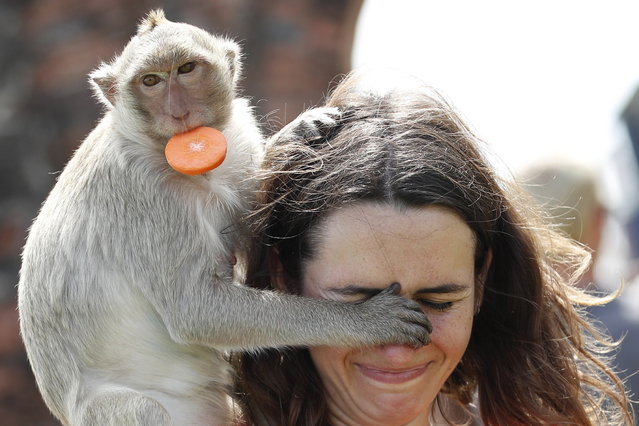
A monkey is being fed by a foreign tourist during the annual Monkey Banquet at Phra Prang Sam Yod ancient temple in Lopburi, some 180km from Bangkok, central Thailand, 24 November 2024. The annual gala has been organized since 1989 by Lopburi's entrepreneur Yongyuth Kitwatananusont, offering all-you-can-eat fruits, vegetables, and desserts for monkeys to honor the long-tailed macaques to attract tourists to visit the town to promote tourism. (Photo by Rungroj Yongrit/EPA)
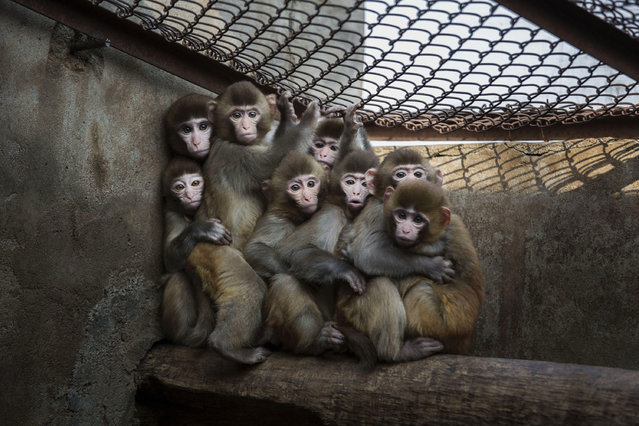
Macaque monkeys crowd together in their cage at a monkey farm on February 3, 2016 in Xinye county, Henan province, China. The area boasts a centuries-long and lucrative history of raising and training monkeys for performance. In Xinye, villagers are seeing an increase in business with the lunar calendar's “Year of the Monkey”. Farmers say most of the monkeys are bred and raised for domestic zoos, circuses, and performing groups, but add that some are also sold for medical research in China and the United States. Despite the popularity of the tradition, critics contend the training methods and conditions constitute animal cruelty. (Photo by Kevin Frayer/Getty Images)