Loading...
Done
The Wolf Man

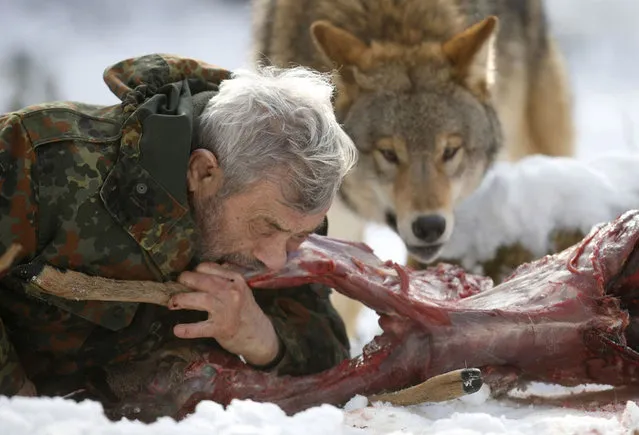
Wolfspark Werner Freund is a wolf sanctuary spread over 25 acres in western Germany. It is home to 29 wolves -- six distinct packs hailing from Europe, Siberia, Canada, the Arctic, and Mongolia. Researcher Werner Freund, 79, a former German paratrooper, established the sanctuary in 1972 and has raised more than 70 animals there over the last 40 years. He acquired the wolves as cubs from zoos or animal parks and has reared them mostly by hand. Werner has also taken to living closely with his wolves, behaving as an alpha male to earn their acceptance and respect. Reuters photographer Lisi Niesner recently spent some time with Freund and his wolves, capturing the interactions between these old friends.
Details
31 Jan 2013 15:50:00


It looks like 2024 has ended and we are still alive (although of course it's not evening yet). Well, let's wish ourselves the same in the future. If someone wants to put USDT TRC20 under the tree: TDWPvSi7RY4wNZPukDRyKghhLGTGsRNRBe (nobody will put anything, of course – but you understand, it's a ritual). Happy New Year! And now disco.
Details
31 Dec 2024 04:28:00
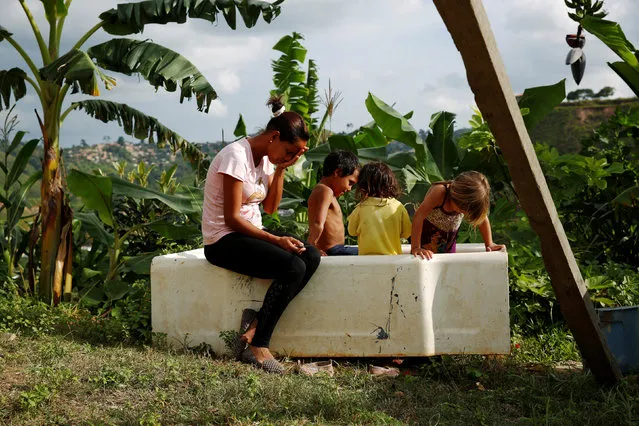
Lisibeht Martinez (L), 30, who was sterilized one year ago, sits next to her children while they play in a bathtub in the backyard of their house in Los Teques, Venezuela July 19, 2016. (Photo by Carlos Garcia Rawlins/Reuters)

Venezuela's food shortages, inflation and crumbling medical sector have become such a source of anguish that a growing number of young women are reluctantly opting for sterilizations rather than face the hardship of pregnancy and child-rearing. Traditional contraceptives like condoms or birth control pills have virtually vanished from store shelves, pushing women towards the hard-to-reverse surgery. While no recent national statistics on sterilizations are available, doctors and health workers say demand for the procedure is growing. (Photo by Carlos Garcia Rawlins/Reuters)
Details
04 Aug 2016 12:22:00


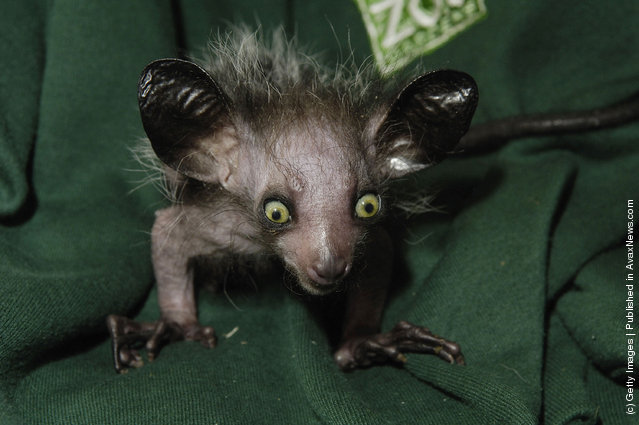
“The aye-aye (Daubentonia madagascariensis) is a lemur, a strepsirrhine primate native to Madagascar that combines rodent-like teeth and a special thin middle finger to fill the same ecological niche as a woodpecker. It is the world's largest nocturnal primate, and is characterized by its unusual method of finding food; it taps on trees to find grubs, then gnaws holes in the wood and inserts its narrow middle finger to pull the grubs out. The only other animal species known to find food in this way is the striped possum. From an ecological point of view the aye-aye fills the niche of a woodpecker as it is capable of penetrating wood to extract the invertebrates within”. – Wikipedia

Photo: In this handout image from Bristol Zoo is seen the first captive bred aye-aye in the UK named “Kintana” (meaning star in Malagasy) April 15, 2005 at Bristol Zoo Gardens, England. The zoo announced today only the second baby aye-aye to be hand-reared in the world (the first was in Jersey Zoo) and has now made his first public appearance since his birth on 11 February 2005. (Photo by Rob Cousins/Bristol Zoo via Getty Images)
Details
13 Apr 2011 13:33:00
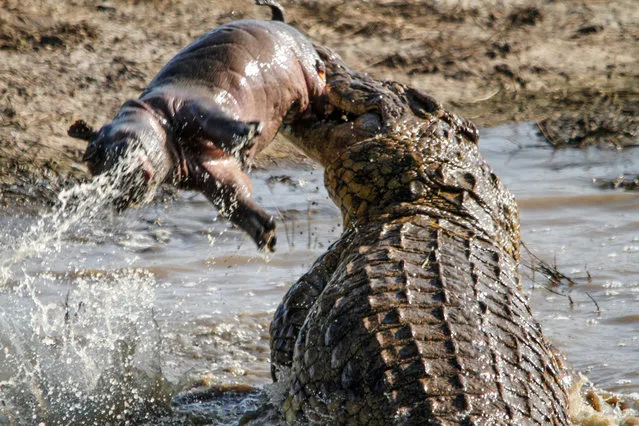
An enormous crocodile mauls a young hippo calf carcass near Lower Sabie on May 11, 2014, in Kruger National Park, South Africa. (Photo by Roland Ross/Barcroft Media)

An enormous crocodile mauls a young hippo calf carcass near Lower Sabie on May 11, 2014, in Kruger National Park, South Africa. An enormous crocodile tosses around a young hippo calf caught in its lethal jaws. The giant reared out of the water revealing a young hippo calf between its teeth. The huge beast then span, jumped and splashed in the water with the small carcass. Amateur photographer Roland Ross captured these incredible photographs near Lower Sabie in Kruger Park, South Africa. (Photo by Roland Ross/Barcroft Media)
Details
06 Aug 2014 10:52:00
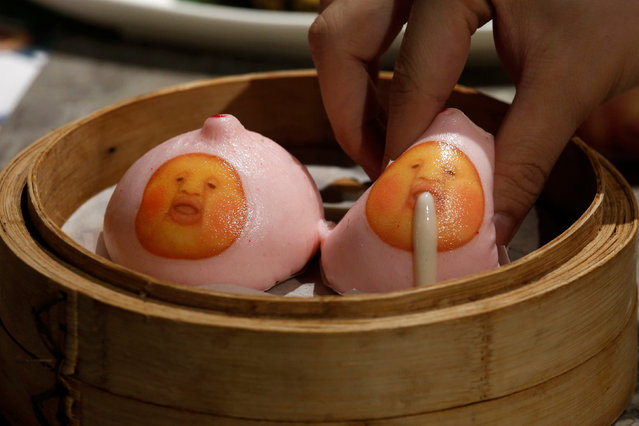
A milk custard bun made to resemble one of the popular Japanese “Kobitos” characters is squeezed during a display for the photographer at Dim Sum Icon restaurant in Hong Kong, China July 25, 2016. A dim sum restaurant in Hong Kong encourages diners to play with their food, and the result will either disgust or delight you. At Dim Sum Icon customers can squeeze a strange creature to poo or vomit on their plate before eating it. Hungry punters poke a hole into the mouth – or the rear – of the dim sum with a chopstick, squeeze it and watch the brown or white cream ooze out. (Photo by Bobby Yip/Reuters)

A milk custard bun made to resemble one of the popular Japanese “Kobitos” characters is squeezed during a display for the photographer at Dim Sum Icon restaurant in Hong Kong, China July 25, 2016. A dim sum restaurant in Hong Kong encourages diners to play with their food, and the result will either disgust or delight you. At Dim Sum Icon customers can squeeze a strange creature to poo or vomit on their plate before eating it. Hungry punters poke a hole into the mouth – or the rear – of the dim sum with a chopstick, squeeze it and watch the brown or white cream ooze out. The unique dim sums are made with a face to resemble Japanese Kobitos characters. (Photo by Bobby Yip/Reuters)
Details
31 Jul 2016 11:25:00
We're getting some feedback: “Hi, I have a question. Why is it that 90% of your posts are about women? You don't seem to acknowledge the existence of men unless they were migrants. You're seriously telling me that you can't find a few great accomplishments that MEN are making?? If this is a feminist website I think you should make that public. I've been viewing your posts since 2010 I think, since you first created avaxnews. Now I'm seriously considering blocking you guys”.


And we can reply: We like women more and for that humbly beg for your forgiveness. In general you are right. We promise to rectify the situation somehow.
Details
17 Sep 2018 17:53:00
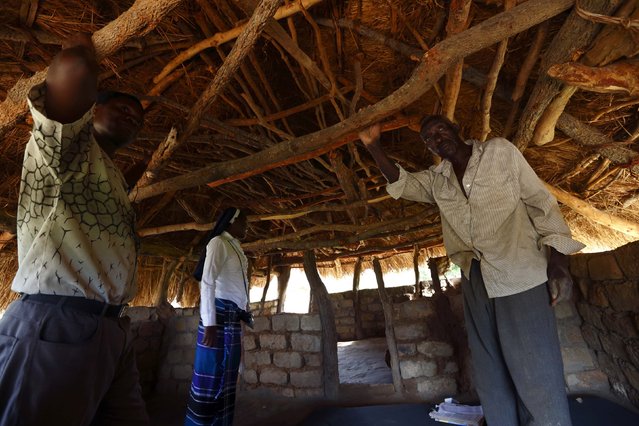
HIV-positive 71-year-old Sylverio Hachiploa (R) talks with caregivers Glandwel Muleya (L) and Sister Abigail Mwaka Mazuba (C) in his thatched hut during a visit by a home-based care team in the village of Nedwmba, south of the Chikuni Mission in the south of Zambia February 23, 2015. (Photo by Darrin Zammit Lupi/Reuters)

HIV-positive 71-year-old Sylverio Hachiploa (R) talks with caregivers Glandwel Muleya (L) and Sister Abigail Mwaka Mazuba (C) in his thatched hut during a visit by a home-based care team in the village of Nedwmba, south of the Chikuni Mission in the south of Zambia February 23, 2015. The caregivers in the Jesuit-run home-based care project at the Chikuni Mission run a capacity-building and empowerment project at the household level, offering training and assistance in crop-growing and animal rearing, as well as offering companionship, pastoral care and monitoring of the antiretroviral treatment compliance of HIV-AIDS patients. (Photo by Darrin Zammit Lupi/Reuters)
Details
25 Feb 2015 09:04:00