Loading...
Done
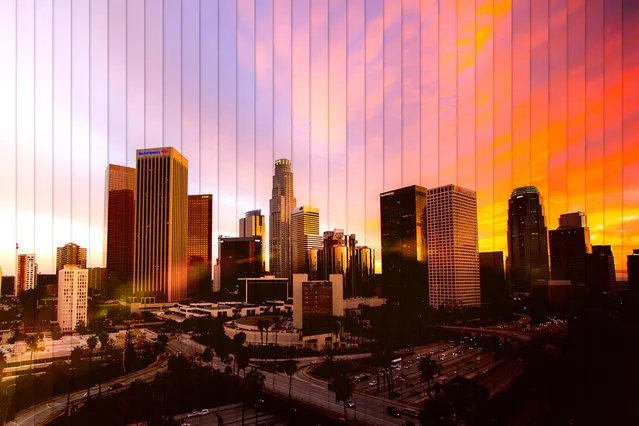
Chicago: 35 photographs, 15 minutes. (Photo by Daniel Marker-Moors/Caters News)

A photographer is using a unique method to show the shift from day to night across famous cities in spectacular images. Daniel Marker-Moors' take on time-lapse photography – which he calls time slice – sees the photographer snap image after image, before combining them to create beautiful, vibrant works. His images usually focus on a point in the day with the most dramatic change in light, such as sunrise or sunset. Marker-Moors, from Los Angeles, begins by shooting hundreds and sometimes thousands of images from the same spot. Here: Chicago – 35 photographs, 15 minutes. (Photo by Daniel Marker-Moors/Caters News)
Details
21 Dec 2015 08:04:00
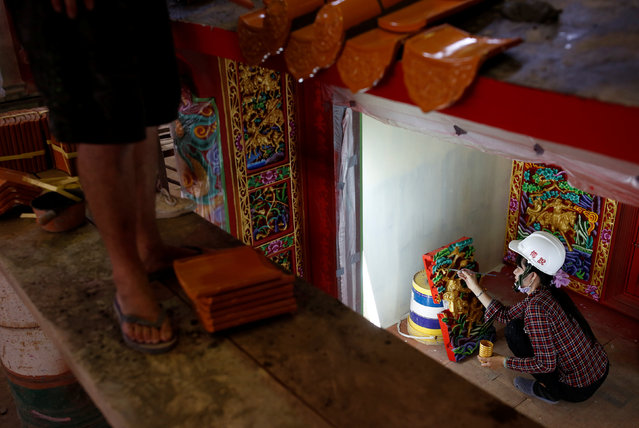
An employee paints a ready-made Chinese traditional temple at the Chuanso factory that manufactures religious objects in Pingtung, Taiwan July 5, 2016. (Photo by Tyrone Siu/Reuters)

Some companies in Taiwan spend months building temples with bricks and cement, but Lin Fu-Chun's firm simply pours concrete into a giant mould and waits for it to dry. The 78-year-old Lin said his temple factory, Chuanso, needed just over six weeks to finish a building that normally took six months with conventional methods – and moulding was 40 percent cheaper. Here: An employee paints a ready-made Chinese traditional temple at the Chuanso factory that manufactures religious objects in Pingtung, Taiwan July 5, 2016. (Photo by Tyrone Siu/Reuters)
Details
29 Jul 2016 12:57:00
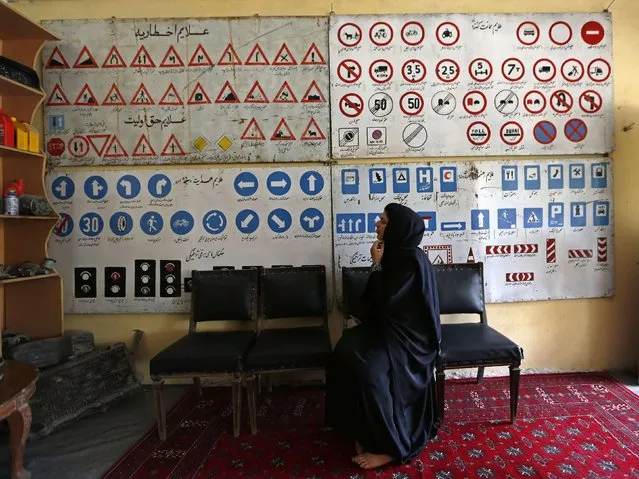
A women attends a class at a driving school in Kabul August 17, 2014. Kabul is one of the world's fastest growing cities and its streets are increasingly blocked by cars and buses. In the city's private driving schools, students pay a $60 fee for a 45-day course, which includes oral and practical driving tests at the country's Traffic Department. (Photo by Mohammad Ismail/Reuters)

A women attends a class at a driving school in Kabul August 17, 2014. Kabul is one of the world's fastest growing cities and its streets are increasingly blocked by cars and buses. In the city's private driving schools, students pay a $60 fee for a 45-day course, which includes oral and practical driving tests at the country's Traffic Department. Some of the women who have signed up say learning to drive is a way to escape unwanted gazes and physical harassment on the cramped, crowded minibuses that are often the only method of urban public transport. (Photo by Mohammad Ismail/Reuters)
Details
19 Dec 2014 12:56:00
Census of Marine Life

The Census of Marine Life was a global network of researchers in more than 80 nations engaged in a 10-year scientific initiative to assess and explain the diversity, distribution, and abundance of life in the oceans. The world's first comprehensive Census of Marine Life — past, present, and future — was released in 2010 in London.
Details
04 Jun 2015 12:08:00
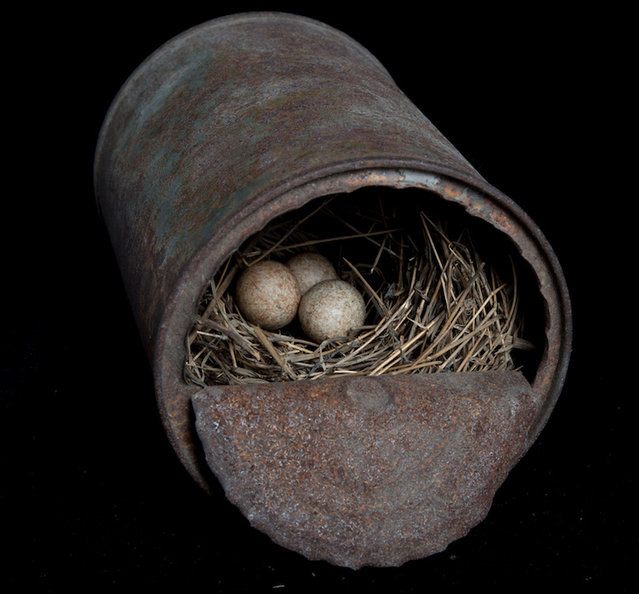
Bird Nest By Sharon Beals Part2

Sharon Beals is a San Francisco based photographer who has photographed nest and eggs specimens collected over the last two centuries at The California Academy of Sciences, The Museum of Vertebrate Zoology, and The Western Foundation of Vertebrate Zoology. While few nests are collected today, these nests and eggs are used for research, providing important information about their builder’s habitats, DNA, diseases and other survival issues.
Details
21 Aug 2013 11:34:00
Pretarsus of the third leg of a female drone fly (Eristalis tenax), ventral view, by Dr. Jan Michels, Institute of Zoology, Christian-Albrechts-University of Kiel, Germany. (Photo by Olympus BioScapes)

“Microscope images forge an extraordinary bond between science and art, said Hidenao Tsuchiya, Olympus America's Vice President and General Manager for the Scientific Equipment Group. We founded this competition to focus on the fascinating stories coming out of today's life science research laboratories. The thousands of images that people have shared with the competition over the years reflect some of the most exciting work going on in research today – work that can help shed light on the living universe and ultimately save lives. We look at BioScapes and these beautiful images as sources of education and inspiration to us and the world”. – OlympusBioScapes

Photo: Pretarsus of the third leg of a female drone fly (Eristalis tenax), ventral view, by Dr. Jan Michels, Institute of Zoology, Christian-Albrechts-University of Kiel, Germany. (Photo by Olympus BioScapes)
Details
29 Jul 2012 09:20:00
Sixty-eight year old cross-country runner Rosie Swale-Pope is interviewed while sitting in her cart, “The Icebird”, in Upperville, Virginia March 13, 2015. Swale-Pope, who is from Great Britain and once ran an unsupported 20,000 mile run around the globe,  is currently running across the United States from New York City to San Francisco in support of cancer research. (Photo by Gary Cameron/Reuters)

Sixty-eight year old cross-country runner Rosie Swale-Pope is interviewed while sitting in her cart, “The Icebird”, in Upperville, Virginia March 13, 2015. Swale-Pope, who is from Great Britain and once ran an unsupported 20,000 mile run around the globe, is currently running across the United States from New York City to San Francisco in support of cancer research. (Photo by Gary Cameron/Reuters)
Details
18 Mar 2015 11:05:00
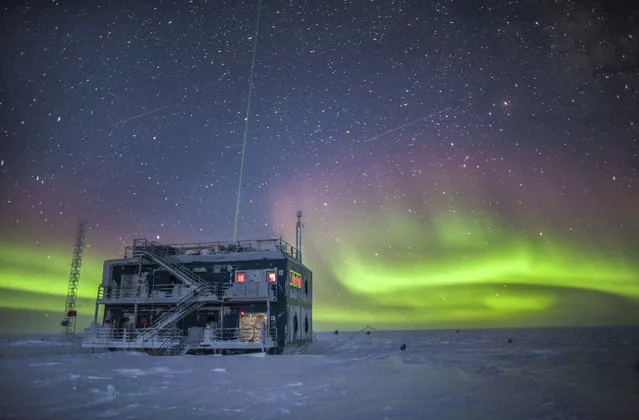
This undated photo provided by NOAA in May 2018 shows aurora australis near the South Pole Atmospheric Research Observatory in Antarctica. When a hole in the ozone formed over Antarctica, countries around the world in 1987 agreed to phase out several types of ozone-depleting chemicals called chlorofluorocarbons (CFCs). Production was banned, emissions fell and the hole shriveled. But according to a study released on Wednesday, May 16, 2018, scientists say since 2013, there’s more of a banned CFC going into the atmosphere. (Photo by Patrick Cullis/NOAA via AP Photo)

This undated photo provided by NOAA in May 2018 shows aurora australis near the South Pole Atmospheric Research Observatory in Antarctica. When a hole in the ozone formed over Antarctica, countries around the world in 1987 agreed to phase out several types of ozone-depleting chemicals called chlorofluorocarbons (CFCs). Production was banned, emissions fell and the hole shriveled. But according to a study released on Wednesday, May 16, 2018, scientists say since 2013, there’s more of a banned CFC going into the atmosphere. (Photo by Patrick Cullis/NOAA via AP Photo)
Details
15 Aug 2018 00:05:00