Loading...
Done
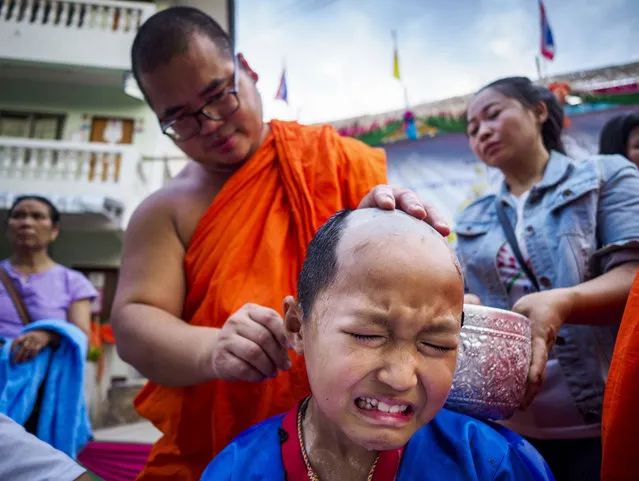
Shan boys pray before they have their heads shaved in anticipation of their ordination in the Poy Song Long Ceremony at Wat Pa Pao in Chiang Mai, Thailand on April 3, 2018. Poy Sang Long (“The Festival of the Crystal Sons”) is a ceremony that marks a rite of passage among the Buddhist Shan people in Myanmar and northern Thailand. Boys between seven and fourteen years of age are ordained as Buddhist novices during a three day ceremony. Before the ceremony starts the boys have their heads shaved. (Photo by Jack Kurtz/ZUMA Wire/Rex Features/Shutterstock)

Shan boys pray before they have their heads shaved in anticipation of their ordination in the Poy Song Long Ceremony at Wat Pa Pao in Chiang Mai, Thailand on April 3, 2018. Poy Sang Long (“The Festival of the Crystal Sons”) is a ceremony that marks a rite of passage among the Buddhist Shan people in Myanmar and northern Thailand. Boys between seven and fourteen years of age are ordained as Buddhist novices during a three day ceremony. Before the ceremony starts the boys have their heads shaved. (Photo by Jack Kurtz/ZUMA Wire/Rex Features/Shutterstock)
Details
06 Apr 2018 07:59:00
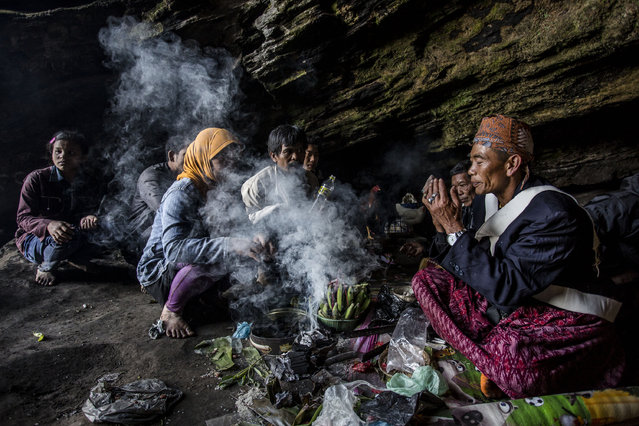
A Tenggerese shaman praying for worshippers at Widodaren cave during the Tenggerese Hindu Yadnya Kasada festival on July 31, 2015 in Probolinggo, East Java, Indonesia. The festival is the main festival of the Tenggerese people and lasts about a month. On the fourteenth day, the Tenggerese make the journey to Mount Bromo to make offerings of rice, fruits, vegetables, flowers and livestock to the mountain gods by throwing them into the volcano's caldera. (Photo by Ulet Ifansasti/Getty Images)

A Tenggerese shaman praying for worshippers at Widodaren cave during the Tenggerese Hindu Yadnya Kasada festival on July 31, 2015 in Probolinggo, East Java, Indonesia. The festival is the main festival of the Tenggerese people and lasts about a month. On the fourteenth day, the Tenggerese make the journey to Mount Bromo to make offerings of rice, fruits, vegetables, flowers and livestock to the mountain gods by throwing them into the volcano's caldera. The origin of the festival lies in the 15th century when a princess named Roro Anteng started the principality of Tengger with her husband Joko Seger, and the childless couple asked the mountain Gods for help in bearing children. The legend says the Gods granted them 24 children but on the provision that the 25th must be tossed into the volcano in sacrifice. The 25th child, Kesuma, was finally sacrificed in this way after initial refusal, and the tradition of throwing sacrifices into the caldera to appease the mountain Gods continues today. (Photo by Ulet Ifansasti/Getty Images)
Details
01 Aug 2015 12:07:00
Zoey And Jasper By Grace Chon

Grace Chon has put together a series of portraits featuring her 10-month-old son and her rescue dog. In each picture, the dog and baby are wearing matching apparel with party hats, baseball caps and sunglasses, adding fun elements to these adorable portraits.
Details
24 Apr 2014 12:10:00
Darth Vader By Tsuneo Sanda

Artist Tsuneo Sanda was born in Osaka, Japan. He first came to Tokyo at age 23, and has been there ever since. He lives in a rural, residential town about 20km west of Tokyo with his wife, Sachicko, two sons, Kensaku and Sohei, and Vivian, their American Shorthair cat.
Details
18 Aug 2014 11:58:00
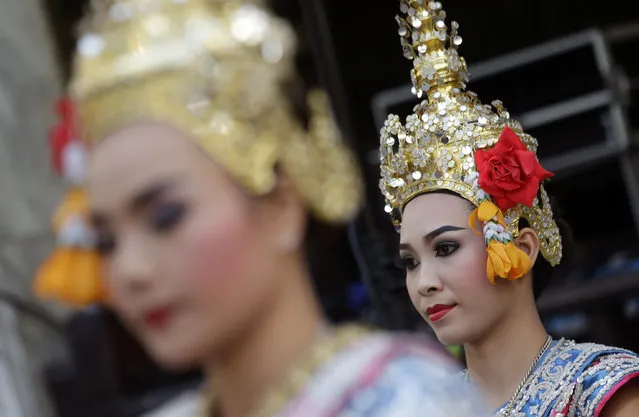
Thai classical dancers perform for Phra Phrom, the Thai interpretation of the Hindu god Brahma, at the Erawan Shrine in Bangkok, Thailand, Friday, September 4, 2015. (Photo by Sakchai Lalit/AP Photo)

Thai classical dancers perform for Phra Phrom, the Thai interpretation of the Hindu god Brahma, at the Erawan Shrine in Bangkok, Thailand, Friday, September 4, 2015. Thai authorities unveiled the restored centerpiece Friday of the Erawan Shrine, in the latest bid to restore confidence among Bangkok's tourism and business communities almost three weeks after a deadly bombing. (Photo by Sakchai Lalit/AP Photo)
Details
05 Sep 2015 12:27:00
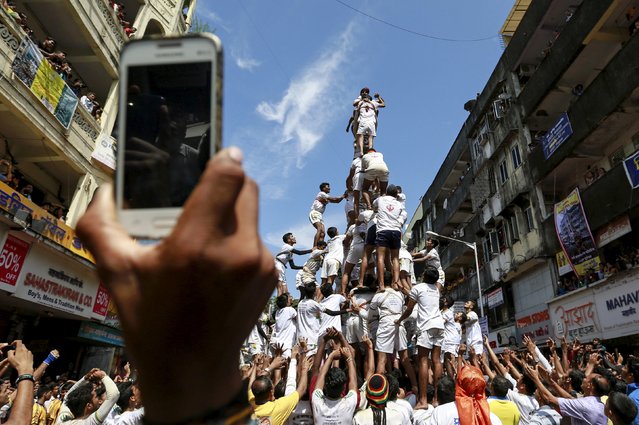
Devotees try to form a human pyramid to break a clay pot containing curd during celebrations to mark the Hindu festival of Janmashtami in Mumbai, India, September 6, 2015. Janmashtami, which marks the birthday of Hindu god Krishna, is being celebrated across the country today. (Photo by Danish Siddiqui/Reuters)

Devotees try to form a human pyramid to break a clay pot containing curd during celebrations to mark the Hindu festival of Janmashtami in Mumbai, India, September 6, 2015. Janmashtami, which marks the birthday of Hindu god Krishna, is being celebrated across the country today. (Photo by Danish Siddiqui/Reuters)
Details
07 Sep 2015 13:16:00
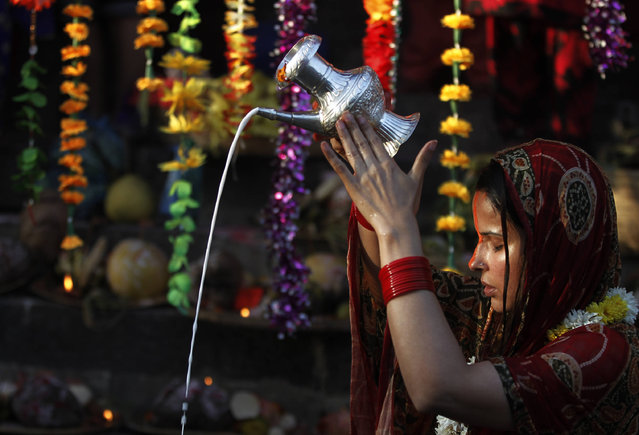
A Nepalese woman pours milk as she offers prayers to the setting Sun on the banks of the Bagmati River during the Chhath Puja festival in Kathmandu, Nepal, Sunday, November 6, 2016. During Chhath, an ancient Hindu festival, rituals are performed to thank the Sun God for sustaining life on earth. (Photo by Niranjan Shrestha/AP Photo)

A Nepalese woman pours milk as she offers prayers to the setting Sun on the banks of the Bagmati River during the Chhath Puja festival in Kathmandu, Nepal, Sunday, November 6, 2016. During Chhath, an ancient Hindu festival, rituals are performed to thank the Sun God for sustaining life on earth. (Photo by Niranjan Shrestha/AP Photo)
Details
08 Nov 2016 11:30:00
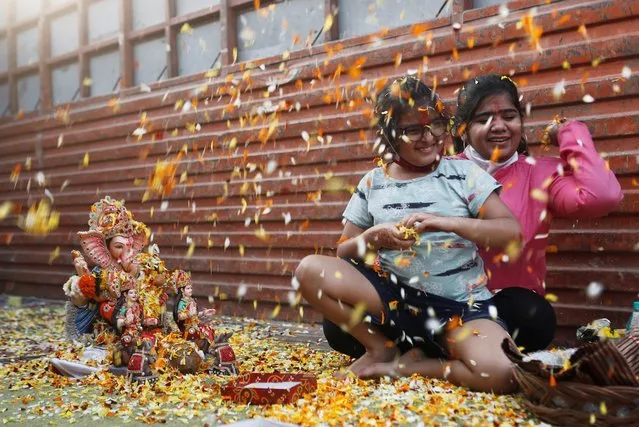
Devotees throw flower petals on an idol of the Hindu god Ganesh, the deity of prosperity, on the occasion of his birthday, celebrated as Magha Ganesh Jayanti, before immersing the idol into the Arabian sea, in Mumbai, India on February 16, 2021. (Photo by Francis Mascarenhas/Reuters)

Devotees throw flower petals on an idol of the Hindu god Ganesh, the deity of prosperity, on the occasion of his birthday, celebrated as Magha Ganesh Jayanti, before immersing the idol into the Arabian sea, in Mumbai, India on February 16, 2021. (Photo by Francis Mascarenhas/Reuters)
Details
22 Feb 2021 09:25:00