Loading...
Done
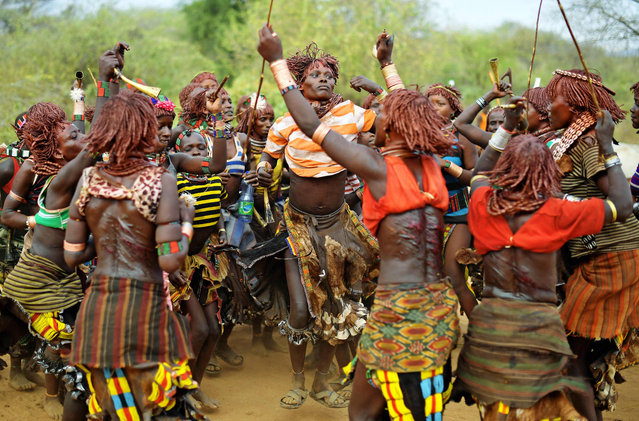
Hamar women dance before a bull jumping ceremony in Ethiopia's southern Omo Valley region near Turmi on September 19, 2016. The Hamar are a Nilotic ethnic group in Ethiopia. The construction of the Gibe III dam, the third largest hydroelectric plant in Africa, and large areas of very “thirsty” cotton and sugar plantations and factories along the Omo river are impacting heavily on the lives of tribes living in the Omo Valley who depend on the river for their survival and way of life. Human rights groups fear for the future of the tribes if they are forced to scatter, give up traditional ways through loss of land or ability to keep cattle as globalisation and development increases. (Photo by Carl De Souza/AFP Photo)

Hamar women dance before a bull jumping ceremony in Ethiopia's southern Omo Valley region near Turmi on September 19, 2016. The Hamar are a Nilotic ethnic group in Ethiopia. The construction of the Gibe III dam, the third largest hydroelectric plant in Africa, and large areas of very “thirsty” cotton and sugar plantations and factories along the Omo river are impacting heavily on the lives of tribes living in the Omo Valley who depend on the river for their survival and way of life. (Photo by Carl De Souza/AFP Photo)
Details
02 Oct 2016 08:45:00
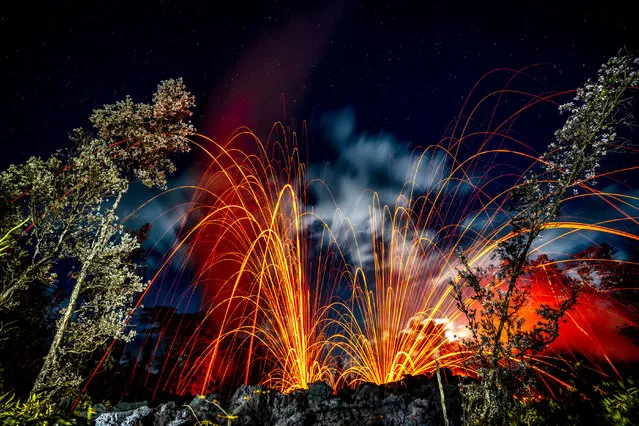
This photo highlights the sheer power of Mother Nature and the act of creating new land. (Photo by CJ Kale/Caters News Agency)

These beautiful images aim to show the more artistic side of Hawaii’s recent volcano eruption, highlighting the sheer power of Mother Nature and the act of creating new land. Photographer CJ Kale’s breathtaking works show the molten lava in its incredible vibrancy, whether it’s bursting from the ground in fireworks fashion or pouring into surrounding waters, causing steam to rise. (Photo by CJ Kale/Caters News Agency)
Details
13 Jul 2018 00:05:00
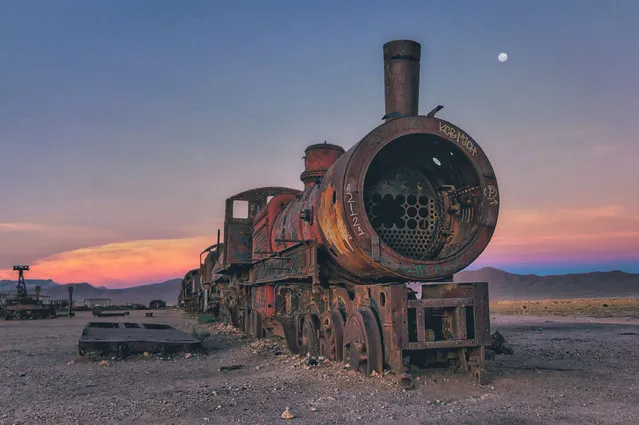
Many of the trains and locomotives are British imports and have been eroded by the harsh Bolivian climate. (Photo by Chris Staring/Rex Features/Shutterstock)

Chris Staring photographs a mysterious train graveyard in the heart of southern Bolivia, where the skeletons of British steam locomotives and rail cars rust away on the edge of the world’s largest salt flats. More than 100 rail cars and locomotives can be found in different states of decay in the train graveyard. (Photo by Chris Staring/Rex Features/Shutterstock)
Details
03 Jul 2016 10:46:00
Club-goers dance at “Morning Gloryville” at the Ministry of Sound in south London August 11, 2015. (Photo by Toby Melville/Reuters)

Club-goers dance at “Morning Gloryville” at the Ministry of Sound in south London August 11, 2015. Morning dance parties with names like “Morning Gloryville” and "Daybreaker" are gathering steam in cities across the world, giving rise to a movement known as “conscious clubbing”. Its founders aim to create the energy and community of electronic dance parties with fruit smoothies and coffee instead of the drugs and alcohol more common after nightfall. (Photo by Toby Melville/Reuters)
Details
18 Aug 2015 14:06:00
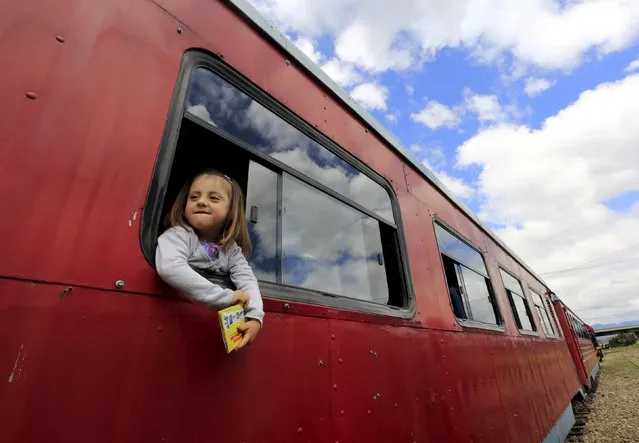
A girl looks out from the window of a “La Sabana” tourist train in La Caro March 1, 2015. (Photo by Jose Miguel Gomez/Reuters)

A girl looks out from the window of a “La Sabana” tourist train in La Caro March 1, 2015. The “La Sabana” tourist train that runs through the capital was founded by Eduardo Rodriguez, a railway engineer. Rodriguez has worked on Colombia's railway system his whole life and now, with an air of nostalgia, transports thousands of tourists in renovated steam locomotives that he fixes in Bogota's Central Station which dates back to 1913. (Photo by Jose Miguel Gomez/Reuters)
Details
23 Apr 2015 11:30:00
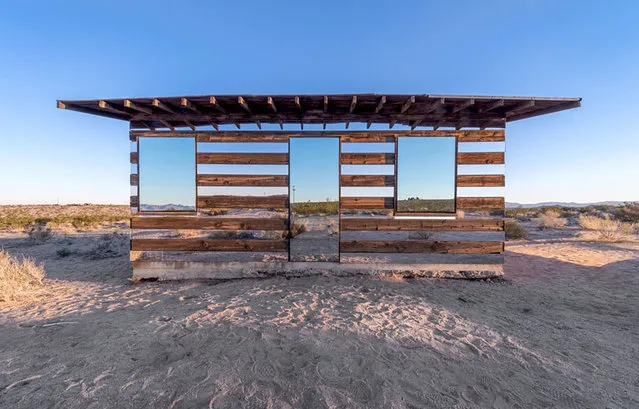
House Of Mirror In The Californian Desert, USA

In the desert near Joshua Tree, California, there stands a 70-year-old homestead cabin that isn’t all there. The ethereal cabin is part of an outdoor art installation by artist Phillip K. Smith III called Lucid Homestead. To give the cabin its striking appearance, the artist replaced strips of the wall with mirrors and the windows with mirrored panels that light up at night. The building reflects the desert sun and environment around it, making it seem like an airy and transparent space
Details
17 Dec 2013 11:13:00
People take part in the “The Burial of the Sardine” funeral procession, which marks the end of carnival festivities, in Madrid, Spain, February 10, 2016. (Photo by Juan Medina/Reuters)

People take part in the “The Burial of the Sardine” funeral procession, which marks the end of carnival festivities, in Madrid, Spain, February 10, 2016. “Mourners” carry a coffin with a mock sardine through the streets to celebrate the countdown to Lent. Spanish painter Francisco de Goya's painting “El entierro de la sardina” (The Burial of the Sardine) was inspired by this tradition, which started in Madrid in the 18th century, around the time of Spanish King Carlos III. (Photo by Juan Medina/Reuters)
Details
11 Feb 2016 12:29:00
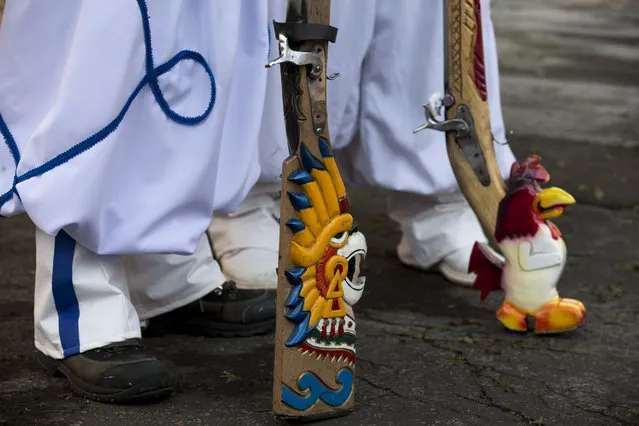
Mexicans dressed as French soldiers carry handcrafted guns, ahead of a reenactment of the battle of Puebla between Zacapoaxtla Indians and the French army during Cinco de Mayo celebrations in Mexico City, Tuesday, May 5, 2015. (Photo by Rebecca Blackwell/AP Photo)

Mexicans dressed as French soldiers carry handcrafted guns, ahead of a reenactment of the battle of Puebla between Zacapoaxtla Indians and the French army during Cinco de Mayo celebrations in Mexico City, Tuesday, May 5, 2015. Monsalvo said he has been portraying Napoleon III in the annual neighborhood event for 28 years. Cinco de Mayo commemorates the victory of an ill-equipped Mexican army over French troops in Puebla on May 5, 1862. (Photo by Rebecca Blackwell/AP Photo)
Details
06 May 2015 13:26:00