Loading...
Done
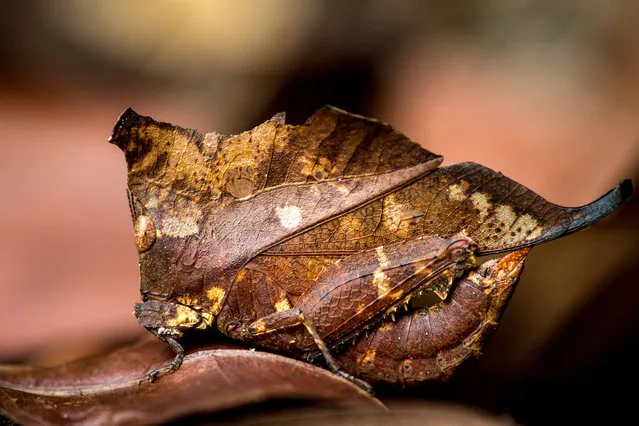
Dead leaf or almost by Guilhem Duvot. Taken in Nován Stráž, Slovakia. Describe what is pictured? A dead leaf grasshopper. How does this image fit with the theme of the competition? The perfect camouflage – nature is amazing. I saw the grasshopper only because it jumped. (Photo by Guilhem Duvot/Royal Society of Biology)

Dead leaf or almost by Guilhem Duvot. Taken in Nován Stráž, Slovakia. Describe what is pictured? A dead leaf grasshopper. How does this image fit with the theme of the competition? The perfect camouflage – nature is amazing. I saw the grasshopper only because it jumped. (Photo by Guilhem Duvot/Royal Society of Biology)
Details
10 Oct 2018 00:05:00
Stuff on Scout's Head

Stuff On Scout's Head is a Tumblr which does what it says on the tin. Scout's owner – for Scout is a dog – puts stuff on Scout's head. And then photographs him.
Details
07 Jan 2014 11:57:00
Photo Collages By Corinne Vionnet

That's exactly what Vionnet's "Photo Opportunities" series does: takes hundreds of tourist photos of iconic landmarks, superimposes them into semi-transparency, and lets a dreamlike meta-image emerge.
Details
17 Aug 2014 08:30:00
Crime Tatoo  Part 1

Tattoos are commonly used among criminals to show gang membership and record the wearer's personal history—such as his or her skills, specialties, accomplishments and convictions. They are also used as a means of personal expression. Certain designs have developed recognized coded meanings. The code systems can be quite complex and because of the nature of what they encode, the tattoo designs are not widely recognized.
Details
23 Apr 2013 10:29:00
Crime Tatoo  Part 2

Tattoos are commonly used among criminals to show gang membership and record the wearer's personal history—such as his or her skills, specialties, accomplishments and convictions. They are also used as a means of personal expression. Certain designs have developed recognized coded meanings. The code systems can be quite complex and because of the nature of what they encode, the tattoo designs are not widely recognized.
Details
24 Apr 2013 09:49:00
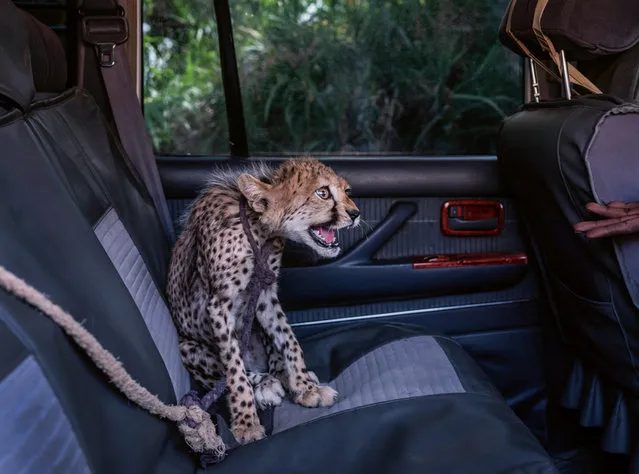
A five-month-old cheetah seated in the back of a Land Cruiser growls at an outstretched hand after being taken from traffickers in Ethiopia and driven to Harirad, Somaliland, in 2020. This photo is part of the work of more than 100 artists in Why We Photograph Animals, a new collection of wildlife photography that aims to help understand why people have photographed animals at different points in history and what it means in the present. (Photo by Nichole Sobecki/Thames & Hudson)

A five-month-old cheetah seated in the back of a Land Cruiser growls at an outstretched hand after being taken from traffickers in Ethiopia and driven to Harirad, Somaliland, in 2020. This photo is part of the work of more than 100 artists in Why We Photograph Animals, a new collection of wildlife photography that aims to help understand why people have photographed animals at different points in history and what it means in the present. (Photo by Nichole Sobecki/Thames & Hudson)
Details
28 Apr 2024 03:15:00
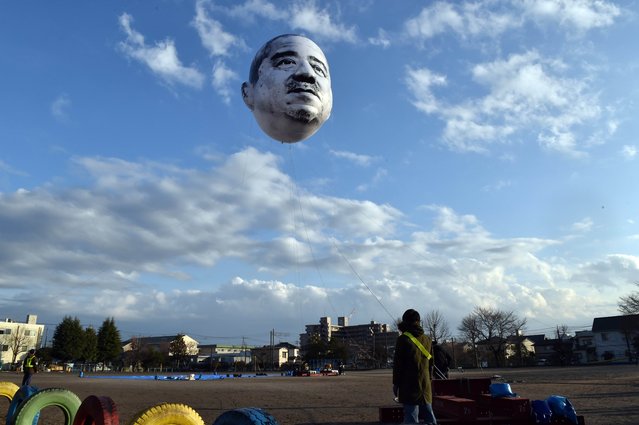
A large balloon of a face of “ojisan”, a middle aged man, floats in the sky above the grounds of Nishiki elementary school in Utsunomiya in Tochigi prefecture, 100km north of Tokyo on December 21, 2014. Members of art group “Me”, meaning “eye” in Japanese and the Utsunomiya Museum of Art launched an art installation “The Day an Ojisan's Face Floated in the Sky”, a 15-meter by 10-meter face balloon of the depicted man, who was auditioned in the city, looking down on his home town from the sky. (Photo by Yoshikazu Tsuno/AFP Photo)

A large balloon of a face of “ojisan”, a middle aged man, floats in the sky above the grounds of Nishiki elementary school in Utsunomiya in Tochigi prefecture, 100km north of Tokyo on December 21, 2014. Members of art group “Me”, meaning “eye” in Japanese and the Utsunomiya Museum of Art launched an art installation “The Day an Ojisan's Face Floated in the Sky”, a 15-meter by 10-meter face balloon of the depicted man, who was auditioned in the city, looking down on his home town from the sky. (Photo by Yoshikazu Tsuno/AFP Photo)
Details
27 Dec 2014 12:48:00
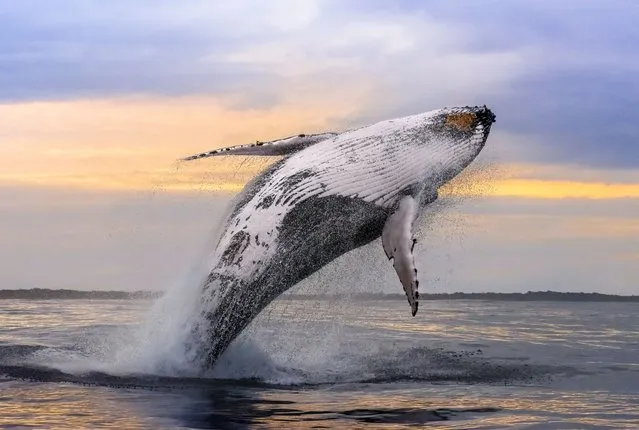
A 40-tonne humpback launching out of the water in an incredible breach in New South Wales, Australia on October 2022 in front of a sunset. The humpback whale can grow up to 56 feet long and typically covers 9,900 miles a year as it travels through the oceans of the world. Humpback whales are a species of Baleen whale, meaning they don't have teeth. Instead, they have baleen which helps them to filter feed. Their main source of food is krill or tiny bait fish. (Photo by Jodie Lowe/Media Drum Images)

A 40-tonne humpback launching out of the water in an incredible breach in New South Wales, Australia on October 2022 in front of a sunset. The humpback whale can grow up to 56 feet long and typically covers 9,900 miles a year as it travels through the oceans of the world. Humpback whales are a species of Baleen whale, meaning they don't have teeth. Instead, they have baleen which helps them to filter feed. Their main source of food is krill or tiny bait fish. (Photo by Jodie Lowe/Media Drum Images)
Details
30 Oct 2022 04:28:00