Loading...
Done
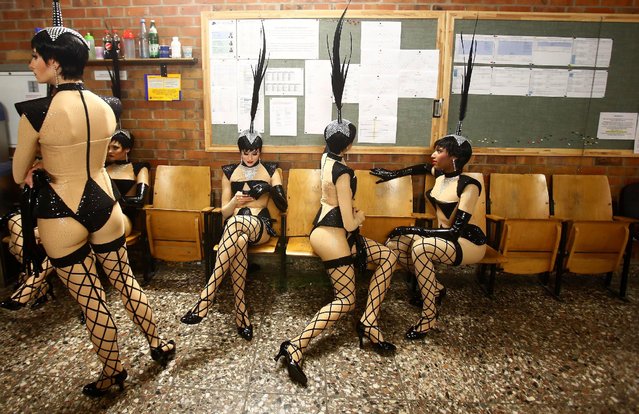
Dancers wait backstage during a dress rehearsal for the new “THE ONE Grand Show” at Friedrichstadt-Palast in Berlin, Germany, September 21, 2016. (Photo by Hannibal Hanschke/Reuters)

Dancers wait backstage during a dress rehearsal for the new “THE ONE Grand Show” at Friedrichstadt-Palast in Berlin, Germany, September 21, 2016. From silver body suits with giant mohawks to revealing fishnet tops with huge feathers, colourful, extravagant costumes take centre stage at a new theatrical show in Berlin. French couturier Jean Paul Gaultier has swapped the Paris runway for the German stage to create some 500 costumes for “THE ONE Grand Show”, an 11-million euro ($12.2 million) production showcasing plenty of singing, dancing and acrobatics. (Photo by Hannibal Hanschke/Reuters)
Details
08 Oct 2016 12:09:00
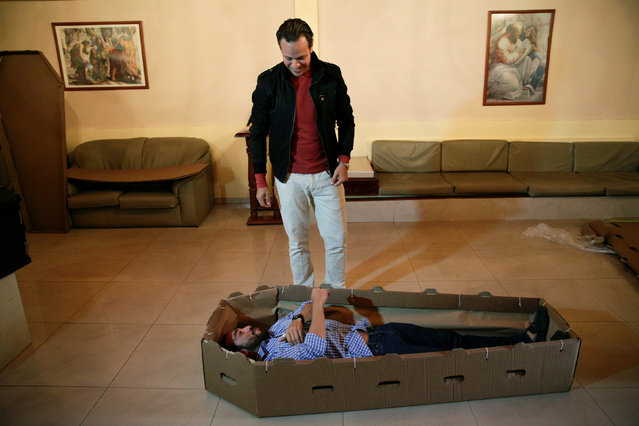
Elio Angulo (bottom C) lies inside a cardboard coffin next to Alejandro Blanchard as they introduce their product to potential customers at a mortuary in Valencia, in the state of Carabobo, Venezuela August 25, 2016. (Photo by Marco Bello/Reuters)

Elio Angulo (bottom C) lies inside a cardboard coffin next to Alejandro Blanchard as they introduce their product to potential customers at a mortuary in Valencia, in the state of Carabobo, Venezuela August 25, 2016. When Venezuelan entrepreneurs Alejandro Blanchard and Elio Angulo decided to create cardboard coffins, they were looking for an ecological selling point to compete against classic wood and brass caskets. Three years on, with the oil-rich country mired in deep economic crisis, their “bio-coffins” are becoming a viable option because of high prices for wooden coffins and shortages of brass ones. (Photo by Marco Bello/Reuters)
Details
27 Aug 2016 11:18:00
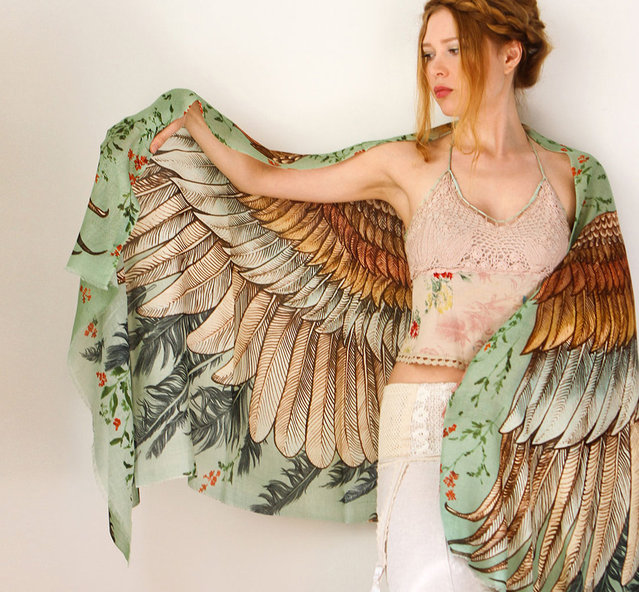
Shovava Wing Scarves By Roza Khamitova

Roza Khamitova was born into a family of artists in Kazakhstan. After finishing design school in Manhattan, New York, she was working in fashion industry for about 8 years. As a visual artist Roza had always drawn most of her inspiration from the natural world around her in the mountains of Kazakhstan. In 2011 she launched Shovava, her personal line of women’s clothing based on her hand drawn paintings and prints of the animals, plants and patterns found in nature. Roza was enchanted by the beauty of wings, its structure and symbolism. First, she sketches big wide-spread wings on paper with a light pencil, adds black ink to create a three-dimensional feel and fills with stunning watercolors.
Details
06 Dec 2015 10:42:00
Chicago: 35 photographs, 15 minutes. (Photo by Daniel Marker-Moors/Caters News)

A photographer is using a unique method to show the shift from day to night across famous cities in spectacular images. Daniel Marker-Moors' take on time-lapse photography – which he calls time slice – sees the photographer snap image after image, before combining them to create beautiful, vibrant works. His images usually focus on a point in the day with the most dramatic change in light, such as sunrise or sunset. Marker-Moors, from Los Angeles, begins by shooting hundreds and sometimes thousands of images from the same spot. Here: Chicago – 35 photographs, 15 minutes. (Photo by Daniel Marker-Moors/Caters News)
Details
21 Dec 2015 08:04:00
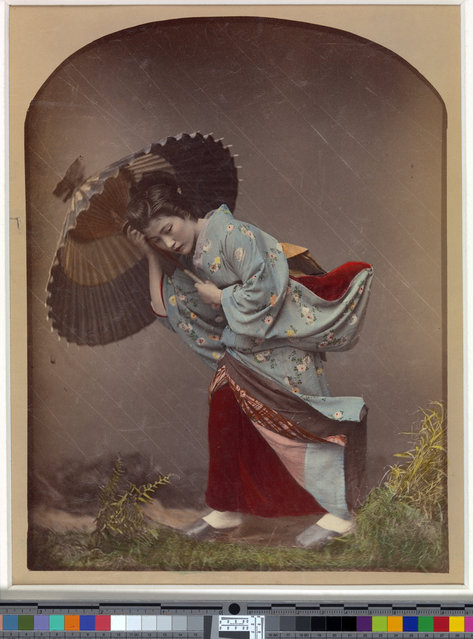
“Woman with Umbrella in Rain” by Raimund von Stillfried. Artist: Kusakabe Kimbei (Japanese, 1841–1934), 1870s. (Photo courtesy of The Metropolitan Museum of Art)

“Woman with Umbrella in Rain” by Raimund von Stillfried. Artist: Kusakabe Kimbei (Japanese, 1841–1934), 1870s. Commercial photography studios in Meiji-era Japan were renowned for the subtlety and refinement of their coloring techniques. This hand-tinted image of a young woman caught in a heavy rainstorm achieved its naturalistic effect by knitting together multiple strands of artifice: the greenery in the foreground was a studio prop; the flaps of the kimono were suspended by thin wires to create the impression of a strong wind; and long, diagonal marks were made on the negative to suggest streaks of rain. (Photo courtesy of The Metropolitan Museum of Art)
Details
12 May 2013 10:13:00
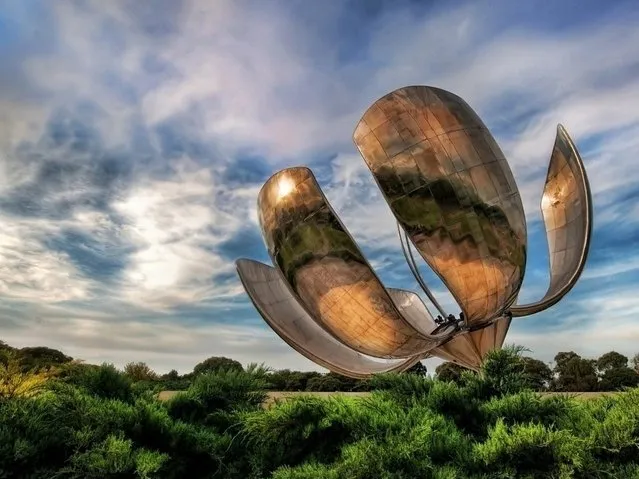
Floralis Generica - Buenos Aires

Floralis Genérica is a sculpture made of steel and aluminum located in Plaza de las Naciones Unidas, Avenida Figueroa Alcorta, Buenos Aires, a gift to the city by the Argentine architect Eduardo Catalano. Catalano once said that the flower "is a synthesis of all the flowers and is both a hope that is reborn every day to open." It was created in 2002. The sculpture moves closing its petals in the evening and opening them in the morning, although this mechanism is currently disabled. The sculpture is located in the center of a park of four acres of wooded boundaries, surrounded by paths that get closer and provide different perspectives of the monument, and placed above a reflecting pool, which apart from fulfilling its aesthetic function, protects it. It represents a large flower made of stainless steel with aluminum skeleton and reinforced concrete, which looks at the sky, extending to it its six petals. Weighs eighteen tons and is 23 meters high.
Details
20 Oct 2013 18:32:00
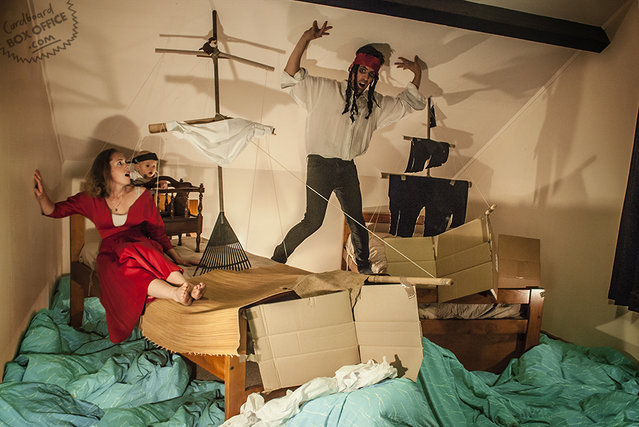
Cardboard Box Office By Lilly, Leon And Baby Orson

Welcome to Cardboard Box Office – our homemade creations of some of your favorite movie scenes built from some of our favorite domestic junk. The project began after finding that we had accumulated both a lot of cardboard boxes (due to moving to a new country) and a baby (due to giving birth). With our social lives drastically altered we decided to find a way to make some of those housebound weekends a little more fun. The costumes, props, and sets in Cardboard Box Office are created entirely out of everyday household items, toys, cardboard, and three individuals slowly losing their sanity. Enjoy!

Lilly, Leon, & (baby) Orson
Details
21 Jan 2014 17:53:00
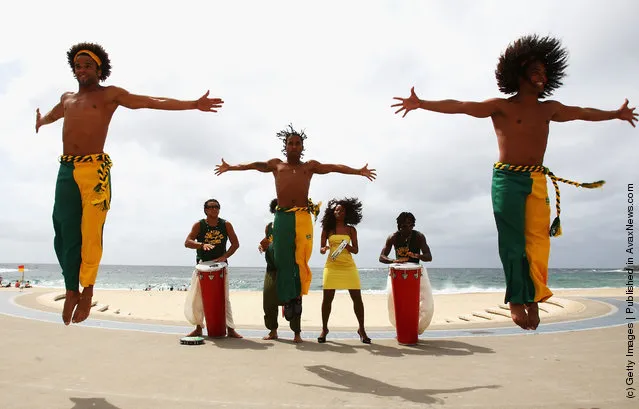
Warriors Of Brazil: Capoeira Spectacular

“Capoeira is a Brazilian art form that combines elements of martial arts, sports, and music. It was created in Brazil mainly by descendants of African slaves with Brazilian native influences, probably beginning in the 16th century. It is known by quick and complex moves, using mainly power kicks and quick leg sweeps, with some ground and aerial acrobatics, knee strikes, take-downs, elbow strikes, punches and headbutts. The word capoeira comes from Tupi, referring to the areas of low vegetation in the Brazilian interior”. – Wikipedia

Photo: The Warriors of Brazil perform on Coogee Beach on November 23, 2009 in Sydney, Australia. The Warriors of Brazil show is a spectacular stage show which combines the extraordinary martial art of Capoeira with the uplifting music and dance of Carnival. (Photo by Ryan Pierse/Getty Images)
Details
19 Sep 2011 14:13:00